

Master Course Accreditation Workflow for Manufacturers

Traditional course accreditation can drain an american training budget, leaving many Marketing Directors and Training Managers searching for affordable, effective solutions. Over eighty percent of building product manufacturers say the paperwork and compliance process feels outdated and time-consuming. This step-by-step guide reveals how to prepare, structure, and launch accredited courses efficiently, helping your team cut costs while meeting North American continuing education standards.
Table of Contents
- Step 1: Prepare Provider Registration And Compliance Documentation
- Step 2: Build Compliant Course Outline With AI-Powered Tools
- Step 3: Submit Course For IDCEC And AIA Accreditation Review
- Step 4: Verify Approval Status And Resolve Any Compliance Feedback
- Step 5: Launch Accredited Course And Monitor Learner Data
Quick Summary
| Key Insight | Explanation |
|---|---|
| 1. Compile Essential Documentation | Gather critical paperwork like licenses and insurance to demonstrate compliance with accreditation standards before starting the process. |
| 2. Utilize AI for Course Structuring | Leverage AI tools to generate a compliant course outline that aligns with professional standards and facilitates effective learning. |
| 3. Organize Thorough Submission Materials | Prepare a detailed submission package that includes course content, trainer qualifications, and learning objectives to streamline the accreditation review process. |
| 4. Methodically Address Feedback | Review accreditation feedback carefully and create an action plan to implement recommended changes for compliance and quality. |
| 5. Monitor Learner Engagement Metrics | Use analytics tools to track completion rates and assessment scores, refining course content and enhancing learner experience continuously. |
Step 1: Prepare provider registration and compliance documentation
Preparing your provider registration and compliance documentation is your roadmap to becoming an official continuing education provider. In this step, you will compile the critical paperwork that proves your organization meets the professional standards required by accreditation bodies.
Start by gathering all essential documents that demonstrate your credibility and operational readiness. This includes your commercial business license, professional liability insurance, and a comprehensive overview of your training procedures. When preparing documentation for professional course accreditation, you will need to create a detailed dossier that covers multiple dimensions of your educational offering.
Your compliance documentation should include several key components. First, develop a professional course overview that outlines your learning objectives with precision. Next, compile trainer qualification documents showcasing the expertise of your instruction team. You will also need to create detailed lesson plans, assessment strategies, and sample certificates. According to accreditation preparation guidelines, these materials must be professionally structured and aligned with industry continuing education standards.
Pro tip: Keep digital and physical copies of all documentation in a dedicated compliance folder, and create a tracking system to monitor document expiration and renewal dates.
Step 2: Build compliant course outline with AI-powered tools
In this crucial step, you will leverage cutting-edge AI technologies to transform your course concept into a fully structured, IDCEC-compliant learning experience. Artificial intelligence has revolutionized course development by simplifying complex documentation processes and ensuring precise alignment with industry standards.
Begin by selecting an AI-powered platform that supports comprehensive course outline generation. These intelligent tools can rapidly convert your existing materials into structured lessons, interactive modules, and assessment components. When utilizing AI course creation technologies, focus on inputting clear learning objectives, your target audience details, and specific content requirements. The AI will analyze your inputs and generate a comprehensive outline that meets professional continuing education guidelines.

The AI course builder will help you craft precise learning objectives, develop appropriate assessment strategies, and ensure your content meets Health Safety Welfare requirements. Pay close attention to the generated content and customize it to reflect your unique expertise and brand voice. Verify that the AI-generated outline includes all necessary components such as learning goals, detailed lesson plans, quiz questions, and appropriate instructional methodologies.
Pro tip: Always review and personally edit AI-generated content to maintain your professional authenticity and ensure the material genuinely reflects your organization’s expertise and teaching approach.
Step 3: Submit course for IDCEC and AIA accreditation review
Submitting your course for professional accreditation represents the critical moment where your carefully crafted educational content meets official review standards. This step transforms your course from an internal project into a recognized continuing education offering for architects and interior designers.
Begin by accessing the official IDCEC course submission process. Your submission must include comprehensive documentation detailing course content, learning objectives, instructor qualifications, and delivery methodology. When preparing materials for AIA course provider submission, ensure you have meticulously organized all required documentation to demonstrate compliance with professional continuing education standards.
Prepare your submission package by collecting all necessary elements including a detailed course outline, instructor credentials, learning objectives, and a comprehensive bibliography. Pay special attention to formatting requirements and ensure all materials precisely match the accreditation body’s guidelines. Most review processes take approximately three weeks, during which reviewers will evaluate your course materials for educational quality, relevance, and alignment with professional development standards.
Pro tip: Create a digital checklist with all submission requirements and cross-reference each document before uploading to catch potential errors that could delay your accreditation.
Step 4: Verify approval status and resolve any compliance feedback
The final stage of course accreditation requires carefully reviewing the official response and strategically addressing any feedback or recommendations provided by the accreditation review team. This critical phase determines whether your course will receive full approval or require additional modifications.
Carefully review the accreditation response documentation for specific commendations, recommendations, and required actions. Your response should be systematic and evidence-based, demonstrating a comprehensive understanding of the feedback and a clear plan for implementing suggested improvements. When addressing compliance recommendations, organize your response methodically by creating a detailed action plan that directly corresponds to each point raised in the review.
Understand that compliance maintenance requires ongoing effort beyond the initial submission. This means not just resolving current feedback but also establishing a continuous improvement framework for your educational content. Prepare documentation that shows how you will implement suggested changes, track improvements, and ensure long term alignment with professional education standards.
Pro tip: Create a tracking spreadsheet mapping each reviewer comment to a specific action item and responsible team member to ensure nothing falls through the cracks.
Step 5: Launch accredited course and monitor learner data
With your course now officially accredited, you are ready to deploy your educational offering and begin tracking learner engagement and performance. This phase transforms your carefully developed content into an active learning experience for architects and designers seeking professional development credits.
Select a learning management system that supports comprehensive learning analytics capable of capturing detailed performance metrics. Your platform should enable real-time tracking of enrollment rates, completion percentages, assessment scores, and participant engagement levels. Implement automated data capture tools that provide instant insights into how professionals are interacting with your course content and where potential improvements might be needed.
Continuously analyze key learner performance metrics to refine your educational materials and demonstrate ongoing value to your target audience. Pay close attention to assessment performance, time spent on different modules, quiz completion rates, and participant feedback. These metrics will not only help you maintain accreditation standards but also provide valuable intelligence about the effectiveness of your course design and content relevance.
Pro tip: Schedule monthly data review sessions to identify trends, adjust course content proactively, and continuously improve your learning experience based on actual learner interactions.
This table highlights essential analytics to monitor after launching your accredited course:
| Metric | Why It Matters | Typical Use |
|---|---|---|
| Completion Rate | Measures learner progress | Identify effective modules |
| Assessment Scores | Reveals knowledge gains | Target content improvements |
| Engagement Level | Shows interaction frequency | Optimize course engagement |
| Participant Feedback | Captures direct opinions | Guide ongoing enhancements |
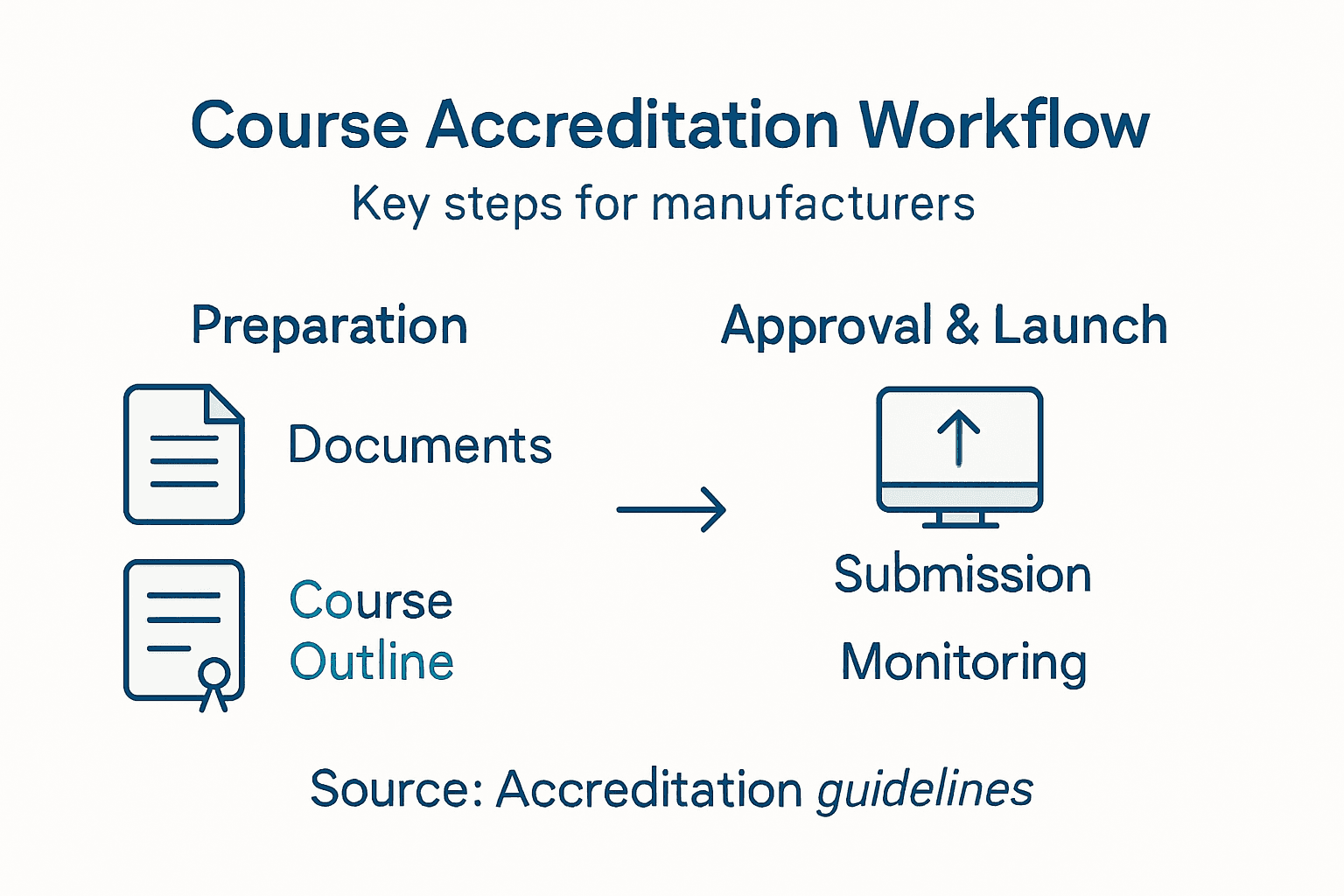
Here’s a summary of the main tasks and outcomes at each step of the course accreditation process:
| Step | Key Action | Main Outcome |
|---|---|---|
| Prepare Documentation | Compile regulatory documents | Demonstrate compliance readiness |
| Build AI-Powered Outline | Structure content with AI tools | Aligned course outline and materials |
| Submit for Accreditation | Organize and send all materials | Start formal review process |
| Address Feedback | Respond to reviewer comments | Achieve full accreditation status |
| Launch and Monitor | Deploy course and track data | Support ongoing quality and compliance |
Own Your Course Accreditation Journey and Cut Costs Dramatically
The detailed “Master Course Accreditation Workflow for Manufacturers” article highlights key challenges like lengthy accreditation timelines, complex compliance requirements, and costly dependency on legacy CEU directories. If you want to take control of your IDCEC and AIA course provider status, stop paying exorbitant fees just to rent space, and accelerate your course development from 12-18 months down to a few weeks, CEU Builder has the solution tailored for you.
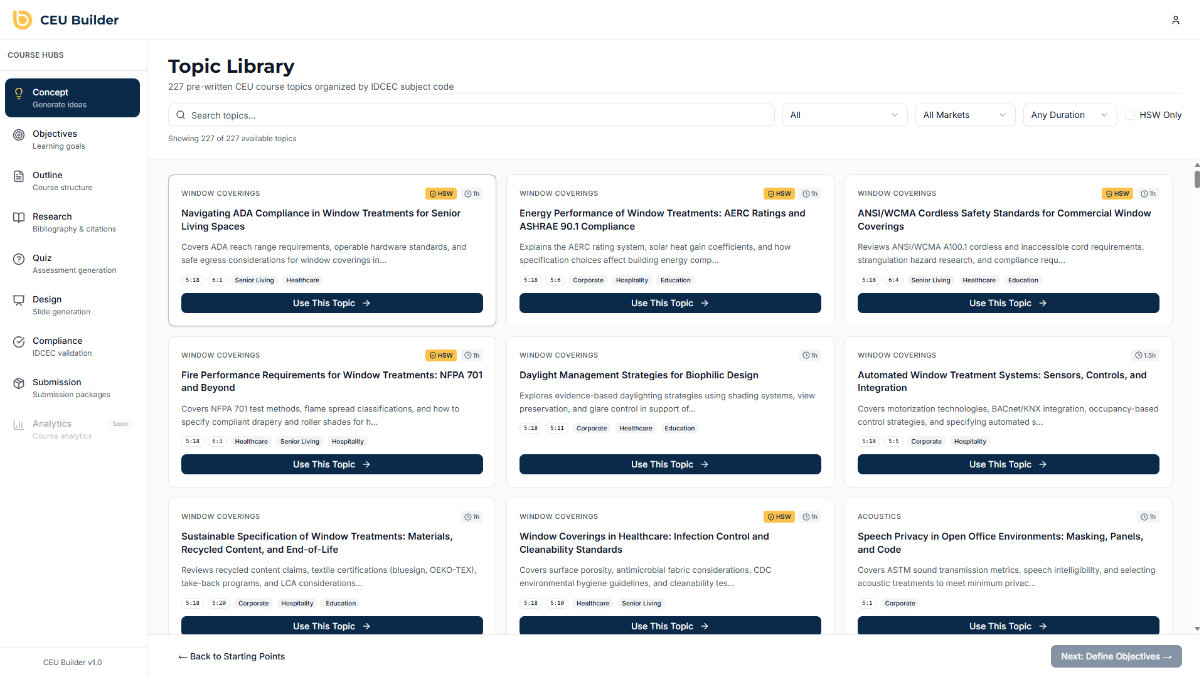
Our AI-powered platform simplifies every step—building compliant course outlines, managing regulatory documentation, and monitoring learner data—while you maintain full ownership of your data and provider status. With transparent pricing starting at $99/month and a guaranteed first-pass approval with our Done-For-You services, you can confidently own your continuing education future without getting trapped in costly vendor lock-in.
AI-Powered Course Builder and Provider Ownership Model empower manufacturers like you to streamline compliance and reduce administrative burden. Ready to boost your accreditation success rates and take full control of your educational programs? Visit CEU Builder now to learn more and get started.
Frequently Asked Questions
What initial documents are needed for course accreditation as a manufacturer?
You’ll need essential documents such as your business license, proof of professional liability insurance, and a detailed overview of your training procedures. Start by gathering these documents to demonstrate your compliance and readiness for the accreditation process.
How can AI tools help in building a compliant course outline?
AI tools can assist by generating structured course outlines based on your learning objectives and target audience. Use an AI-powered platform to input your content requirements, and within minutes, receive a comprehensive course outline aligned with industry standards.
What should I include in my course submission package for accreditation?
Your submission package must include a detailed course outline, instructor qualifications, learning objectives, and a bibliography. Organize these materials thoroughly to ensure they meet the formatting and documentation standards required for professional review.
How can I effectively respond to feedback after my accreditation submission?
Address feedback systematically by creating an action plan that corresponds to the reviewer’s comments and suggestions. Develop your response to ensure all points are covered and submit it promptly to show your commitment to compliance.
What metrics should I monitor after launching my accredited course?
Key metrics to monitor include completion rates, assessment scores, engagement levels, and participant feedback. Schedule monthly reviews of these metrics to identify trends and make necessary adjustments to enhance the learner experience.
Recommended
- Why Manufacturers Should Be Their Own IDCEC Provider – CEU Builder
- CEU Builder – Stop Paying Six Figures to Be Buried in a Directory
- How to Become an IDCEC Provider in 2026 (Step-by-Step Guide) – CEU Builder
- Industry Insights & Strategy – CEU Builder Blog
- Top 5 Product Liability Case Examples You Should Know
- Bedeutung zertifizierter Matten – Sicherheit im Fokus – Just Mats
