

Course Development Process Explained: Driving CEU Results
Every Marketing Director in the North American hospitality furniture sector faces the challenge of developing CEU programs that truly engage architects and encourage product specification. The course development process shapes how well your CEU content stands out, ensuring alignment between learning objectives, industry expectations, and accreditation standards. This guide highlights key development phases, collaborative team roles, and proven strategies to help your programs deliver professional value while amplifying your products’ presence in architectural projects.
Table of Contents
- What Is the Course Development Process?
- Types of Courses and Accreditation Paths
- Key Phases in CEU Course Creation
- Roles and Responsibilities in Development
- Common Risks and Costly Mistakes
- Optimizing for Specification and Market Impact
Key Takeaways
| Point | Details |
|---|---|
| Structured Course Development | The course development process follows a systematic approach using the ADDIE model to ensure effective educational content. |
| Collaboration is Key | Successful course creation requires teamwork among subject matter experts, instructional designers, and technical developers. |
| Accreditation Matters | Understanding specific accreditation requirements is essential for maximizing the value of continuing education courses. |
| Continuous Feedback | Implementing feedback loops during development helps maintain course relevance and effectiveness in meeting professional standards. |
What Is the Course Development Process?
The course development process is a strategic, systematic approach to creating effective educational content that meets both learning objectives and professional standards. At its core, this process involves carefully designed stages that transform complex information into engaging, meaningful learning experiences. Course development methodology requires meticulous planning and execution.
Primary stages of course development typically include several critical components:
- Course Design: Establishing clear learning objectives and outcomes
- Content Development: Creating comprehensive instructional materials
- Instructional Strategy: Designing engaging learning activities
- Assessment Creation: Developing evaluation mechanisms
- Review and Refinement: Iterative quality improvement processes
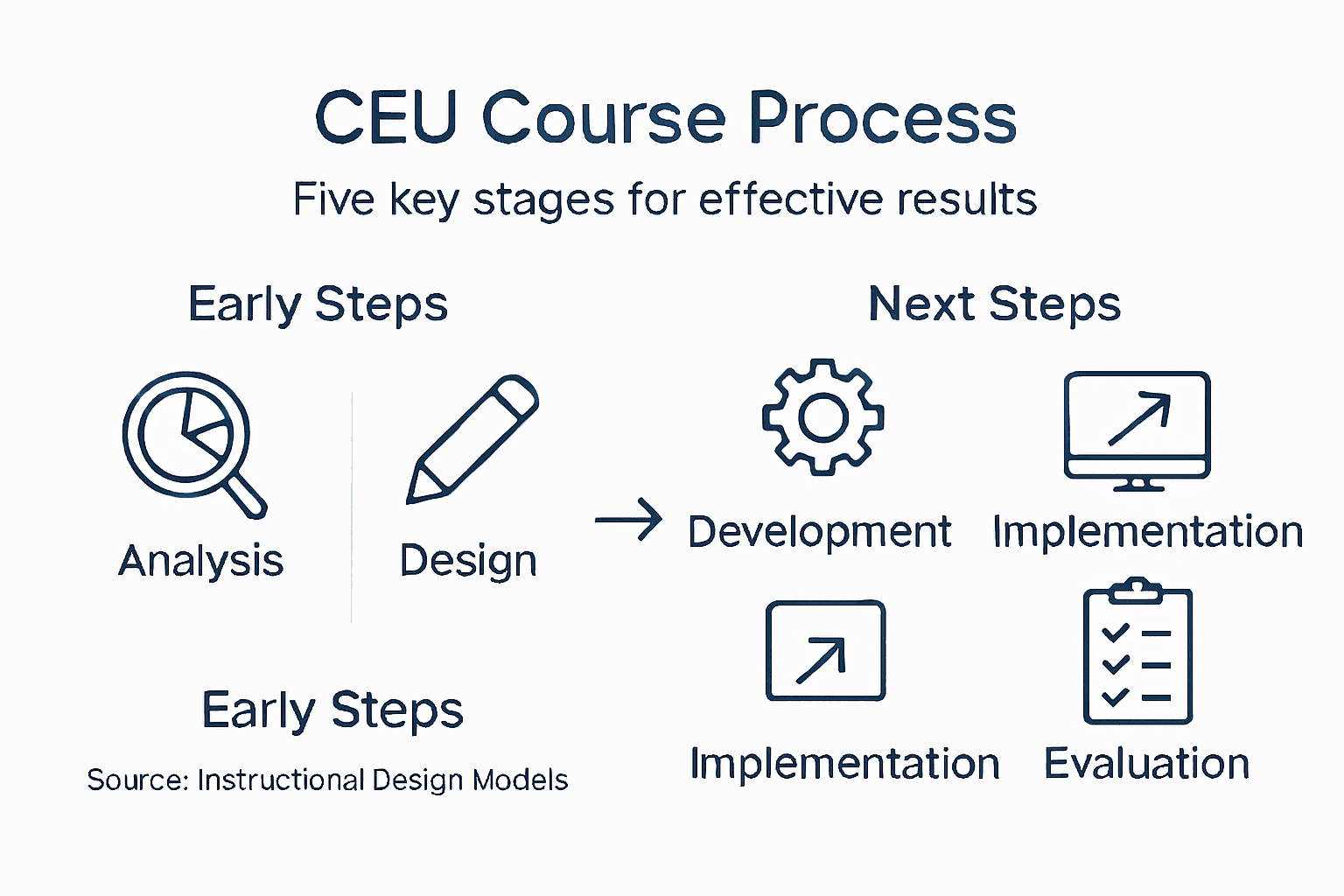
The typical course development workflow follows an iterative framework known as ADDIE (Analysis, Design, Development, Implementation, Evaluation). This approach ensures that each phase builds systematically upon the previous one, creating a cohesive learning experience. Comprehensive course development model emphasizes continuous refinement and strategic alignment between learning objectives and instructional content.
Successful course development requires collaboration between subject matter experts, instructional designers, and technical developers. Each team member contributes unique expertise to create a robust educational product that meets professional standards and learner needs. The process demands attention to detail, deep understanding of the subject matter, and a commitment to creating meaningful learning experiences.
Pro tip: Always validate your course development process by conducting pilot tests and gathering feedback from a representative sample of your target audience to ensure maximum effectiveness and engagement.
Types of Courses and Accreditation Paths
Continuing education courses encompass a diverse range of formats and accreditation paths designed to meet professional development needs across various industries. Continuing education units represent structured learning experiences that provide standardized recognition of professional training and skill enhancement.
The primary types of continuing education courses include:
- Professional Development Courses
- Technical skill enhancement
- Industry-specific compliance training
- Leadership and management programs
- Academic Continuing Education
- Graduate-level certificate programs
- Specialized research-based courses
- Interdisciplinary learning modules
- Certification Preparation Courses
- Professional licensure support
- Exam preparation and credentialing
- Skill validation programs
Accreditation paths for these courses vary depending on the specific professional domain and regulatory requirements. Accreditation bodies play a critical role in establishing quality standards, ensuring that educational content meets rigorous professional and academic benchmarks. Different industries maintain unique accreditation standards, ranging from healthcare and engineering to design and architecture.
Successful course providers must navigate complex accreditation landscapes, understanding the specific requirements of professional organizations, state licensing boards, and industry-specific credentialing bodies. This requires a comprehensive approach to course development that balances educational quality, professional relevance, and regulatory compliance.
Pro tip: Always verify the specific accreditation requirements for your target professional audience before developing continuing education courses to ensure maximum value and recognition.
Key Phases in CEU Course Creation
Continuing education course creation is a structured process that demands precision and strategic planning. Course development methodology involves multiple interconnected phases designed to ensure high-quality, impactful learning experiences.
The key phases in CEU course creation typically include:
- Information Collection Phase
- Identify target audience demographics
- Assess professional learning needs
- Define clear learning outcomes
- Design Phase
- Develop comprehensive learning objectives
- Create assessment strategies
- Structure course curriculum
- Content Development Phase
- Curate and develop instructional materials
- Design engaging learning activities
- Prepare supporting resources
- Review and Quality Assurance Phase
- Conduct content accuracy checks
- Test course accessibility
- Validate learning effectiveness
- Launch and Support Phase
- Implement course delivery mechanisms
- Provide learner support systems
- Collect and analyze participant feedback
Operational course development steps follow the comprehensive ADDIE model, which provides a systematic approach to creating educational content. This framework ensures that each phase builds upon the previous one, creating a cohesive and meaningful learning experience that meets professional development standards.
Here’s how the ADDIE model phases compare to the typical CEU course creation stages:
| ADDIE Phase | CEU Course Creation Stage | Key Focus |
|---|---|---|
| Analysis | Information Collection | Learner needs and goals |
| Design | Design | Learning objectives, structure |
| Development | Content Development | Instructional materials |
| Implementation | Launch and Support | Course delivery, support |
| Evaluation | Review and Quality Assurance | Effectiveness, improvements |
Successful CEU course creation requires collaboration between subject matter experts, instructional designers, and technical developers. Each team member brings unique expertise to transform complex professional knowledge into digestible, engaging educational content that drives meaningful skill development and meets rigorous accreditation requirements.
Pro tip: Integrate continuous feedback loops throughout the course development process to ensure ongoing relevance and effectiveness of your continuing education programs.
Roles and Responsibilities in Development
Developing continuing education courses requires a collaborative approach with clearly defined roles and responsibilities. Course development team dynamics involve multiple professionals working together to create high-quality educational experiences.
Key roles in the course development process include:
- Subject Matter Experts
- Provide deep content knowledge
- Define learning objectives
- Ensure technical accuracy of materials
- Instructional Designers
- Create pedagogical strategies
- Structure course content
- Develop engaging learning experiences
- Technical Developers
- Build course infrastructure
- Manage technological platforms
- Ensure accessibility and user experience
- Project Managers
- Coordinate team efforts
- Manage development timelines
- Oversee quality control processes
- Quality Assurance Specialists
- Review content accuracy
- Test course accessibility
- Validate learning outcomes
Collaborative course development approaches emphasize the importance of clear communication and defined responsibilities. Each team member brings unique expertise that contributes to creating comprehensive and effective continuing education programs.

Successful course development demands a synergistic approach where subject matter expertise, instructional design principles, and technological capabilities converge. This collaborative model ensures that courses not only meet professional standards but also deliver meaningful learning experiences that drive skill development and professional growth.
For quick review, here are roles and their primary contributions in course development:
| Role | Main Contribution | Example of Impact |
|---|---|---|
| Subject Matter Expert | Ensures content accuracy | Validates technical information |
| Instructional Designer | Shapes learning experience | Enhances learner engagement |
| Technical Developer | Manages digital delivery | Optimizes user interaction |
| Project Manager | Coordinates process | Keeps project on schedule |
| Quality Assurance | Verifies course quality | Detects accessibility issues |
Pro tip: Establish clear communication protocols and define specific deliverables for each team role to minimize overlap and maximize efficiency in course development.
Common Risks and Costly Mistakes
Continuing education course development is fraught with potential pitfalls that can derail even the most well-intentioned projects. Common course design mistakes can significantly undermine the effectiveness of educational content and waste valuable resources.
Most critical risks in course development include:
- Content Overload
- Overwhelming learners with excessive information
- Reducing comprehension and retention
- Diminishing learner engagement
- Unclear Learning Objectives
- Lack of specific, measurable goals
- Ambiguous performance expectations
- Difficulty in assessing learning outcomes
- Insufficient Stakeholder Alignment
- Misalignment with organizational needs
- Disconnection from professional requirements
- Poor understanding of target audience
- Technical Implementation Failures
- Inadequate platform accessibility
- Poor user experience design
- Compatibility issues across devices
- Feedback and Evaluation Gaps
- Minimal learner interaction mechanisms
- Lack of continuous improvement processes
- Incomplete performance tracking
Course development risk mitigation requires a proactive approach that anticipates potential challenges before they become critical problems. Successful course creators implement comprehensive strategies that address potential weaknesses across design, content, and technological dimensions.
Navigating these risks demands rigorous planning, continuous stakeholder communication, and a commitment to iterative improvement. Course developers must remain adaptable, regularly soliciting feedback and being willing to reconstruct elements that are not meeting educational or professional standards.
Pro tip: Conduct thorough pilot testing with a representative audience sample and integrate their feedback before final course deployment to identify and address potential development risks.
Optimizing for Specification and Market Impact
Continuing education courses represent strategic assets that must be meticulously designed to drive market relevance and professional specification. Course optimization strategies require a nuanced approach balancing institutional goals with learner expectations and industry demands.
Key optimization approaches include:
- Market Alignment
- Conduct comprehensive labor market research
- Map course content to current industry requirements
- Anticipate emerging professional skill needs
- Content Precision
- Develop targeted, actionable learning modules
- Create measurable performance outcomes
- Design curriculum with direct professional application
- Data-Driven Refinement
- Implement continuous feedback mechanisms
- Use statistical analysis for course improvement
- Track learner engagement and completion metrics
- Specification Enhancement
- Highlight unique course value propositions
- Demonstrate clear professional credentialing pathways
- Emphasize practical skill transferability
- Strategic Positioning
- Differentiate from competing educational offerings
- Build reputation as industry-focused knowledge provider
- Create compelling narrative around course expertise
Market impact optimization demands a sophisticated approach that goes beyond traditional educational development. Successful courses leverage predictive models and evidence-based methodologies to ensure sustained relevance and competitive positioning.
The most effective continuing education programs view course development as a dynamic, iterative process. They continuously adapt content, integrate emerging industry insights, and maintain a laser focus on delivering tangible professional value that directly supports learner career advancement.
Pro tip: Develop a comprehensive feedback loop that includes input from industry professionals, recent course graduates, and potential employers to maintain course relevance and specification potential.
Accelerate Your Course Development for Real CEU Success
If you are navigating the complex course development process and seeking to transform continuing education from a mere compliance task into a vibrant demand generation engine, CEU Builder offers proven solutions tailored for you. This article highlights key challenges such as aligning content with accreditation standards, optimizing learning objectives, and managing iterative review phases. Our approach solves these pain points by delivering rapid course turnaround with a perfect 100% first-pass IDCEC approval rate.
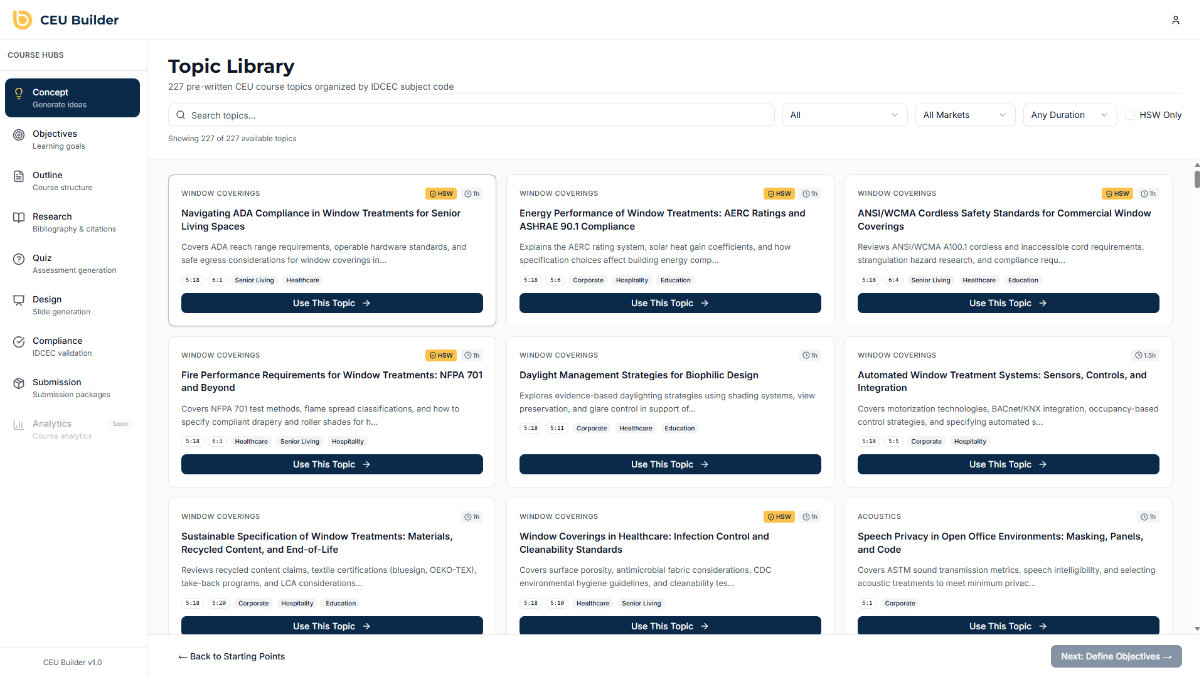
Explore how our streamlined processes and expert team help manufacturers create impactful CEU courses that resonate with architects and designers. Whether you need full-service support for seamless end-to-end development or powerful tools combined with training to take ownership internally, CEU Builder provides strategic, accreditation-compliant, and market-focused solutions. Visit Compliance & Accreditation – CEU Builder to learn about our specialized expertise. Ready to revolutionize your course creation? Start building your future at https://ceubuilder.com/ today and gain access to industry-leading intelligence and tools.
Discover how we integrate instructional design best practices and market insights from Marketplaces & Distribution – CEU Builder to ensure every course not only meets standards but drives specification results. Act now to shorten your development cycle and elevate your CEU offerings.
Frequently Asked Questions
What is the course development process?
The course development process is a systematic approach to creating effective educational content, involving design, content development, instructional strategy, assessment creation, and continuous review to meet learning objectives.
What is the ADDIE model in course development?
The ADDIE model stands for Analysis, Design, Development, Implementation, and Evaluation. It provides a structured framework that ensures each phase of course development builds on the previous one to create a cohesive learning experience.
How can I optimize my continuing education courses for market impact?
Optimizing continuing education courses involves conducting market research, aligning content with industry requirements, implementing data-driven refinement, and strategically differentiating your offering from competitors to enhance professional relevance.
What are some common mistakes to avoid in continuing education course development?
Common mistakes include content overload, unclear learning objectives, insufficient stakeholder alignment, technical implementation failures, and lack of feedback and evaluation mechanisms that hinder course effectiveness.
Recommended
