

Accreditation Management: Driving Successful CEU Programs
Finding new ways to shape architect decision-making can feel complex for even the most experienced Marketing Director in the hospitality manufacturing world. Accreditation is more than a credential—it is a dynamic, continuous improvement process recognized across North America for raising educational and industry standards. Understanding how IDCEC-accredited CEU courses enhance professional trust gives you a strategic edge, increasing architect engagement and directly influencing your brand’s place in future hospitality projects.
Table of Contents
- Accreditation Management Defined And Debunked
- Types Of Accreditation For Hospitality Businesses
- Key Steps In The Accreditation Process
- Critical IDCEC Requirements And Pitfalls
- Compliance Risks And Cost Implications
- Effective Accreditation Strategies For CEU Programs
Key Takeaways
| Point | Details |
|---|---|
| Accreditation is a Continuous Process | Accreditation goes beyond a one-time certification; it is a dynamic process focused on ongoing quality improvement and compliance with evolving standards. |
| Types of Accreditation Impact Credibility | Understanding the different types of accreditation, especially in hospitality, can enhance an institution’s credibility and competitive positioning in the market. |
| Documentation is Crucial | Comprehensive and meticulous documentation is vital for a successful accreditation process and helps facilitate smoother evaluations. |
| Strategic Financial Planning is Essential | Developing a thorough budget that anticipates all potential accreditation-related expenses can greatly reduce unforeseen costs and improve operational efficiency. |
Accreditation Management Defined and Debunked
Accreditation represents a critical quality assurance mechanism in professional and educational domains, ensuring organizations meet rigorous standards of excellence. At its core, accreditation is a comprehensive peer review process that validates an institution’s commitment to maintaining high-quality educational or professional standards.
The accreditation landscape involves several key components that organizations must understand:
- A collaborative assessment approach involving self-evaluation
- Systematic review by external experts
- Ongoing quality improvement requirements
- Periodic re-evaluation to maintain credentials
- Transparent standards applied consistently across institutions
Most professionals misunderstand accreditation as a one-time certification, when in reality, it represents a dynamic, continuous improvement process. Governmental recognition of accreditation bodies ensures that these evaluations maintain public accountability and academic integrity.
The process typically unfolds through a structured methodology that includes comprehensive documentation, on-site assessments, and thorough peer reviews. Accrediting agencies examine multiple dimensions of an organization, including:
- Institutional mission and strategic objectives
- Educational or professional delivery standards
- Resource allocation and management practices
- Student or participant outcomes
- Continuous improvement mechanisms
While many view accreditation as bureaucratic, it serves a critical function in maintaining professional standards and protecting stakeholder interests. By establishing clear benchmarks, accreditation creates a framework for consistent quality across diverse organizations.
Pro tip: When pursuing accreditation, invest time in detailed self-assessment and documentation to streamline the external review process.
Types of Accreditation for Hospitality Businesses
In the dynamic world of hospitality education and professional training, understanding the nuanced landscape of accreditation bodies is crucial for businesses seeking to establish credibility and excellence. Accreditation serves as a comprehensive validation mechanism that ensures institutions meet rigorous industry standards and deliver high-quality educational experiences.
The hospitality sector recognizes several key types of accreditation:
- Professional Program Accreditation: Validates specific hospitality management and educational programs
- Institutional Accreditation: Evaluates entire educational institutions’ overall quality and compliance
- Specialized Accreditation: Focuses on unique aspects like culinary arts, event management, or tourism studies
- International Accreditation: Provides global recognition and standardization
- Continuing Education Accreditation: Ensures ongoing professional development meets industry standards
The Accreditation Commission for Programs in Hospitality Administration plays a pivotal role in establishing academic benchmarks for hospitality education. These accreditation processes typically involve comprehensive assessments that examine multiple dimensions of an organization’s educational or training capabilities.
For hospitality businesses, accreditation offers several strategic advantages:
- Enhanced institutional credibility
- Improved student and professional confidence
- Alignment with industry best practices
- Access to broader professional networks
- Potential competitive differentiation
While navigating accreditation can seem complex, it represents a critical investment in maintaining high standards and demonstrating commitment to professional excellence. By understanding and pursuing appropriate accreditation pathways, hospitality businesses can differentiate themselves in an increasingly competitive marketplace.

Pro tip: Regularly review and update your accreditation status to ensure continued alignment with evolving industry standards and expectations.
Key Steps in the Accreditation Process
Navigating the accreditation process requires a strategic and methodical approach. Comprehensive review procedures demand careful preparation and meticulous documentation from organizations seeking professional recognition and credibility.
The accreditation journey typically involves several critical stages:
- Preliminary Self-Assessment: Evaluate current organizational capabilities
- Mission and Goal Articulation: Clearly define institutional objectives
- Comprehensive Documentation: Prepare detailed evidence of standards compliance
- Application Submission: Formally request accreditation review
- External Peer Evaluation: Undergo rigorous independent assessment
The review and evaluation stages represent the most intensive components of the accreditation process. These typically include:
- Initial eligibility verification
- Institutional self-study preparation
- On-site peer review visits
- Comprehensive standards assessment
- Formal accreditation commission review
Successful accreditation requires organizations to demonstrate not just current compliance, but a robust framework for continuous improvement. This means developing systems that can adapt to evolving industry standards and maintain high-quality performance over time.
Most accreditation bodies look for evidence of:
- Systematic quality management
- Clear performance metrics
- Transparent reporting mechanisms
- Ongoing professional development
- Commitment to institutional effectiveness
Pro tip: Document every step of your accreditation journey meticulously, creating a comprehensive narrative that showcases your organization’s commitment to excellence.
Critical IDCEC Requirements and Pitfalls
Successful IDCEC accreditation demands meticulous attention to detail and a comprehensive understanding of complex federal compliance standards. Organizations must navigate a challenging landscape of regulatory requirements that extend far beyond simple documentation.
The most critical IDCEC requirements encompass several key dimensions:
- Curriculum Integrity: Ensuring educational content meets professional standards
- Learning Objective Precision: Crafting clear, measurable learning outcomes
- Assessment Methodology: Developing robust evaluation mechanisms
- Instructor Qualifications: Demonstrating expert-level subject matter credentials
- Documentation Completeness: Maintaining thorough and transparent records
Common pitfalls that derail accreditation efforts include:
- Inadequate documentation of student learning outcomes
- Poorly defined instructional objectives
- Insufficient evidence of instructor expertise
- Inconsistent quality control mechanisms
- Lack of systematic performance tracking
The rigorous accreditation standards demand comprehensive compliance across multiple dimensions. Organizations must develop robust systems that not only meet current requirements but anticipate future regulatory changes.
Successful providers understand that accreditation is not a one-time achievement but a continuous process of quality management. This requires:
Here’s a comparison of common accreditation pitfalls and proactive solutions organizations can use to avoid them:
| Common Pitfall | Impact on Accreditation | Proactive Solution |
|---|---|---|
| Incomplete documentation | Delays or denies approval | Standardized record-keeping system |
| Vague learning objectives | Low assessment scores | Clear, measurable outcome mapping |
| Insufficient instructor expertise | Credibility reduced | Ongoing professional development |
| Inconsistent quality mechanisms | Risk of noncompliance | Routine internal audits |
| Limited performance tracking | Inability to demonstrate outcomes | Continuous data review process |
- Proactive compliance monitoring
- Regular internal audits
- Ongoing professional development
- Adaptive curriculum design
- Transparent reporting mechanisms
Pro tip: Create a dedicated compliance tracking system that documents every aspect of your educational program, ensuring you can demonstrate continuous improvement and regulatory alignment.
Compliance Risks and Cost Implications
Navigating the financial landscape of accreditation requires a strategic approach that balances comprehensive compliance with budget considerations. Accreditation fees vary significantly depending on organizational size, complexity, and specific industry requirements.
Key financial dimensions of the accreditation process include:
- Initial Application Costs: One-time fees for submission and review
- Site Visit Expenses: Direct and indirect costs associated with external evaluations
- Annual Maintenance Fees: Ongoing investments to maintain accreditation status
- Documentation Preparation: Internal resource allocation for comprehensive reporting
- Potential Remediation Expenses: Costs of addressing compliance gaps
Most organizations underestimate the comprehensive financial implications of accreditation. The true cost extends beyond direct fees and encompasses:
- Staff time dedicated to preparation
- Potential productivity disruptions
- Technology and system upgrades
- Professional development requirements
- Continuous improvement investments
Interestingly, strategic accreditation can actually reduce operational expenses by creating more efficient organizational systems. Accredited entities often experience:
The following table summarizes the financial implications and efficiency benefits of strategic accreditation:
| Financial Aspect | Cost Consideration | Long-Term Benefit |
|---|---|---|
| Initial application fees | Upfront monetary expense | Improved credibility and contracts |
| Staff preparation time | Temporary productivity disruption | Enhanced workflow efficiency |
| Maintenance and audit fees | Recurring budget allocation | Reduced insurance premiums |
| Technology upgrades | One-time infrastructure expense | Streamlined compliance processes |
| Quality investments | Continuous improvement costs | Stronger reputation and risk control |
- Reduced insurance premiums
- Enhanced contract opportunities
- Improved risk management
- Greater operational efficiency
- Strengthened organizational reputation
Pro tip: Develop a comprehensive three-year budget that anticipates all potential accreditation-related expenses, including both direct costs and indirect organizational investments.
Effective Accreditation Strategies for CEU Programs
Designing successful CEU programs requires a strategic approach that goes beyond basic compliance. Developing training offerings with accreditation demands a comprehensive understanding of stakeholder needs and rigorous educational standards.
Key strategic elements for successful CEU program development include:
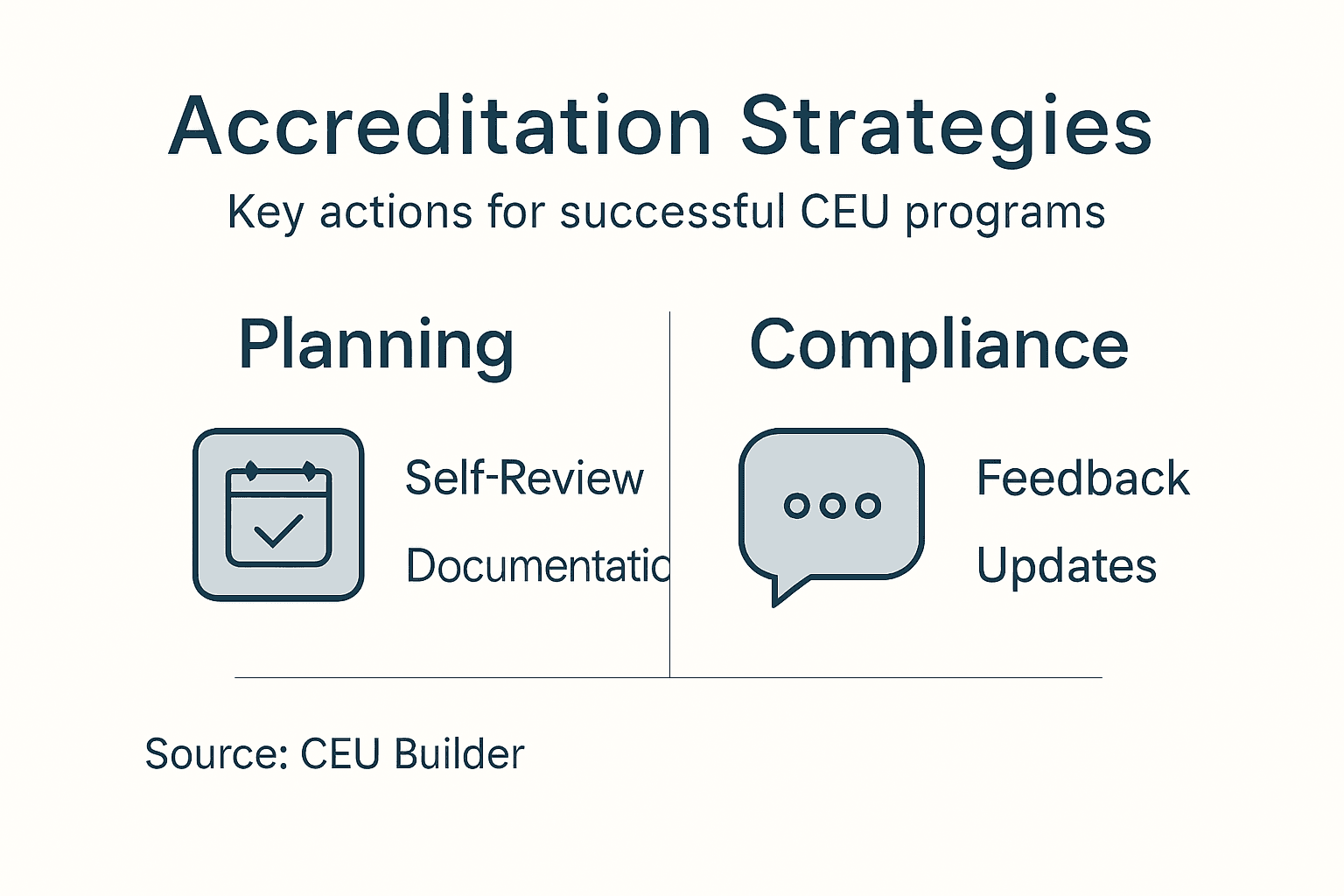
- Early Process Engagement: Proactively aligning with accreditation requirements
- Mission Alignment: Ensuring program objectives match organizational goals
- Stakeholder Collaboration: Involving industry experts in curriculum design
- Continuous Quality Improvement: Implementing systematic evaluation mechanisms
- Documentation Excellence: Maintaining comprehensive and transparent records
Successful CEU programs typically follow a structured approach:
- Conduct comprehensive needs assessment
- Design curriculum with clear learning objectives
- Develop robust assessment methodologies
- Create comprehensive documentation
- Implement ongoing quality monitoring
The strategic accreditation landscape emphasizes several critical dimensions of program development:
- Data-driven continuous improvement processes
- Transparent evaluation of learning outcomes
- Responsive adaptation to stakeholder feedback
- Rigorous adherence to industry standards
- Systematic performance tracking
Pro tip: Develop a comprehensive feedback loop that integrates learner insights, industry expert recommendations, and accreditation body guidelines into your CEU program design.
Transform Your Accreditation Management Into a Growth Engine
The article highlights the complexity and risk of accreditation management, especially for CEU programs that must navigate IDCEC requirements and avoid costly pitfalls. If you struggle with meticulous documentation, meeting evolving standards, or avoiding common accreditation errors, you are not alone. Hospitality manufacturers aiming to move from mere compliance to strategic market leadership face challenges like slow approval timelines, rejected course submissions, and missed opportunities to influence architects and designers through education.
At CEU Builder, we specialize in turning these challenges into competitive advantages. With a proven 100 percent first-pass accreditation approval rate, we eliminate the risk and uncertainty surrounding IDCEC submissions. We help you meet every critical detail of accreditation while positioning your CEU programs to drive specifications and grow revenue. Whether you prefer a fully managed solution or tools that empower your internal teams, our IDCEC compliance expertise and hospitality industry focus mean your CEU development is supported every step of the way.
Ready to elevate your accreditation management from a burdensome process to a business growth driver See how our Compliance & Accreditation – CEU Builder solutions simplify complexity and ensure success.
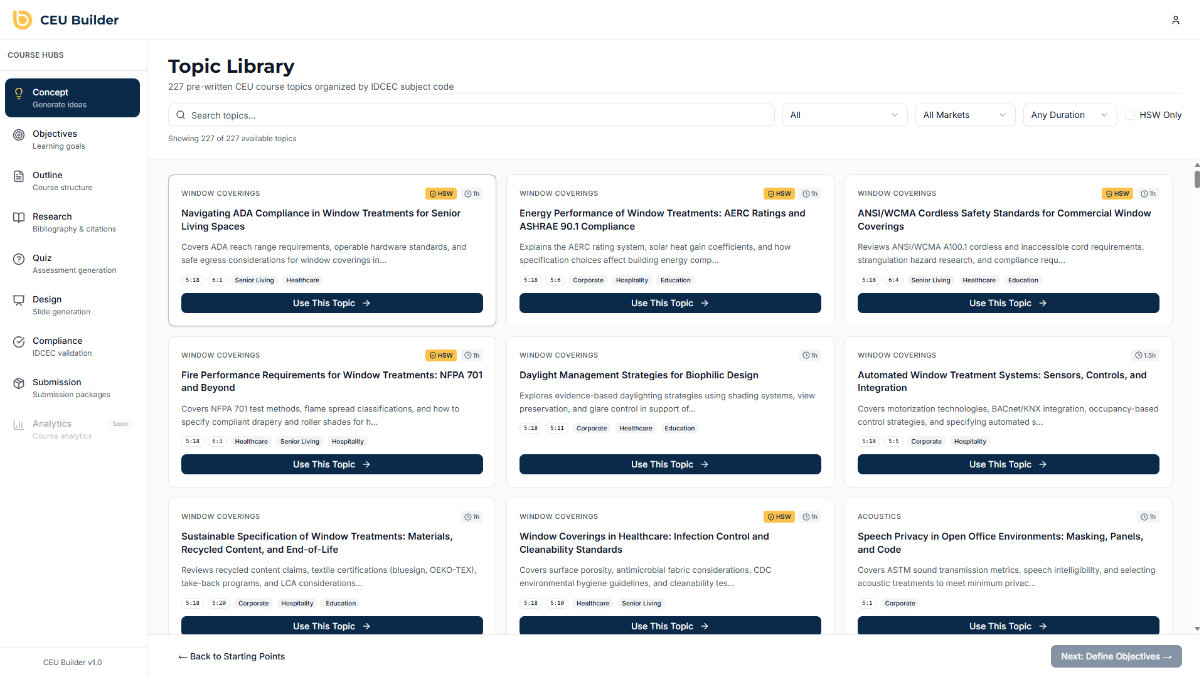
Don’t let accreditation hold back your CEU program. Visit CEU Builder today to explore strategic approaches in CEU Strategy & Best Practices – CEU Builder and unlock the full potential of continuing education for your brand.
Frequently Asked Questions
What are the key components of accreditation management for CEU programs?
Accreditation management for CEU programs involves early process engagement, ensuring mission alignment, collaborating with stakeholders, implementing continuous quality improvement, and maintaining documentation excellence.
How can organizations ensure compliance with accreditation standards?
Organizations can ensure compliance by conducting thorough self-assessments, articulating clear learning objectives, preparing comprehensive documentation, and developing robust evaluation methodologies.
What are common pitfalls in the accreditation process for CEU programs?
Common pitfalls include incomplete documentation, vague learning objectives, insufficient evidence of instructor expertise, inconsistent quality control mechanisms, and limited performance tracking, which can jeopardize accreditation efforts.
What financial implications should organizations consider when seeking accreditation?
Organizations should consider application fees, site visit expenses, annual maintenance fees, documentation preparation costs, and potential remediation expenses, as well as the long-term benefits of improved efficiency and reduced operational costs.
Recommended
