

Continuing Education: Driving Success for Manufacturers
Finding ways to strengthen architect relationships often feels like chasing a moving target for hospitality furniture manufacturers across North America. Staying current with evolving industry standards and shifting designer preferences makes professional development a top priority. By understanding how continuing professional development unlocks growth and builds trust, Marketing Directors can shape CEU strategies that speak directly to what architects need, ensuring deeper engagement and more frequent specifications.
Table of Contents
- Defining Continuing Education And Its Purposes
- Major Types And Industry-Specific Differences
- How Continuing Education Works In Practice
- Common Requirements And Accreditation Standards
- Risks, Pitfalls, And Strategic Value For Manufacturers
Key Takeaways
| Point | Details |
|---|---|
| Importance of Continuing Education | Continuing education is essential for professionals to maintain relevance and competency in rapidly changing industries. |
| Diverse Learning Formats | Various continuing education formats cater to different industry needs, ranging from technical certifications to online courses. |
| Accreditation Standards | Adhering to rigorous accreditation standards ensures the quality and efficacy of continuing education programs. |
| Strategic Workforce Development | Manufacturers must align continuing education with business goals to foster innovation and enhance operational efficiency. |
Defining Continuing Education and Its Purposes
Continuing education represents a structured approach for professionals to maintain, enhance, and expand their knowledge and skills throughout their career journey. Unlike traditional academic learning confined to specific timeframes, continuing professional development (CPD) provides an ongoing learning pathway that adapts to evolving industry demands and technological advancements.
At its core, continuing education serves multiple critical purposes for professionals across various sectors:
- Maintaining professional competency and relevance in rapidly changing industries
- Ensuring compliance with licensing and regulatory requirements
- Expanding technical skills and knowledge base
- Supporting career advancement and personal growth
- Facilitating organizational innovation and workforce adaptability
The landscape of continuing professional development encompasses both formal and informal learning activities designed to help professionals continuously upgrade their capabilities. These activities might include structured training programs, workshops, online courses, conferences, self-directed learning, and industry certifications.
For manufacturers specifically, continuing education plays a pivotal role in addressing skill gaps, maintaining technological currency, and ensuring workforce readiness. By investing in ongoing learning initiatives, companies can transform their workforce from static resources into dynamic, adaptable teams capable of driving organizational innovation.
Pro Tip: Develop a systematic approach to tracking and managing continuing education credits, using digital platforms that can integrate learning records with professional development goals.
Major Types and Industry-Specific Differences
Continuing education encompasses a diverse range of learning formats designed to meet the unique needs of different professional sectors. Types of continuing education vary widely, reflecting the specialized requirements of industries and individual career development goals.
The primary categories of continuing education include:
- Post-Secondary Degree Programs: Advanced academic courses for professional advancement
- Professional Certifications: Industry-specific credentials validating specialized skills
- Independent Studies: Self-directed learning modules and research opportunities
- Professional Events: Conferences, seminars, and workshops
- On-the-Job Training: Practical skill development within workplace settings
Manufacturing and technical fields demonstrate particularly unique continuing education characteristics. These industries often prioritize hands-on training and technical certifications that directly align with technological advancements and operational requirements. Unlike corporate sectors that might emphasize theoretical workshops, manufacturers focus on practical skill acquisition and technical competency.
Here’s a comparison of continuing education formats across professional sectors:
| Format Type | Manufacturing Focus | Corporate Sector Focus | Accessibility |
|---|---|---|---|
| Technical Certification | Emphasized for up-to-date skills | Optional or supplemental | Moderate |
| Workshops & Seminars | Hands-on, operational | Theory-driven, strategic | High |
| Online Courses | Targeted, skill-specific | Broad personal development | Very High |
| On-the-Job Training | Core workforce strategy | Supplemental learning | High |
The evolving landscape of continuing education has been significantly transformed by digital learning platforms. Online learning options such as Massive Open Online Courses (MOOCs) and industry-specific digital training programs have made professional development more accessible and flexible, allowing professionals to upgrade their skills without disrupting their work schedules.
Pro Tip: Develop a personalized continuing education roadmap that aligns your learning objectives with emerging industry technologies and skill requirements.
How Continuing Education Works in Practice
Continuing Professional Development (CPD) functions as a dynamic, iterative process that enables professionals to systematically enhance their skills and knowledge. Continuous learning strategies involve a structured approach of identifying learning needs, engaging in targeted development activities, and reflecting on professional growth.
The practical implementation of continuing education typically follows a strategic framework:
- Needs Assessment: Identifying skill gaps and learning objectives
- Learning Planning: Developing a personalized development roadmap
- Active Learning: Participating in formal and informal educational experiences
- Implementation: Applying new knowledge in professional contexts
- Reflection and Evaluation: Analyzing learning outcomes and impact
For manufacturers, continuing education works through a comprehensive approach that integrates workplace learning, formal instruction, and technological adaptation. This approach ensures that professionals remain current with emerging technologies, industry standards, and operational best practices. By creating a systematic learning environment, organizations can transform continuing education from a compliance requirement into a strategic competitive advantage.

Digital platforms and innovative learning technologies have revolutionized how professionals engage with continuing education. Interactive online modules, virtual workshops, and microlearning approaches now enable just-in-time skill development that can be seamlessly integrated into existing work schedules, making professional growth more accessible and flexible than ever before.
Pro Tip: Create a personal learning portfolio that documents your professional development journey, tracking skills acquired and demonstrating continuous improvement to current and potential employers.
Common Requirements and Accreditation Standards
Continuing education programs must adhere to rigorous accreditation standards that ensure educational quality, professional integrity, and meaningful learning outcomes. These standards establish comprehensive guidelines that protect the interests of learners, institutions, and industries by maintaining consistent educational benchmarks.
Key elements of continuing education accreditation typically include:
- Content Validity: Ensuring educational materials are current, accurate, and professionally relevant
- Instructional Design: Developing structured learning experiences with clear objectives
- Assessment Mechanisms: Creating robust methods to evaluate learning comprehension
- Instructor Qualifications: Verifying subject matter expertise and teaching competence
- Ethical Standards: Maintaining independence from commercial bias and conflicts of interest
For manufacturers, accreditation requirements often focus on technical precision, industry-specific knowledge, and practical skill development. These standards go beyond traditional academic metrics, emphasizing real-world application and technological competency. Professional bodies carefully evaluate continuing education programs to ensure they deliver tangible value to participants and their respective industries.
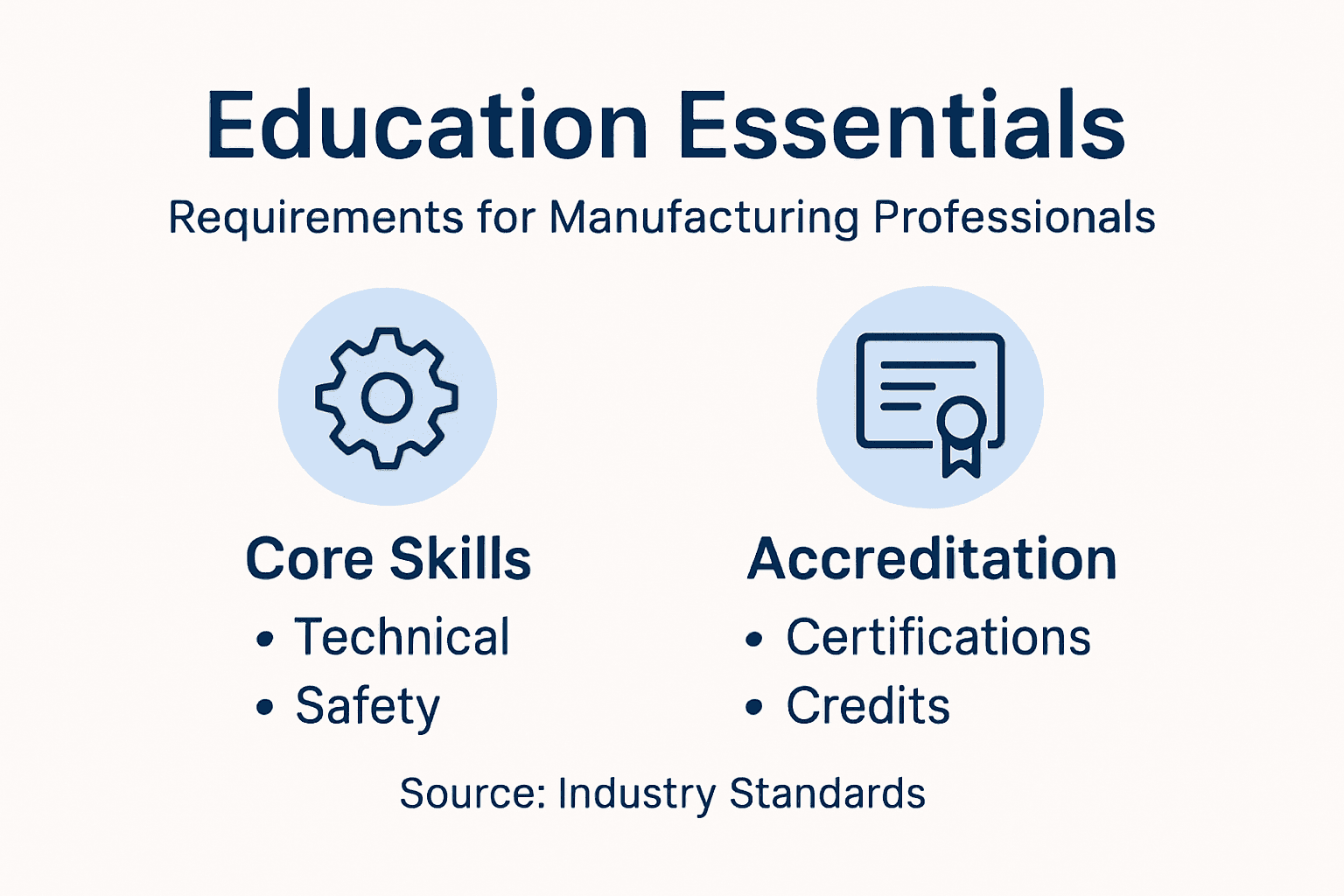
The table below summarizes key accreditation standards and their impacts:
| Accreditation Element | Purpose | Impact on Participants | Industry Example |
|---|---|---|---|
| Content Validity | Ensures up-to-date knowledge | Reliable skill growth | Technical fields |
| Instructor Qualifications | Verifies teaching competence | Trusted learning outcomes | IT sector |
| Assessment Mechanisms | Confirms comprehension | Measurable progress | Healthcare |
| Ethical Standards | Prevents commercial bias | Protects learner interests | Financial services |
Modern accreditation processes increasingly incorporate technology-driven assessment tools, allowing for more dynamic and comprehensive evaluation of learning outcomes. By implementing sophisticated tracking and measurement systems, accreditation bodies can provide more nuanced insights into educational effectiveness and professional skill development.
Pro Tip: Develop a systematic documentation process that tracks your continuing education activities, including detailed records of course content, learning objectives, and professional competencies gained.
Risks, Pitfalls, and Strategic Value for Manufacturers
Manufacturers face significant challenges in implementing continuing education programs, with strategic risks and opportunities deeply impacting organizational competitiveness. Understanding these dynamics is crucial for developing effective workforce development strategies.
Key risks and potential pitfalls in continuing education include:
- Technological Obsolescence: Failure to keep pace with rapidly evolving manufacturing technologies
- Resource Misallocation: Investing in training programs with limited practical relevance
- Skills Mismatch: Creating educational content that does not align with actual workforce needs
- Compliance Challenges: Navigating complex regulatory requirements
- Return on Investment Uncertainty: Difficulty measuring direct educational impact
The strategic value of continuing education extends far beyond simple skill enhancement. Manufacturers who effectively implement comprehensive learning programs can transform workforce development from a compliance requirement into a competitive advantage. By creating adaptive learning ecosystems, organizations can foster innovation, improve operational efficiency, and build a more resilient workforce capable of navigating complex technological transitions.
Successful continuing education strategies require a holistic approach that integrates organizational culture, targeted learning interventions, and measurable performance outcomes. This means moving beyond traditional training models to create dynamic, responsive educational frameworks that continuously evolve with industry demands.
Pro Tip: Develop a comprehensive skills mapping framework that continuously tracks emerging technological trends and aligns learning objectives with strategic organizational goals.
Unlock the Full Potential of Continuing Education for Manufacturers
Manufacturers face the challenge of transforming continuing education from a mandatory task into a powerful driver of competitive advantage. The article highlights critical pain points like overcoming accreditation hurdles, aligning learning with real industry needs, and converting educational content into tangible specification wins. If you want to close skill gaps, position your brand as an expert, and accelerate specification opportunities, then strategic continuing education is your solution.
At CEU Builder, we specialize in delivering IDCEC-accredited education programs that go beyond compliance. Our proven approach combines fast turnaround, zero accreditation failure, and deeply researched course content designed around what architects and designers actually seek. Whether you need a fully managed course build or a robust platform to create your own, our offerings address the unique demands manufacturing professionals face today. Discover how your CEU strategy can generate measurable revenue gains and lasting influence in the design professional community.
Explore trusted insights on Compliance & Accreditation – CEU Builder and learn proven CEU Strategy & Best Practices – CEU Builder to turn education into your strongest specification tool. Visit CEU Builder now to take the first step toward gaining the educational authority your manufacturing business deserves.
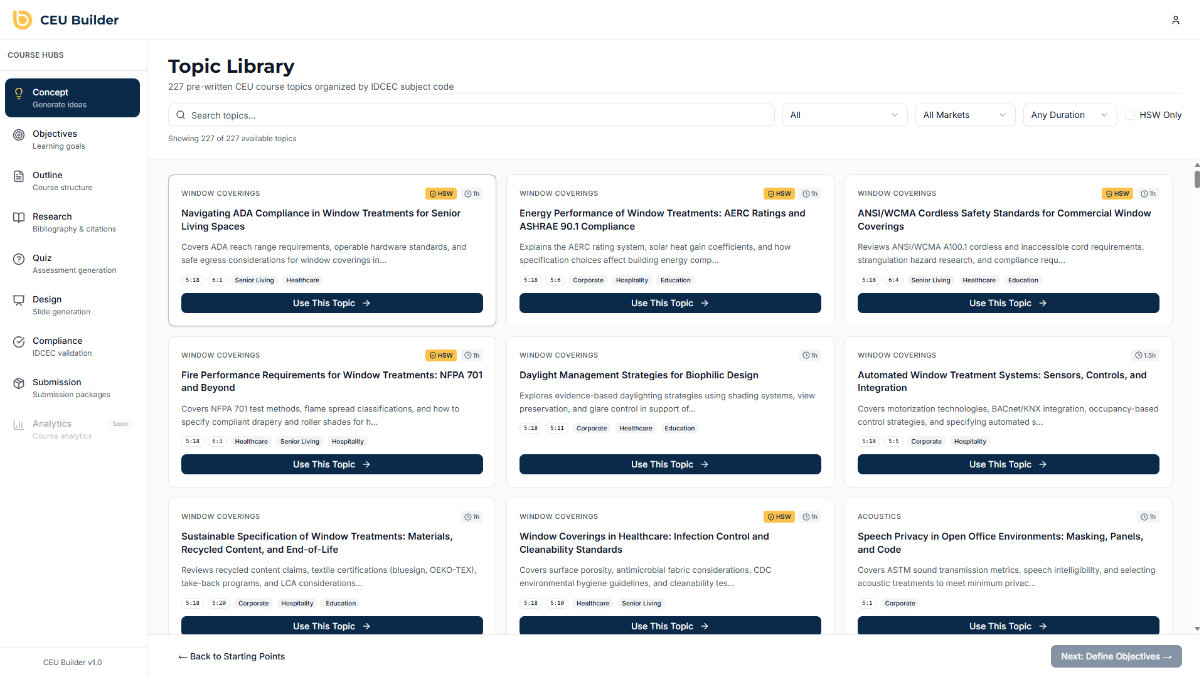
Ready to transform continuing education into an engine for specification success Start by connecting with CEU Builder’s expert team today and discover how fast, reliable accreditation can lead to increased market share and sustained growth.
Frequently Asked Questions
What is continuing education, and why is it important for manufacturers?
Continuing education is a structured approach for professionals to enhance and expand their knowledge and skills throughout their careers. For manufacturers, it is crucial for maintaining technological competency, addressing skill gaps, and ensuring workforce readiness in a rapidly evolving industry.
What types of continuing education formats are available for professionals in the manufacturing sector?
Manufacturing professionals can engage in various continuing education formats, including technical certifications, workshops, on-the-job training, online courses, and independent studies, all designed to address specific industry needs and skill requirements.
How does continuing education benefit individual career advancement?
Continuing education allows individuals to maintain professional competency, expand their technical skills, comply with regulatory requirements, and ultimately support their personal and career growth, making them more competitive in the job market.
What are the common accreditation standards for continuing education programs?
Accreditation standards for continuing education programs ensure educational quality and include elements like content validity, instructional design, assessment mechanisms, instructor qualifications, and ethical standards, all aimed at providing meaningful learning outcomes.
Recommended
