

From topic to submission-ready in under six hours: A look at the process

For most hospitality and commercial interior product manufacturers, the creation of a new CEU course is a project that looms on the marketing calendar for months. It usually starts with a realization that the existing library is stale, followed by a series of meetings with product managers, and eventually ends with a $15,000 invoice from an external agency. By the time the course is actually ready for submission to the IDCEC or AIA, three to six months have passed. The momentum of the product launch it was meant to support has often evaporated.
This traditional timeline is not a requirement of the accreditation bodies. It is a byproduct of a fragmented process, excessive billable hours from agencies, and a lack of standardized internal systems. When you break down what actually goes into a high-quality, compliant CEU course, the work does not require weeks of contemplation. It requires a structured flow of information from the experts to the template.
At CEU Builder, we have refined a process that allows a marketing or sales leader to take a raw topic and turn it into a submission-ready package in under six hours. This is not about cutting corners or sacrificing educational integrity. It is about eliminating the "waiting for feedback" loops that consume 90 percent of the traditional development cycle.
The traditional timeline bottleneck
To understand how to move fast, you must first acknowledge why the current system is slow. Most manufacturers rely on an agency model where the agency knows a lot about marketing but very little about the technical specifics of flooring, textiles, or architectural acoustics. This leads to a constant back-and-forth where the manufacturer's subject matter expert (SME) must correct technical errors, only for the agency to return a week later with a revised draft that still misses the mark on compliance.
Furthermore, the "research phase" in many academic or agency environments is treated as an open-ended exploration. While research is critical, manufacturers already possess the core knowledge needed for a CEU. You know your product, the science behind it, and the problems it solves for designers. The delay isn't a lack of information, it is a lack of a delivery mechanism.

Visual description: A pencil sketch illustration showing a series of interconnected gears labeled "Knowledge," "Structure," and "Submission," with a graphite finish and a selective yellow accent on the "Submission" gear.
Hour 1: Information extraction and the SME brain dump
The first hour of a six-hour sprint is dedicated to gathering raw intelligence. The mistake most teams make is trying to write and research simultaneously. Instead, the focus should be on a concentrated "brain dump" from the person who knows the topic best. This is usually a product manager or a senior technical lead.
During this hour, you do not worry about slide design or perfect grammar. You focus on four core pillars:
- The specific problem the designer faces (the "Why").
- The technical or scientific principles involved (the "How").
- The industry standards or codes that apply (the "Rules").
- The practical application in a commercial or hospitality environment (the "Result").
By documenting these four pillars in a single hour of focused conversation or dictation, you generate 80 percent of the course content. The goal is to move the knowledge out of the expert's head and into a structured outline. This eliminates the need for an agency to spend twenty hours "discovering" what your company already knows.
Hour 2: Structural alignment and compliance mapping
Once the raw information is gathered, the second hour is spent mapping that content to the specific requirements of accreditation bodies like the IDCEC or AIA. This is where many courses fail. If you do not align your content with the IDCEC subject index early on, you will spend hours later trying to retroactively justify why your course is educational rather than promotional.
In this phase, we define the four mandatory learning objectives. These objectives must be specific, measurable, and focused on the learner's benefit. For example, instead of saying "Learn about our new tile," the objective becomes "Analyze the slip-resistance requirements for high-traffic hospitality lobbies according to ADA standards."
This structural mapping ensures that every minute of the course serves a compliance purpose. If a piece of information doesn't support a learning objective, it is removed. This keeps the course lean, professional, and much more likely to pass the first round of review. You can find more on navigating these requirements at our compliance and accreditation resource page.
Hour 3: Narrative development and drafting
With a solid structure and raw data in hand, the third hour is for drafting the actual narrative. This is where the "script" or the slide notes are written. Because the structure was defined in hour two, the writing becomes a matter of connecting the dots rather than staring at a blank page.
A common pitfall is over-complicating the language. Designers and architects are busy people. They value clarity and technical depth over marketing fluff. During this hour, the focus is on creating a direct, educational tone. We avoid "game-changer" language and instead focus on data, case studies, and code references.
The narrative should flow logically from the problem to the solution. If the first two hours were done correctly, this drafting phase is essentially an exercise in refinement. You are taking the "brain dump" and polishing it into a professional educational script.
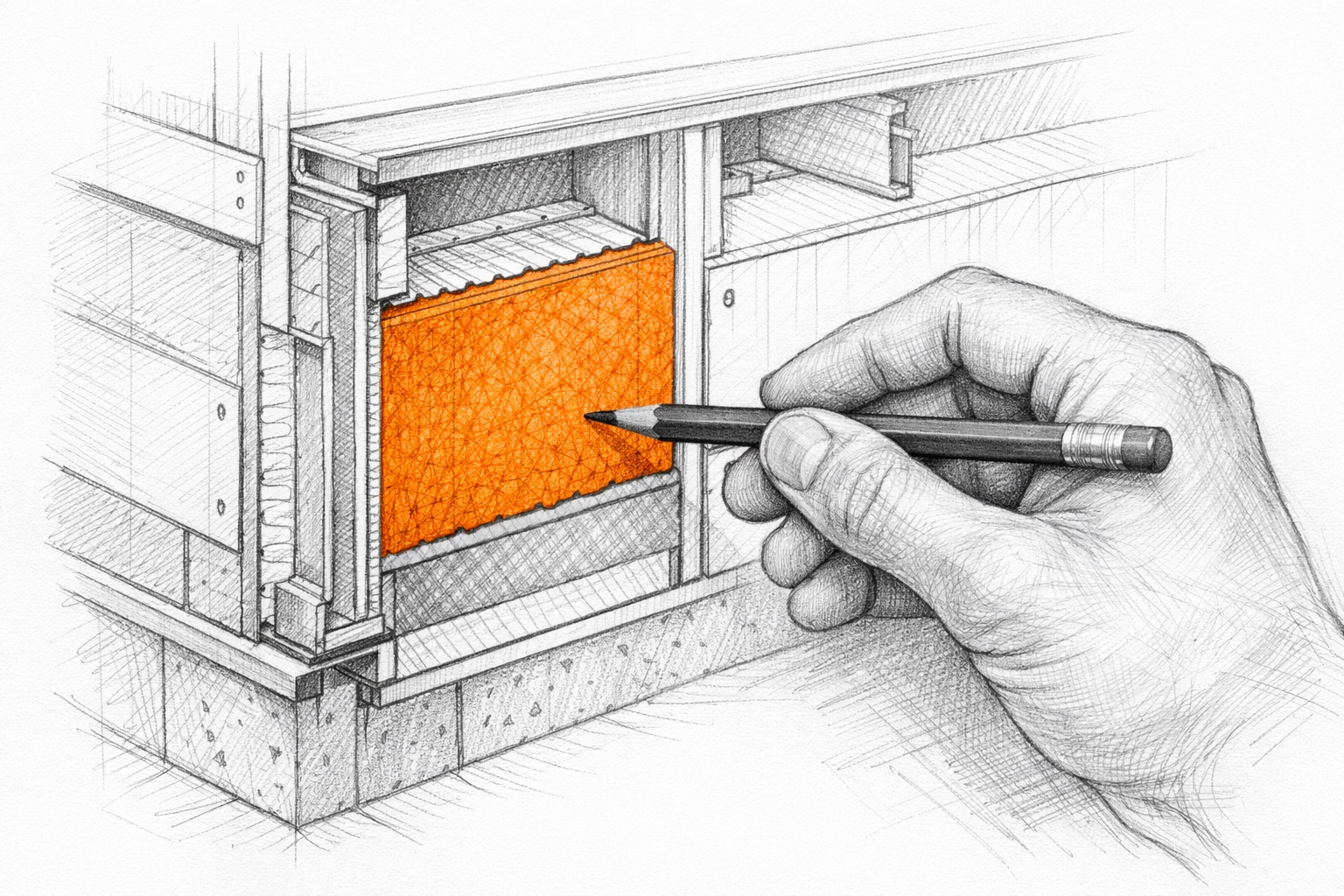
Visual description: An architectural linework sketch of a drafting table with a single graphite pencil, featuring a selective blue accent on a blueprint representing the course outline.
Hour 4: Visual integration and slide construction
The fourth hour is dedicated to the visual component. In the A&D community, visuals are not just decoration; they are a primary method of communication. However, you do not need a graphic design degree to create an effective CEU deck if you have the right assets.
Since the narrative is already written, the visual phase involves selecting the right diagrams, photography, and technical drawings to support the text. The most effective CEU visuals are those that illustrate a point: a cross-section of a wall assembly, a chart showing acoustic decibel reduction, or a side-by-side comparison of material durability.
At this stage, we utilize standardized templates that are pre-formatted for compliance (proper font sizes, required intro/outro slides, and placeholder spots for mandatory accreditation logos). This prevents the "design creep" that often adds days to a project when working with an outside agency.
Hour 5: Quality assurance and compliance check
The fifth hour is the "red pen" phase. This is an internal review focused strictly on two things: technical accuracy and non-promotional compliance.
The IDCEC is very strict about proprietary names and "salesy" language. During this hour, we scan the deck for any mention of brand names within the educational content. We ensure that the product photos are generic enough to be educational or are clearly labeled as "examples of type" rather than "buy this product."
This is also the time to verify that all citations are current. If you are referencing a 2021 building code, but the 2024 version is now in effect, your course could be rejected or seen as outdated by sophisticated architects. This hour of rigorous checking is what prevents the three-week delay of a rejected submission. For a deeper look into common rejection reasons, visit our strategy and best practices section.
Hour 6: Final polish and submission preparation
The final hour is administrative. This involves gathering all the necessary components for the submission portal:
- The final slide deck (usually in PDF format).
- The 10-question quiz (formatted correctly with an answer key).
- The course description and speaker biography.
- The learning objectives and subject codes.
By the end of this hour, the entire package is zipped and ready to be uploaded to the IDCEC or AIA portal. What used to be a fragmented pile of emails, PowerPoint files, and Word documents is now a professional, cohesive submission.
Visual description: A pencil sketch of a stopwatch with graphite shading, where the clock face shows the final hour highlighted in a selective green accent.
The impact of the six-hour workflow
When you condense the development time from months to hours, the math for your marketing department changes. Instead of producing one course per year and hoping it stays relevant, you can produce a new course every quarter.
This speed allows you to respond to market shifts in real time. If a new sustainability regulation is passed in California, you can have a CEU addressing it in the hands of your sales reps by the end of the week. If a competitor launches a product with a specific flaw, you can create an educational course on "avoiding common failures in [category]" that positions your brand as the expert solution.
Agility is a competitive advantage. In the hospitality and commercial interiors world, being the first to educate the market on a new trend or regulation earns you the "expert" status that leads to specifications. When you own the process and can execute quickly, you stop being a tenant of an agency's schedule and start being a leader in the A&D channel.
Why speed does not mean lower quality
There is a common misconception that if a project is completed quickly, it must be "rushed." In the context of CEU development, the opposite is often true. A six-hour concentrated sprint keeps the narrative tight and the focus sharp. When a project drags on for six months, it often suffers from "design by committee," where too many voices dilute the educational message and add unnecessary fluff.
The six-hour process works because it relies on a system rather than a series of ad-hoc decisions. By using a platform like CEU Builder, you are operating within a framework designed for the A&D industry. You aren't reinventing the wheel; you are just putting the right tires on it.
Moving away from agency dependency
The primary reason most manufacturers cannot move this fast is because they do not own their process. They are dependent on an agency's creative director, an agency's copywriter, and an agency's project manager. Each of those people is a gatekeeper that adds time and cost to the project.
By bringing the "assembly" of the CEU in-house while using a structured system, you remove those gatekeepers. The marketing director or the sales lead regains control of the timeline. This shift from "renting" expertise to "owning" a process is the foundation of a modern, high-growth A&D strategy.
If you are tired of waiting months for content that should take days, it is time to look at your process. The information is already in your building. The experts are already on your payroll. All you are missing is the framework to turn that knowledge into an accredited asset in a single workday.
Visual description: A monochromatic pencil sketch of a modern architectural building with clean linework, featuring a selective orange accent on the windows to represent the "light" of knowledge being shared.
Take the first step toward ownership
The ability to go from a topic to a submission-ready course in under six hours is not a dream, it is a standard operational procedure for brands that use CEU Builder. We provide the tools, the templates, and the compliance framework that allow your team to execute at speed.
Stop letting your CEU strategy be dictated by agency timelines and $15,000 invoices. Start treating your educational content as the agile sales tool it was meant to be.
To see exactly how this process can work for your specific product category, visit ceubuilderhq.com or book a demo today. We will show you how to take back control of your accreditation process and build a library that keeps you at the top of the specifier's list.
