

How to Optimize Continuing Education for CEU Success

Most American manufacturers report that continuing education gaps can slow product adoption in construction and design. Industry leaders know that bridging these divides is not just about compliance—it is about meeting the demands of architects and designers in a rapidly changing market. By rethinking how you assess, develop, and deliver CE content, your programs can become powerful drivers of brand preference and lasting connections with the professional community.
Table of Contents
- Step 1: Assess Current CE Offerings And Compliance Needs
- Step 2: Streamline Course Development And Approval Workflows
- Step 3: Customize Content To Match Brand And Audience
- Step 4: Integrate Monitoring And Reporting Processes
- Step 5: Verify Outcomes And Refine CE Strategies
Quick Summary
| Key Insight | Explanation |
|---|---|
| 1. Conduct a thorough audit of CE offerings | Evaluate current courses against compliance needs and industry standards for relevance and effectiveness. |
| 2. Streamline course development workflows | Implement digital tools to enhance collaboration and speed up the course creation process while ensuring compliance. |
| 3. Customize content to reflect brand identity | Align course materials with your organization’s values and target audience needs for more engaging learning experiences. |
| 4. Establish robust monitoring and reporting systems | Utilize data-driven metrics to track course performance and learner outcomes to facilitate ongoing improvements. |
| 5. Implement continuous outcome verification | Develop a comprehensive framework to assess educational effectiveness and adapt to emerging demands and insights. |
Step 1: Assess current CE offerings and compliance needs
Successfully optimizing continuing education starts with a comprehensive evaluation of your existing training landscape. Your goal is to conduct a strategic audit of current course offerings, identifying gaps and alignment opportunities with industry compliance requirements.
Begin by mapping out your current continuing education portfolio, examining each course through the lens of industry compliance trends and institutional requirements. This means systematically reviewing course content, learning objectives, delivery methods, and accreditation status. Look for courses that may have become outdated or no longer meet current professional standards. Pay special attention to credential requirements specific to your industry sector.
A thorough assessment involves more than just cataloging existing courses. You need to analyze participation rates, learner feedback, and alignment with workforce development needs. Compare your current offerings against emerging market demands and professional development expectations. This might mean conducting surveys with past participants, consulting industry associations, and tracking shifts in professional certification requirements.
Pro Tip: Create a dynamic tracking spreadsheet that allows you to continuously monitor course performance, compliance indicators, and market relevance in real time.
Here’s a summary of key elements to include when auditing continuing education (CE) offerings:
| Audit Area | What to Examine | Why It Matters |
|---|---|---|
| Course Content | Relevance, accuracy, update cycle | Ensures alignment with current industry standards |
| Learning Objectives | Clarity, measurable outcomes | Supports effective skill development |
| Delivery Methods | Online, in-person, hybrid formats | Matches learner preferences and accessibility |
| Accreditation Status | Validity, renewal timelines | Maintains compliance and learner confidence |
| Participation Rates | Enrollment, completion trends | Identifies program strengths and gaps |
| Learner Feedback | Surveys, qualitative input | Informs targeted improvements |
| Workforce Needs | Industry trends, job requirements | Guides future course development |
Step 2: Streamline course development and approval workflows
Transforming your continuing education program requires creating an efficient and responsive course development process that minimizes administrative friction and maximizes content quality. Your objective is to design a workflow that accelerates course creation while maintaining rigorous academic and compliance standards.

Start by implementing digital workflow automation strategies that centralize and simplify the course development pipeline. This means establishing clear checkpoints and digital review mechanisms that allow rapid collaboration between subject matter experts, curriculum designers, and compliance reviewers. Each proposed course should move through standardized stages tracking content relevance, learning objectives, instructional design quality, and alignment with professional credentialing requirements.
A successful streamlined workflow demands cross functional engagement and transparent communication protocols. Develop a structured review process that includes input from industry professionals, accreditation experts, and internal stakeholders. Document each stage of course development with clear expectations, time frames, and accountability measures. Integrate feedback loops that allow quick revisions and continuous improvement of educational content without getting bogged down in bureaucratic processes.
Pro Tip: Create a digital dashboard that provides real time tracking of course development stages and highlights potential bottlenecks before they become significant delays.
Step 3: Customize content to match brand and audience
Designing continuing education courses that truly resonate requires more than generic content creation. Your mission is to develop learning experiences that not only meet professional standards but also reflect your unique brand identity and speak directly to your target audience’s specific needs and expectations.
Begin by developing a comprehensive brand identity strategy that goes beyond visual design. This means crafting a consistent narrative and communication approach that aligns with your organization’s core values and professional positioning. Analyze your target audience demographics, learning preferences, and professional development goals to create content that feels personalized and immediately relevant. Consider factors like industry sector, career stage, technical complexity, and preferred learning modalities when designing your course materials.
Successful content customization demands a strategic blend of institutional expertise and learner centered design. Integrate your brand voice into every aspect of course development including visual aesthetics, instructional language, case studies, and multimedia elements. Develop templates, style guides, and content frameworks that ensure consistency while allowing flexibility for subject matter nuance. Regularly collect and incorporate learner feedback to continuously refine your approach and demonstrate responsiveness to your professional community’s evolving needs.
Pro Tip: Create a comprehensive brand style guide specifically for educational content that outlines voice, tone, visual design principles, and storytelling approaches for your continuing education materials.
Step 4: Integrate monitoring and reporting processes
Establishing robust monitoring and reporting systems is critical for continuously improving your continuing education programs and demonstrating tangible value to stakeholders. Your objective is to create a comprehensive tracking mechanism that provides real time insights into course performance, learner outcomes, and institutional effectiveness.
Implement data-driven tracking and monitoring systems that enable systematic collection and analysis of key performance indicators. This involves developing standardized metrics that capture learner engagement, knowledge retention, professional advancement, and compliance achievement. Design dashboards that provide granular visibility into course completion rates, knowledge assessment scores, participant feedback, and alignment with professional credentialing requirements. Use these data points to identify strengths, address potential learning gaps, and continuously refine your educational content and delivery strategies.
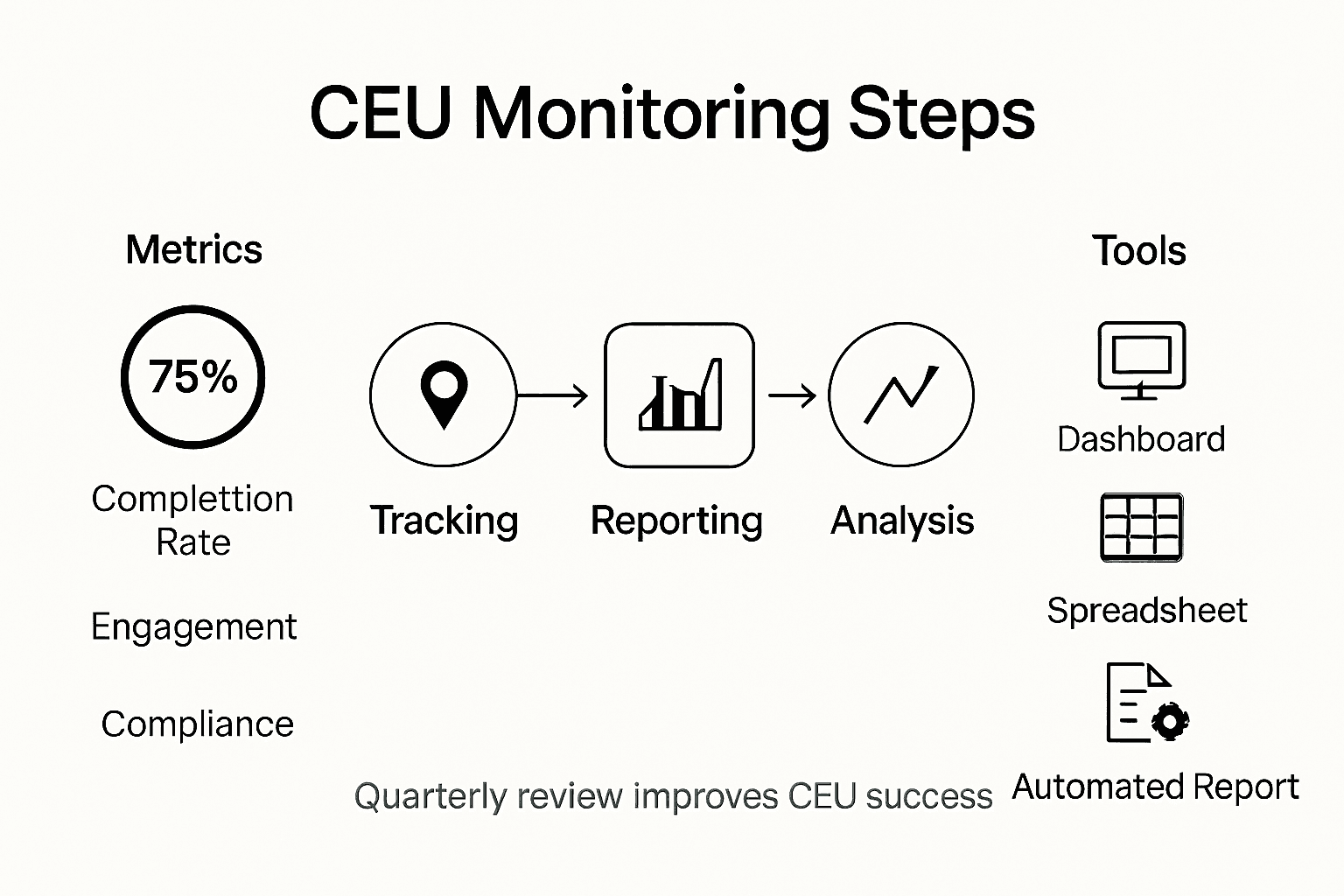
Effective monitoring requires more than just data collection. Create a structured review process that transforms raw data into actionable insights. Schedule regular comprehensive evaluations that examine course performance from multiple perspectives including learner experience, industry relevance, and institutional goals. Develop cross functional review teams that can interpret data comprehensively and recommend strategic improvements. Establish clear protocols for documenting findings, tracking implementation of recommended changes, and maintaining ongoing quality assurance.
Pro Tip: Implement a quarterly performance review cycle that uses automated reporting tools to generate comprehensive insights and facilitate rapid, data informed decision making.
This comparison highlights the benefits of monitoring and reporting processes at different levels:
| Monitoring Level | Key Metrics Tracked | Main Stakeholder Benefit |
|---|---|---|
| Course Level | Completion rates, engagement, feedback | Improves course design and learner support |
| Program Level | Certification attainment, skill impact | Demonstrates value to industry partners |
| Institutional Level | Aggregate outcomes, compliance rates | Informs strategic planning and compliance |
Step 5: Verify outcomes and refine CE strategies
Successfully optimizing continuing education requires a systematic approach to evaluating program effectiveness and implementing strategic improvements. Your ultimate goal is to transform raw data and participant insights into meaningful enhancements that drive professional development and maintain educational relevance.
Begin by implementing comprehensive outcome verification methodologies that go beyond surface level metrics. This means developing robust assessment frameworks that capture multidimensional learning outcomes including knowledge acquisition, skill development, professional application, and long term career impact. Design evaluation protocols that incorporate quantitative performance indicators as well as qualitative feedback mechanisms. Track metrics such as course completion rates, professional certification attainment, knowledge retention assessments, and participant satisfaction scores to build a holistic understanding of educational program effectiveness.
Strategic refinement demands a proactive and iterative approach to program development. Create a continuous improvement cycle that encourages ongoing dialogue between course designers, industry experts, and participants. Develop mechanisms for gathering deep contextual feedback that reveals not just what participants learned, but how they applied those learnings in their professional environments. Use these insights to rapidly prototype and implement curriculum adjustments, ensuring your continuing education offerings remain agile, responsive, and aligned with emerging industry demands.
Pro Tip: Establish a dedicated cross functional review team that meets quarterly to analyze comprehensive program data and recommend targeted strategic refinements.
Take Control of Your Continuing Education with CEUBuilder
The article highlights critical steps to optimize continuing education by streamlining workflows, customizing brand-aligned content, and integrating robust monitoring systems. If managing compliance, speeding up course development, or maintaining brand consistency feels overwhelming, you are not alone. Many manufacturers and construction product companies face these exact challenges—juggling complex accreditation requirements while trying to deliver engaging, compliant CEU courses rapidly.
At CEUBuilder, we empower manufacturers to become their own IDCEC and AIA providers, giving you full control over your education content, branding, and data ownership. Our tailored platform helps you cut course development time from up to 18 months down to just 4-6 weeks, with transparent pricing and zero hidden fees. Take the frustration out of continuing education by leveraging our all-in-one services including course development, accreditation management, and LMS hosting designed specifically for your industry.
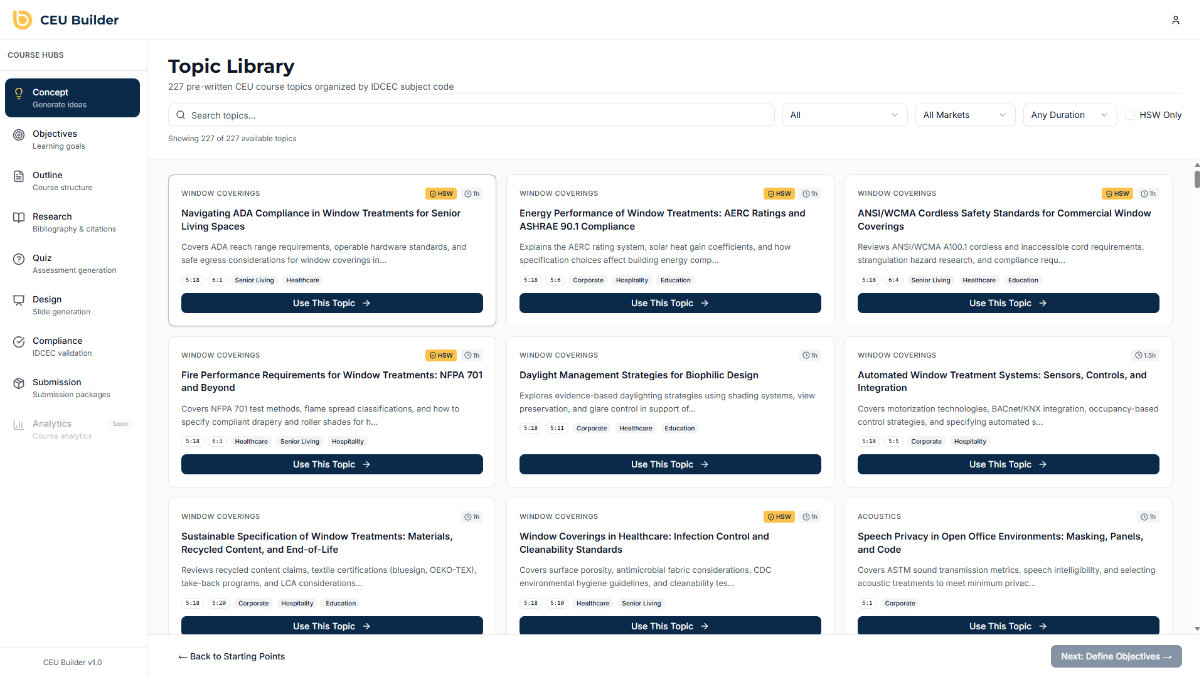
Ready to accelerate your professional education strategy and ensure compliance while strengthening your brand? Visit lightyellow-elephant-553228.hostingersite.com/ now to explore how you can streamline your continuing education program and gain a competitive edge. Don’t wait—unlock faster pathways to CEU success today and drive product adoption directly through architect and designer engagement.
Frequently Asked Questions
How can I assess my current continuing education offerings?
To assess your current continuing education offerings, start by conducting a thorough audit of your courses. Review course content, learning objectives, and participation rates to identify gaps and ensure alignment with industry compliance requirements.
What strategies can I use to streamline course development workflows?
To streamline course development workflows, implement digital automation strategies that centralize the course creation process. Establish clear checkpoints and collaborative review mechanisms to minimize administrative friction and enhance content quality.
How do I ensure my continuing education content matches my brand identity?
To ensure your continuing education content matches your brand identity, develop a brand style guide that outlines tone, voice, and visual design principles. Customize your materials to resonate with your target audience’s learning preferences and professional goals.
What metrics should I monitor to evaluate the effectiveness of my continuing education programs?
Monitor key performance indicators such as course completion rates, learner engagement, and certification attainment to evaluate your continuing education programs. Use this data to identify strengths and areas for improvement in your educational offerings.
How can I verify outcomes and refine my continuing education strategies?
To verify outcomes and refine your continuing education strategies, implement comprehensive evaluation frameworks that capture both quantitative and qualitative data. Analyze feedback and learning outcomes regularly to adapt your programs to meet emerging industry demands.
Recommended
