

What Is Continuing Education and Why It Drives Growth
Finding the right formula for continuing education can feel complex, especially when industry standards are always shifting. For marketing and CEU program coordinators at hospitality furniture manufacturers, continuing education is not just about staying current but about creating compelling IDCEC-accredited content that directly supports both brand authority and specification generation. This guide offers practical steps and key features to help deliver impactful, career-focused programs that resonate with designers and drive measurable business results.
Table of Contents
- Defining Continuing Education For Professionals
- Major Types Of Continuing Education Programs
- Core Features And How These Programs Work
- Accreditation, Compliance, And Legal Standards
- Strategic Benefits And Common Missteps
Key Takeaways
| Point | Details |
|---|---|
| Importance of Continuing Education | Continuing education is essential for professionals to enhance their skills, maintain industry relevance, and adapt to changes in technology and regulations. |
| Diverse Learning Formats | Continuing education offers various formats such as online courses, workshops, and certificate programs to cater to individual needs and career goals. |
| Accreditation and Compliance | Accreditation ensures that continuing education programs meet high standards, maintaining professional competence and industry expectations. |
| Strategic Investment | Organizations benefit from ongoing education as it fosters employee skill development, enhances performance, and drives innovation. |
Defining Continuing Education for Professionals
Continuing education represents a structured approach to professional development that enables individuals to maintain and enhance their knowledge, skills, and competencies throughout their careers. Unlike traditional academic learning, continuing education focuses on practical, career-specific learning that directly supports professional growth and adaptation to evolving industry standards.
The landscape of continuing education encompasses diverse learning formats designed to meet professionals’ dynamic needs. Specialized continuing education programs typically include:
- Online courses and webinars
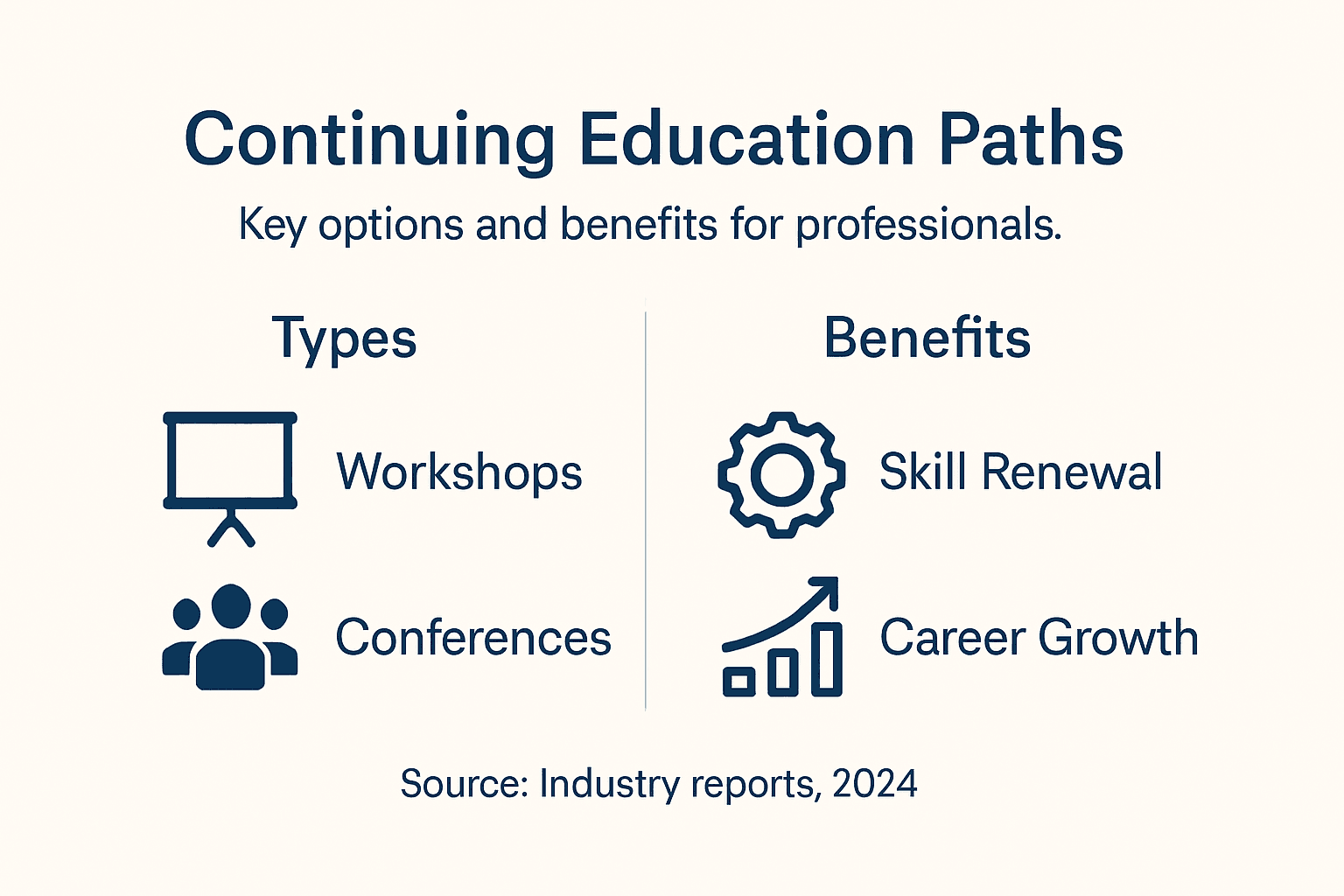
- In-person workshops and conferences
- Self-paced learning modules
- Academic certificate programs
- Professional certification preparation
Professional organizations and licensing boards often mandate continuing education to ensure practitioners remain current with emerging technologies, regulations, and best practices. Accredited continuing education activities provide structured opportunities for professionals across industries to demonstrate ongoing competence and commitment to their field.
Continuing education serves multiple critical functions beyond basic skill maintenance. It enables professionals to:
- Stay current with technological advancements
- Meet professional licensing requirements
- Expand career opportunities
- Demonstrate professional commitment
- Network with industry peers
Professional development is not a destination, but a continuous journey of learning and adaptation.
Pro tip: Develop a personalized continuing education strategy by tracking your industry’s emerging trends and proactively selecting learning opportunities that align with your career goals.
Major Types of Continuing Education Programs
Continuing education encompasses a diverse array of learning formats designed to support professional growth and skill enhancement across multiple industries. Professional development programs range from intensive academic certifications to targeted skill-building workshops that address specific industry needs and emerging technological challenges.
The primary categories of continuing education programs include:
- Professional Certificate Programs
- Industry-specific credential development
- Advanced skill validation
- Career advancement preparation
- Online Learning Modules
- Self-paced digital courses
- Flexible scheduling options
- Multimedia instructional content
- Workshop and Conference Training
- Interactive skill development sessions
- Expert-led instruction
- Networking opportunities
Accredited continuing education activities typically fall into two primary delivery formats: live events and enduring materials. Live events include in-person conferences, seminars, and workshops, while enduring materials encompass online courses, recorded webinars, journal-based learning, and self-study programs.
Compare live events and enduring materials for continuing education program delivery:
| Delivery Format | Flexibility | Interaction Level | Typical Examples |
|---|---|---|---|
| Live Events | Limited scheduling flexibility | High attendee interaction | Conferences, workshops |
| Enduring Materials | Anytime access, self-paced | Lower or no interaction | Online courses, recorded webinars |
Professional sectors leverage different continuing education approaches based on their specific requirements. Healthcare professionals often require structured credit-based learning, technology experts prioritize rapidly evolving skill updates, and business leaders seek strategic development programs that enhance leadership capabilities.
Continuing education is not just about accumulating credits, but about maintaining professional relevance in a rapidly changing world.
Pro tip: Create a personalized learning roadmap by identifying skill gaps in your current professional profile and strategically selecting continuing education programs that directly address those developmental needs.
Core Features and How These Programs Work
Continuing education programs are meticulously designed to deliver targeted, actionable learning experiences that directly address professional development needs. Effective educational interventions leverage sophisticated instructional design principles to create meaningful, transformative learning opportunities across diverse professional contexts.
The core features of successful continuing education programs typically include:
- Comprehensive Needs Assessment
- Initial skill gap analysis
- Targeted learning objective development
- Personalized learning pathways
- Multimodal Learning Approaches
- Blended learning formats
- Interactive digital content
- Practical application strategies
- Continuous Performance Evaluation
- Self-assessment mechanisms
- Competency tracking
- Ongoing professional development metrics
Lifelong learning platforms typically implement structured approaches that integrate several key operational components. These include centralized digital platforms, personalized guidance systems, and mechanisms for tracking individual professional progress and skill development.
The implementation process for continuing education programs generally follows a systematic approach designed to maximize learning outcomes and professional relevance. Most programs incorporate a cyclical model that begins with needs assessment, moves through targeted curriculum design, and concludes with performance evaluation and continuous improvement.
Successful continuing education transcends mere credit accumulation, focusing instead on meaningful professional transformation and skill mastery.
Pro tip: Prioritize continuing education programs that offer clear learning objectives, demonstrate direct applicability to your professional role, and provide robust mechanisms for tracking personal skill development.

Accreditation, Compliance, and Legal Standards
Continuing education programs are governed by complex regulatory frameworks that ensure professional competence and maintain industry standards. Continuing education requirements are rigorously defined by professional licensing boards, government agencies, and industry-specific accreditation organizations to guarantee practitioners remain current and competent in their respective fields.
The critical components of accreditation and compliance typically include:
- Regulatory Oversight
- Government agency monitoring
- Professional board standards
- Legal compliance frameworks
- Certification Requirements
- Specific credit hour mandates
- Content quality standards
- Periodic renewal processes
- Provider Verification
- Institutional credential validation
- Course content review
- Ongoing performance evaluation
Professional sectors implement varying levels of regulatory complexity. Healthcare, legal, financial, and technical industries maintain the most stringent accreditation standards, often requiring practitioners to complete specific types of educational activities that demonstrate direct relevance to current professional practices.
Here’s a summary of how continuing education requirements differ across key professional sectors:
| Industry Sector | Typical Requirements | Main Regulatory Bodies |
|---|---|---|
| Healthcare | Credit-based courses, renewal exams | State medical boards, accrediting agencies |
| Legal | Ethics classes, annual credit mandates | Bar associations, state supreme courts |
| Financial | Mandatory compliance updates, technical training | FINRA, state regulators |
| Technology | Frequent skill refreshers, certification renewals | Vendor certifications, tech associations |
The accreditation process serves multiple critical functions beyond mere bureaucratic compliance. It ensures that continuing education programs maintain high-quality educational standards, provide meaningful learning experiences, and directly contribute to professional skill development and knowledge enhancement.
Accreditation is not a destination, but a continuous commitment to professional excellence and lifelong learning.
Pro tip: Maintain comprehensive documentation of your continuing education activities, including course descriptions, learning objectives, and completion certificates, to streamline future professional certification and licensing requirements.
Strategic Benefits and Common Missteps
Continuing professional development represents a critical strategic investment for organizations and individual professionals seeking sustained growth and competitive advantage. Professional development strategies drive organizational capability by systematically enhancing workforce adaptability and individual learning potential.
The strategic benefits of continuing education include:
- Professional Identity Enhancement
- Career trajectory alignment
- Skill relevance maintenance
- Personal brand development
- Organizational Performance Improvements
- Knowledge capital expansion
- Innovation capability boost
- Talent retention strategies
- Individual Capability Development
- Technical skill upgrading
- Emerging technology awareness
- Cross-functional competence
Accredited continuing education programs simultaneously generate multiple strategic advantages while mitigating potential professional development risks. Organizations that implement robust continuing education frameworks create environments of continuous learning, positioning themselves as industry leaders committed to workforce excellence.
Common missteps in continuing education implementation often stem from inadequate program design, poor learner engagement, and misalignment between educational content and actual professional requirements. Professionals and organizations must critically evaluate their continuing education approaches, ensuring meaningful learning experiences that translate directly into enhanced performance and career progression.
Strategic continuing education transforms routine training into a powerful mechanism for professional growth and organizational adaptation.
Pro tip: Develop a personalized continuing education roadmap that aligns your learning objectives with emerging industry trends and your specific career aspirations, creating a targeted approach to professional development.
Unlock the Power of Continuing Education to Drive Growth and Specifications
The article highlights a familiar challenge for manufacturers: navigating the complex world of continuing education to create meaningful growth and influence specification decisions. Many professionals struggle with accreditation requirements, ineffective program design, and lack of strategic alignment that keeps education from translating into revenue. If you want to transform your CE programs from mere compliance exercises into powerful demand generation tools consider a strategic, proven approach to CE content creation. Understanding key concepts like accreditation, course relevance, and architect engagement are critical steps toward measurable results.
At CEU Builder, we specialize in turning continuing education into a strategic advantage for manufacturers by focusing on what architects and designers actually need and search for. Our 100% first-pass IDCEC accreditation rate eliminates costly delays and rejections. Explore how our CEU Strategy & Best Practices – CEU Builder can guide your content development. For deep understanding of compliance essentials visit Compliance & Accreditation – CEU Builder.
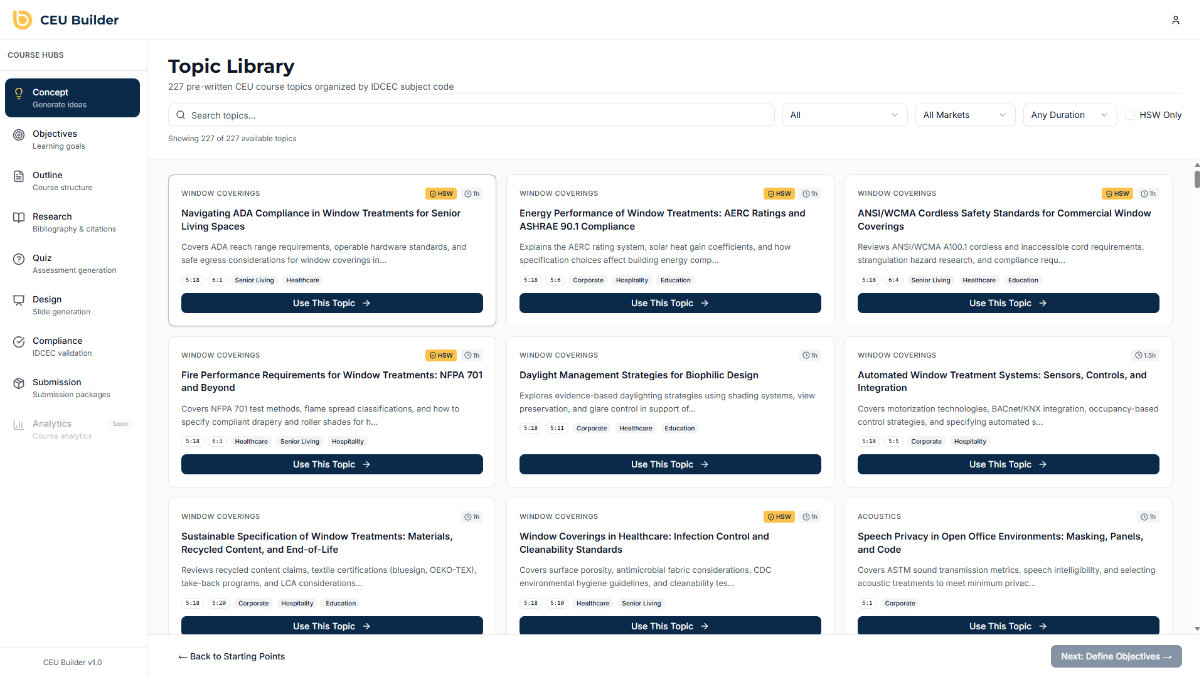
Ready to accelerate your continuing education impact and generate real business outcomes? Visit CEU Builder today to discover how our education solutions can position your brand as the trusted expert and specification partner architects rely on. Don’t let complex accreditation processes or misaligned content slow your growth. Take control now with expert guidance and a system designed to deliver results.
Frequently Asked Questions
What is continuing education?
Continuing education is a structured approach to professional development that helps individuals maintain and enhance their knowledge, skills, and competencies throughout their careers. It focuses on practical, career-specific learning applicable to evolving industry standards.
Why is continuing education important for professionals?
Continuing education is essential for professionals as it helps them stay current with technological advancements, meet licensing requirements, expand career opportunities, demonstrate commitment to their fields, and network with peers.
What types of continuing education programs are available?
Continuing education programs include professional certificate programs, online learning modules, workshops, and conference training. These formats deliver targeted skill development addressing specific industry needs and emerging challenges.
How can I develop a personalized continuing education strategy?
To develop a personalized continuing education strategy, track your industry’s trends, identify skills gaps in your professional profile, and proactively select learning opportunities that align with your career goals.
Recommended
- Continuing Education: Driving Success for Manufacturers
- 7 Data-Driven Hacks That Drive CEU Program Results – CEU Builder
- Course Development Process Explained: Driving CEU Results
- How to Optimize Continuing Education for CEU Success
- data driven urban development | 3D Cityplanner
- Ongoing Maintenance – Why It Powers WooCommerce Growth – WPCTO
- Try Winning App
