

What Is Course Development and Why It Matters Now

Developing continuing education courses for IDCEC approval often feels more involved than many expect. Effective course development is a systematic process that moves far beyond basic content upload, demanding thoughtful design, clear objectives, and ongoing evaluation. For American manufacturers aiming to reduce legacy platform costs and meet compliance standards, understanding the structured phases of course development is key. This introduction highlights why moving past common myths unlocks meaningful value for your organization and your professional audience.
Table of Contents
- Course Development Defined And Common Myths
- Key Types Of Course Development Models
- Critical Components And Workflow Steps
- Compliance For Continuing Education Courses
- Cost Drivers, Risks, And Ownership Models
Key Takeaways
| Point | Details |
|---|---|
| Course Development is Multifaceted | It involves a thorough, systematic approach that requires careful planning, execution, and refinement to create impactful educational experiences. |
| Choose the Right Development Model | Selecting a course development model aligned with specific learning objectives enhances the effectiveness of educational programs. |
| Compliance is Crucial for Continuing Education | Adhering to regulatory standards and maintaining documentation ensures the integrity and quality of continuing education courses. |
| Financial Management and Risk Assessment are Key | Understanding cost drivers and implementing effective risk management strategies are essential to minimize budget overruns and operational disruptions. |
Course Development Defined and Common Myths
Course development represents a strategic, systematic process for creating educational experiences that transform learning from passive information absorption to active skill development. While many professionals assume course creation is straightforward, the reality involves complex instructional design principles and meticulous planning.
At its core, course development is a comprehensive training methodology that goes far beyond simply assembling content. This process involves multiple intricate stages including detailed analysis, strategic design, precise development, careful implementation, and ongoing evaluation. Successful course creators understand that each phase requires specialized expertise and deliberate attention to learner needs.
Common myths about course development frequently undermine potential learning outcomes. Many professionals mistakenly believe that subject matter expertise alone qualifies someone to design effective training programs. However, professional development research demonstrates that sustainable learning requires structured instructional approaches that consider pedagogical principles, learner psychology, and comprehensive performance objectives.
Key characteristics of robust course development include:
- Systematic instructional design methodology
- Alignment with specific learning objectives
- Consideration of diverse learner backgrounds
- Iterative refinement based on feedback
- Integration of assessment and evaluation mechanisms
Pro Tip: Before beginning course development, conduct a comprehensive needs analysis to ensure your educational content directly addresses specific performance gaps and learner requirements.
Key Types of Course Development Models
Course development models represent critical frameworks that guide the systematic creation of educational experiences, providing structured approaches to transforming learning objectives into effective instructional content. These models serve as essential roadmaps for instructional designers, offering strategic methodologies to navigate the complex process of curriculum design.
Instructional development models range from linear sequential approaches to more dynamic, iterative frameworks. The most prominent models include the ADDIE model (Analysis, Design, Development, Implementation, Evaluation), which represents a classic linear approach, and more flexible, cyclical models that emphasize continuous refinement and adaptation. Each model brings unique strengths to the course development process, allowing designers to select the most appropriate strategy based on specific learning goals and contextual requirements.
The diversity of course development models reflects the evolving understanding of learning processes and institutional needs. Curriculum design approaches have expanded beyond traditional content-driven models to include more nuanced frameworks such as:
- Learner-centered models
- Competency-based designs
- Systemic models integrating organizational goals
- Inclusive approaches addressing diversity and equity
- Performance-oriented development strategies
These models differ significantly in their fundamental approach, with some emphasizing sequential progression, while others prioritize iterative refinement and continuous feedback loops. The most effective course development strategies often blend multiple models, creating hybrid approaches that can adapt to complex learning environments and diverse learner needs.
Here’s how common course development models differ in practice:
| Model Type | Workflow Structure | Flexibility | Best Use Case |
|---|---|---|---|
| ADDIE | Linear stages | Low | Traditional corporate training |
| Iterative (e.g., SAM) | Cycles and repeats | High | Rapid prototyping needs |
| Learner-Centered | Adaptive pathways | Moderate | Personalized education |
| Competency-Based | Outcome driven | Moderate | Skills certification programs |
Pro Tip: Select a course development model that aligns with your specific learning objectives, and remain flexible enough to incorporate elements from multiple approaches to maximize instructional effectiveness.
Critical Components and Workflow Steps
Course development represents a complex, multifaceted process that demands careful planning, strategic execution, and continuous refinement. Understanding the critical components and workflow steps is essential for creating impactful educational experiences that effectively transform learning objectives into meaningful instructional content.

Professional course development workflows typically follow a structured approach encompassing five primary stages: analysis, design, development, implementation, and evaluation. Each stage plays a crucial role in ensuring the course meets learner needs and achieves intended educational outcomes. The analysis phase involves comprehensive needs assessment, identifying target audience characteristics, learning gaps, and performance objectives. During the design stage, instructional designers craft detailed learning frameworks, establishing clear objectives, selecting appropriate instructional strategies, and mapping out content sequences.
The development phase transforms conceptual designs into tangible instructional materials, creating engaging content, interactive elements, assessments, and supporting resources. Effective professional development strategies emphasize creating learning experiences that are not just informative, but truly transformative. Key components in this stage include:
- Developing multimedia learning resources
- Creating assessment instruments
- Designing interactive learning activities
- Aligning content with specified learning objectives
- Ensuring accessibility and inclusive design
Implementation and evaluation represent the final critical stages, where courses are delivered to learners and their effectiveness is systematically measured. This involves monitoring learner engagement, collecting feedback, assessing learning outcomes, and making data-driven refinements to improve future iterations of the course. Successful course developers understand that development is an iterative process requiring continuous adaptation and improvement.
Pro Tip: Document each stage of your course development workflow meticulously, creating a comprehensive project archive that allows for future refinement and serves as a valuable reference for subsequent educational initiatives.
Compliance for Continuing Education Courses
Continuing education compliance represents a complex landscape of regulatory requirements that demand meticulous attention to detail, institutional credibility, and professional standards. Manufacturers developing continuing education courses must navigate a sophisticated framework of legal and professional expectations that extend far beyond simple content creation.
Continuing education providers must meet stringent regulatory standards established by professional licensing bodies, accreditation agencies, and industry-specific governing organizations. These standards encompass multiple critical dimensions, including program content quality, instructor qualifications, documentation processes, and ongoing curriculum relevance. Compliance is not a one-time achievement but a continuous commitment to maintaining educational excellence and professional integrity.
The core components of continuing education compliance typically include:
- Obtaining official provider status
- Meeting specific accreditation requirements
- Developing content aligned with professional standards
- Maintaining comprehensive documentation
- Implementing robust assessment mechanisms
- Ensuring instructor expertise and qualifications
Institutional compliance policies emphasize the importance of structured program development, rigorous performance evaluations, and adherence to operational guidelines. These policies protect both educational providers and professionals by establishing clear expectations, maintaining program integrity, and ensuring that continuing education truly advances professional competence.
Pro Tip: Develop a comprehensive compliance checklist that covers all regulatory requirements, and schedule regular internal audits to proactively identify and address potential compliance gaps before external reviews.
Cost Drivers, Risks, and Ownership Models
Navigating the complex landscape of course development requires a strategic understanding of the financial implications, potential risks, and various ownership models that can significantly impact an organization’s educational initiatives. The economic dimensions of continuing education extend far beyond simple content creation, encompassing multifaceted considerations that demand careful analysis and proactive management.
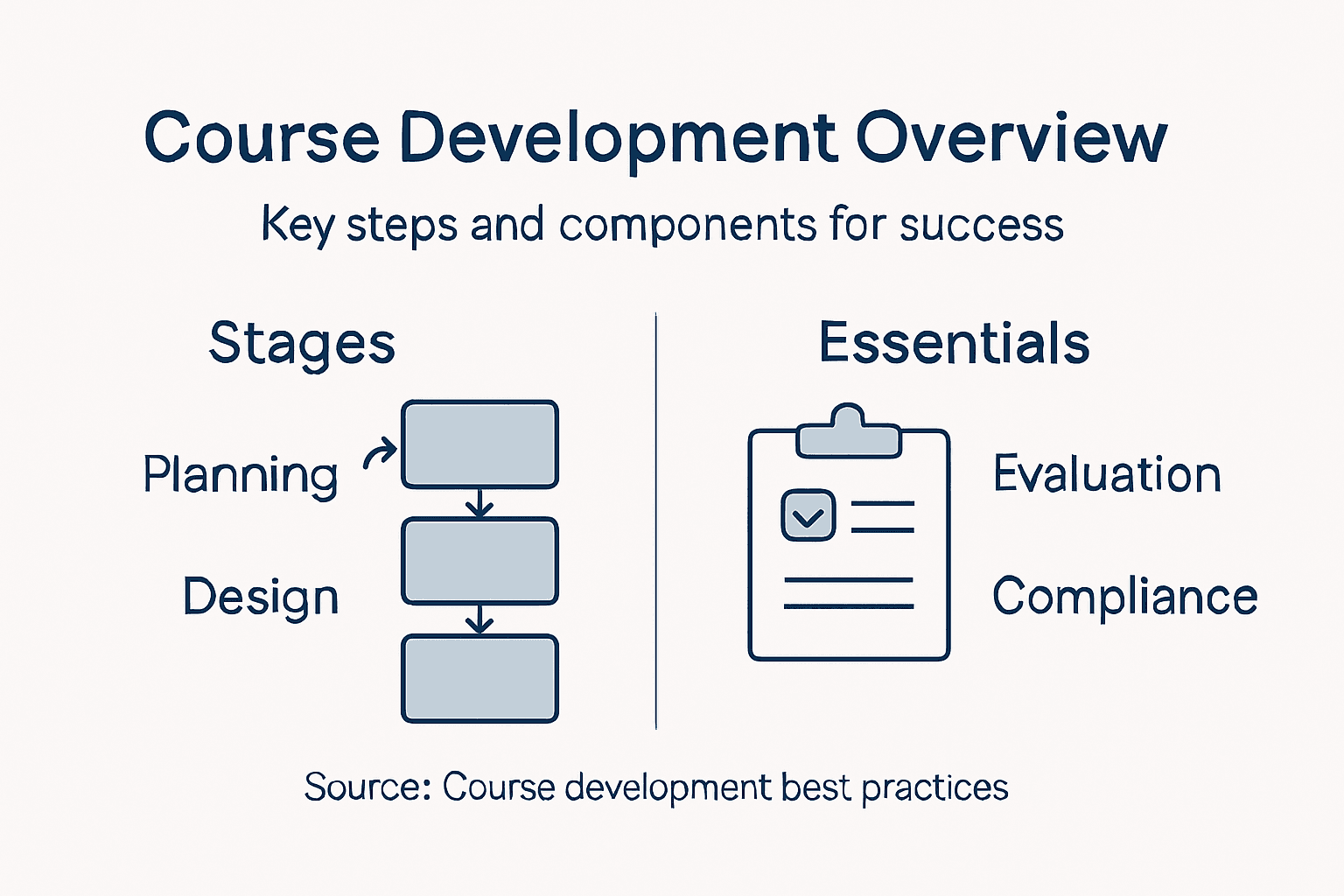
Cost drivers in course development represent a comprehensive range of financial and operational expenses that organizations must meticulously evaluate. These typically include personnel investments (instructional designers, subject matter experts, administrative staff), technological infrastructure, content development resources, delivery platforms, and ongoing maintenance expenses. The financial complexity increases with the sophistication of the educational content and the specific requirements of professional certification programs.
Risk management in course development involves several critical dimensions:
- Budget overrun prevention
- Quality assurance mechanisms
- Participant engagement strategies
- Compliance and regulatory adherence
- Technology infrastructure stability
- Scalability of educational resources
Effective cost management strategies emphasize comprehensive planning, detailed scope definition, and continuous risk assessment. Ownership models play a crucial role in determining financial responsibilities, with variations including:
Below is a summary of key financial and risk considerations for course development:
| Cost Driver or Risk | Impact Area | Example Strategy |
|---|---|---|
| Personnel costs | Budget planning | Hire cross-functional teams |
| Technology upkeep | Ongoing expenses | Use scalable platforms |
| Compliance errors | Legal risk | Schedule annual audits |
| Budget overruns | Project management | Set contingency funds |
- Fully institutional internal development
- Hybrid partnerships with external providers
- Outsourced content creation with organizational oversight
- Collaborative development models with shared accountability
Pro Tip: Develop a detailed financial model that includes contingency budgets and conduct comprehensive risk assessments before initiating any course development project to minimize unexpected expenses and operational disruptions.
Own Your Continuing Education Future With Smart, Speedy Course Development
The article highlights how effective course development demands a strategic process that addresses compliance, learner engagement, and regulatory standards. Yet, the challenges manufacturers face often include long timelines, lack of control over provider status, and hidden fees that drain budgets without delivering true ROI. If you are ready to break free from legacy CEU platforms that rent you space but own your data and provider credentials, it is time to take ownership.
CEU Builder empowers building product manufacturers to become their own accredited education providers quickly and affordably. Our AI-powered platform streamlines the complexities of course creation, compliance checks, IDCEC subject code mapping, and learning objective generation — so you can develop impactful courses in weeks, not months.
Key benefits include:
- 100% ownership of your IDCEC/AIA provider status and learner data
- Transparent pricing with no hidden or recurring fees
- Accelerated course development from 4 to 12 weeks compared to 12 to 18 months
- Compliance tools that reduce risk and rejection
Don’t let myths about course development or legacy CEU platforms limit your educational impact and growth. Discover how to build your own accredited programs while saving hundreds of thousands over time. Visit CEU Builder to explore our AI Course Builder and expert Done-For-You Services designed specifically for manufacturers in hospitality, commercial interiors, and more.
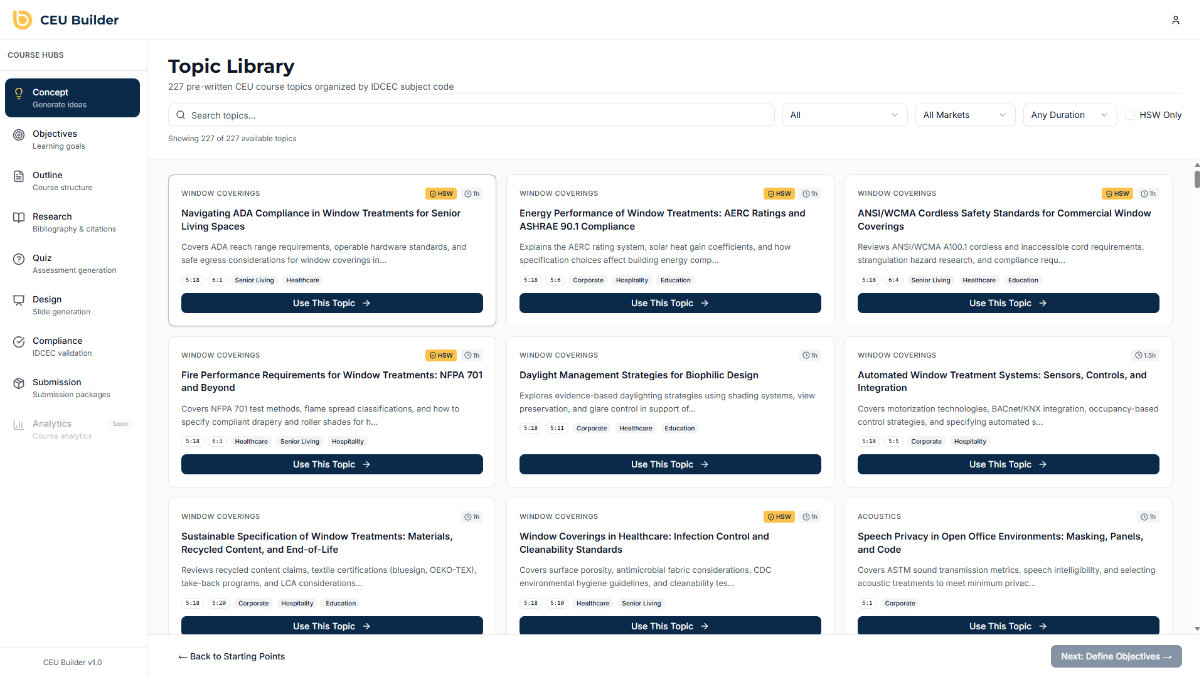
Ready to own your continuing education program without costly vendor lock-in? Act now and start building compliant, market-ready courses faster than you thought possible. Visit CEU Builder and take the first step toward true provider independence today.
Frequently Asked Questions
What is course development?
Course development is a systematic process for creating educational experiences that focus on transforming learning from passive absorption of information to active skill development. It involves detailed stages such as analysis, design, development, implementation, and evaluation.
Why is course development important in education?
Course development is crucial as it ensures that educational programs are effectively designed to meet specific learning objectives and address the diverse needs of learners. A well-developed course enhances engagement, knowledge retention, and overall learner success.
What are the key components of effective course development?
Effective course development includes systematic instructional design, alignment with learning objectives, consideration of diverse learner backgrounds, iterative refinement based on feedback, and integration of assessment mechanisms to measure learning outcomes.
What course development models are commonly used?
Common course development models include the ADDIE model, which follows a linear approach, and more flexible models like SAM that emphasize iterative refinement. Other models focus on learner-centered, competency-based, and performance-oriented designs, allowing for various strategies based on specific educational needs.
Recommended
