

What Is Course Registration and Why It Matters
Securing a competitive edge in the North American hospitality furniture market often hinges on more than innovative design. For marketing leaders, understanding course registration systems is becoming vital, especially when leveraging IDCEC training to improve product specificity and connect with architects. With options ranging from self-enrollment to manual processes, the right strategy can transform continuing education into a meaningful driver of engagement and industry credibility.
Table of Contents
- Defining Course Registration For Education
- Types Of Course Registration Systems
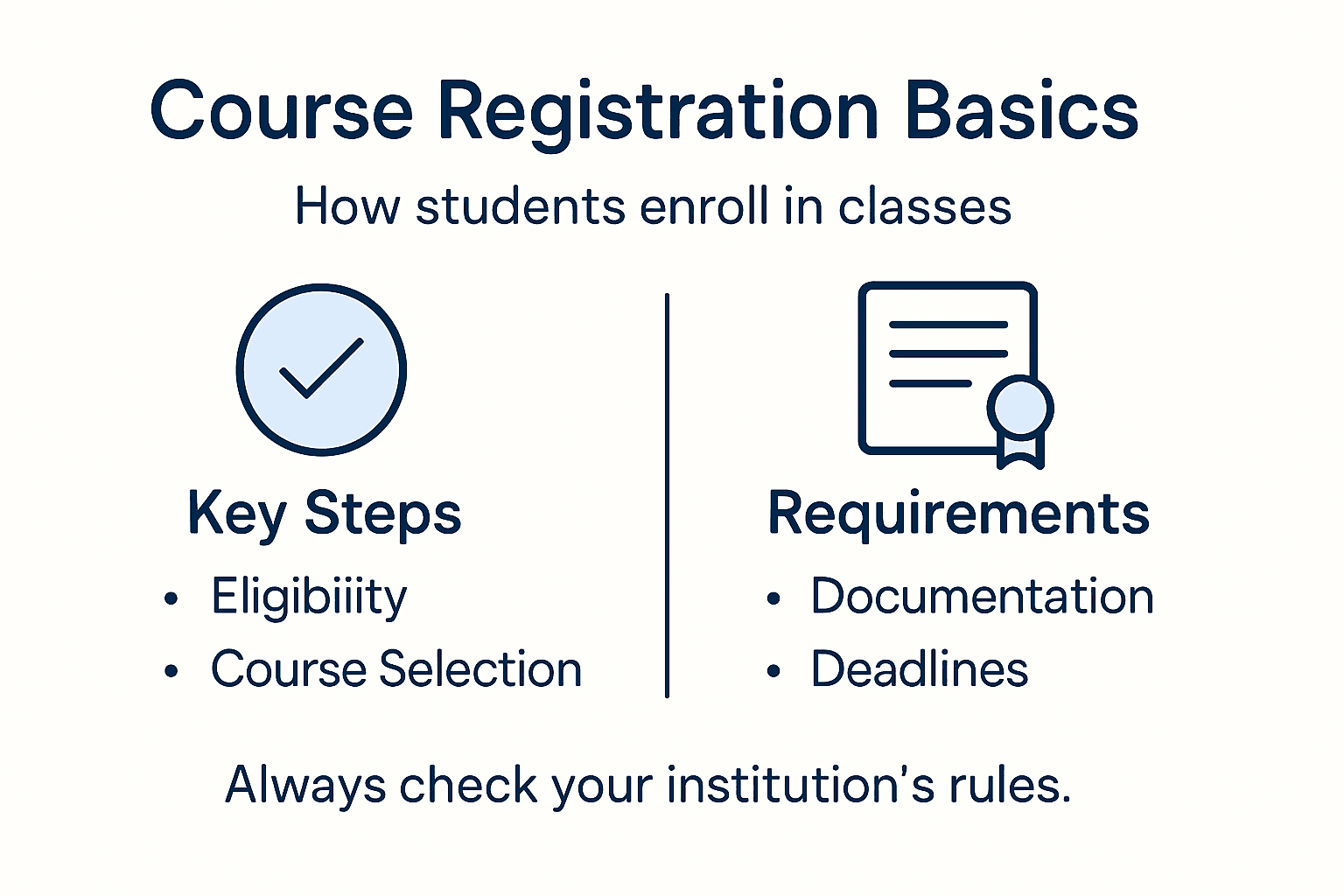
- Key Steps In The Registration Process
- Requirements For Accredited Course Registration
- Common Mistakes And How To Avoid Them
Key Takeaways
| Point | Details |
|---|---|
| Course Registration Importance | Course registration is essential for student enrollment and academic access, helping institutions manage resources and track progress. |
| Variety of Registration Systems | Different registration systems, like self-enrollment and bulk enrollment, cater to various institutional needs and student preferences. |
| Key Registration Steps | Students should follow critical steps, including eligibility verification and financial clearance, to ensure smooth enrollment. |
| Avoiding Common Mistakes | Proactive planning and communication are vital to avoid registration errors, such as missed deadlines and inadequate tech preparation. |
Defining Course Registration for Education
Course registration is the critical administrative process that enables students to formally join and access specific academic programs or courses. Higher education enrollment dynamics have dramatically transformed in recent years, with millions of students worldwide seeking educational opportunities through structured registration systems.
At its core, course registration involves several key components that facilitate student entry into academic programs. This typically includes identifying available courses, selecting desired classes, confirming enrollment eligibility, and completing necessary administrative procedures. Course enrolment methods can vary widely, ranging from self-enrollment through online platforms to manual registration managed by academic administrators.
The registration process serves multiple strategic purposes beyond mere administrative tracking. It allows educational institutions to manage student capacity, track academic progress, allocate resources effectively, and ensure that learners are placed in appropriate academic environments. By creating structured pathways for student entry, registration systems help maintain academic standards and support individual learning journeys.
Pro tip: Research and understand your institution’s specific registration deadlines and procedures well in advance to streamline your enrollment experience and avoid last-minute complications.
Types of Course Registration Systems
Modern educational institutions utilize diverse learning management system platforms that support multiple course registration approaches. These systems are designed to accommodate varied institutional needs, student preferences, and administrative requirements, ensuring flexible and efficient enrollment processes.
The primary types of course registration systems include:
- Self-Enrollment Systems: Allow students to independently select and register for courses through online platforms
- Manual Enrollment: Requires direct administrative intervention where staff manually add students to specific courses
- Bulk Enrollment: Enables mass registration through CSV file uploads or cohort synchronization
- Linked Course Enrollment: Automatically registers students in related or prerequisite courses
Each registration method offers unique advantages and challenges. Course enrollment mechanisms can range from highly automated digital platforms to traditional paper-based systems, depending on the institution’s technological infrastructure and operational preferences. The goal remains consistent: creating streamlined pathways for students to access educational programs while maintaining administrative control and accuracy.
The following table summarizes the main types of course registration systems and their ideal use cases:
| Registration System Type | Best For | Main Benefit |
|---|---|---|
| Self-Enrollment | Large institutions | Flexible, student-driven |
| Manual Enrollment | Small programs | Direct administrative oversight |
| Bulk Enrollment | Cohorts or groups | Efficient mass course entry |
| Linked Enrollment | Prerequisite courses | Streamlined progression |
Pro tip: Familiarize yourself with your institution’s specific registration system early to navigate enrollment processes more efficiently and avoid potential administrative complications.
Key Steps in the Registration Process
Navigating the course registration process requires careful attention to detail and strategic planning. Student registration procedures involve multiple critical stages that ensure academic and administrative compliance for students.
The comprehensive registration process typically involves the following key steps:
- Eligibility Verification
- Confirm academic standing
- Review program requirements
- Check prerequisite completion
- Information Gathering
- Review available course offerings
- Understand scheduling and time conflicts
- Assess course load and academic goals
- Course Selection
- Select courses aligned with degree requirements
- Prioritize mandatory and elective courses
- Consider academic and career objectives
- Financial Clearance
- Verify tuition and fee status
- Complete necessary financial documentation
- Resolve any outstanding balances
Course enrollment mechanisms require students to carefully navigate administrative requirements while maintaining academic progression. Each step is crucial in ensuring smooth entry into desired academic programs and maintaining institutional compliance.

Pro tip: Create a detailed registration checklist and set reminders for key deadlines to streamline your enrollment experience and avoid last-minute complications.
Requirements for Accredited Course Registration
Accreditation serves as a critical quality assurance mechanism for educational programs. Higher education accreditation standards establish rigorous criteria that institutions must meet to ensure educational excellence and maintain institutional integrity.
The key requirements for accredited course registration encompass several critical dimensions:
- Institutional Legitimacy
- Legal authorization to operate educational programs
- Demonstrated financial stability
- Compliance with state and federal regulations
- Academic Quality
- Faculty qualifications and credentials
- Comprehensive curriculum design
- Robust student support services
- Operational Standards
- Transparent administrative processes
- Consistent student enrollment practices
- Ethical conduct and institutional accountability
Institutional eligibility requirements extend beyond basic academic metrics. They demand comprehensive evidence of institutional capability, including sustained performance, financial soundness, and commitment to continuous educational improvement. Accrediting agencies meticulously evaluate these dimensions to ensure that registered courses meet established quality benchmarks.
Pro tip: Thoroughly research and understand the specific accreditation requirements for your educational program to ensure seamless registration and maintain institutional credibility.
Common Mistakes and How to Avoid Them
Successful course registration requires strategic planning and proactive management. Distance learning challenges often stem from avoidable mistakes that can significantly impact academic performance and student experience.
The most prevalent registration and enrollment mistakes include:
- Poor Time Management
- Procrastinating on course selection
- Failing to review prerequisite requirements
- Overlooking scheduling conflicts
- Technical Preparedness
- Inadequate technology setup
- Limited understanding of online learning platforms
- Weak internet connectivity
- Communication Gaps
- Minimal interaction with academic advisors
- Lack of proactive communication with instructors
- Insufficient understanding of course expectations
- Resource Underutilization
- Ignoring available student support services
- Not exploring academic assistance programs
- Failing to seek help when encountering difficulties
Online learning strategies emphasize the importance of comprehensive preparation and active engagement. Students who anticipate potential challenges and develop robust support mechanisms are significantly more likely to navigate course registration successfully and maintain academic momentum.
Here’s a reference table outlining common registration mistakes and proactive solutions:
| Common Mistake | Impact | Proactive Solution |
|---|---|---|
| Delayed course selection | Missed classes or overfilled sections | Set calendar reminders |
| Ignoring prerequisites | Ineligibility for key courses | Review requirements early |
| Weak tech setup | Platform access issues | Test systems in advance |
| Poor advisor contact | Missed guidance and support | Schedule early meetings |
Pro tip: Create a comprehensive registration checklist and schedule a preliminary consultation with your academic advisor to proactively identify and mitigate potential enrollment challenges.
Elevate Your Course Registration Success with Expert CEU Solutions
The article highlights the critical complexity and importance of a flawless course registration process, especially for programs requiring accreditation and strategic positioning. If you are facing challenges such as navigating accreditation requirements, managing course approval risks, or aligning educational content with the needs of professional learners, you are not alone. Common pain points include missed deadlines, technical compliance hurdles, and ineffective course content that fails to engage or generate real demand.
At CEU Builder, we understand these challenges deeply. Our proven methodology offers a streamlined path to IDCEC accreditation with a 100% first-pass approval rate that eliminates costly delays. Whether you want to accelerate your course registration and approval with our full-service course development or prefer to leverage our platform and training tools to own the process internally, CEU Builder transforms continuing education into a powerful business driver rather than just administrative compliance. Learn how to integrate strategic educational content that architects and designers actively seek and trust by visiting CEU Builder.

Ready to remove registration guesswork and create engaging accredited courses that drive specifications and revenue? Explore our Done-For-You Service or discover how our Platform + AI + Training can empower your team. Take control of your course registration success today and turn education into your competitive advantage.
Frequently Asked Questions
What is course registration?
Course registration is the administrative process that allows students to formally enroll in specific academic programs or courses, ensuring they can access the educational opportunities they seek.
Why is course registration important?
Course registration is crucial because it helps institutions manage student capacity, track academic progress, allocate resources, and verify that students are placed in suitable courses, thereby supporting their academic journey.
What are the main steps in the course registration process?
The main steps in the course registration process include verifying eligibility, gathering information on available courses, selecting courses, and ensuring financial clearance before officially enrolling.
What common mistakes should I avoid during course registration?
Common mistakes to avoid include poor time management (e.g., procrastinating on course selection), inadequate technical preparedness (e.g., setup issues), communication gaps with advisors or instructors, and underutilizing available resources and support services.
Recommended
