

Why your 2021 course library is costing you 2025 meetings

The commercial interior design world operates on a cycle of relevance that moves faster than most manufacturers realize. If your sales team is still walking into architecture and design (A&D) firms with the same Continuing Education Unit (CEU) courses you launched in 2021, you are likely wondering why your meeting request acceptance rate has plummeted. The reality is that a four year old course is no longer an educational asset. It is a signal to the market that your brand is stagnant.
In 2021, the hospitality and commercial sectors were reacting to a global shift in how people moved through spaces. Content from that era was heavily focused on immediate crisis management, surface antimicrobial properties, and temporary social distancing configurations. By 2025, the conversation has moved entirely. Design professionals are now focused on long-term wellness, carbon neutrality, adaptive reuse, and neurodiversity in public spaces. When your rep pitches a 2021 course to a design director in 2025, they aren't just pitching old information. They are proving that they don't understand the designer’s current challenges.
The gap between what you are offering and what the market requires is a direct cost to your pipeline. This is not just about a single missed lunch and learn. It is about the lost opportunity to be written into specifications that will be realized in 2026 and 2027. If you want to win the 2025 meeting, your content must reflect the 2025 reality.
The invisible expiration date of design education
Architects and designers are required to earn learning units every year to maintain their professional licenses. Because of this, they are professional consumers of education. They can spot a dated course within thirty seconds of the introductory slide. The most obvious indicator is photography. In an industry built on aesthetics, showing a hotel lobby or office floor plan from 2020 feels like looking at ancient history.
Beyond the visuals, the technical standards have shifted. Sustainability metrics that were "nice to have" in 2021 are now mandatory in many jurisdictions. If your course mentions LEED v4 without acknowledging the nuances of the latest updates or the rise of the WELL Building Standard, you lose credibility instantly. The designer assumes that if your education is outdated, your product innovation is likely lagging as well.
This "content decay" happens slowly, then all at once. For the first two years, a course might feel slightly seasoned. By year four, it is a relic. This is particularly dangerous for manufacturers who spent $15,000 or $20,000 with an agency in 2021 to build a "gold standard" course. Because that investment was so high, there is a natural internal resistance to replacing it. You feel you haven't gotten your money's worth yet. However, the cost of keeping that course in your library is now higher than the cost of replacing it.
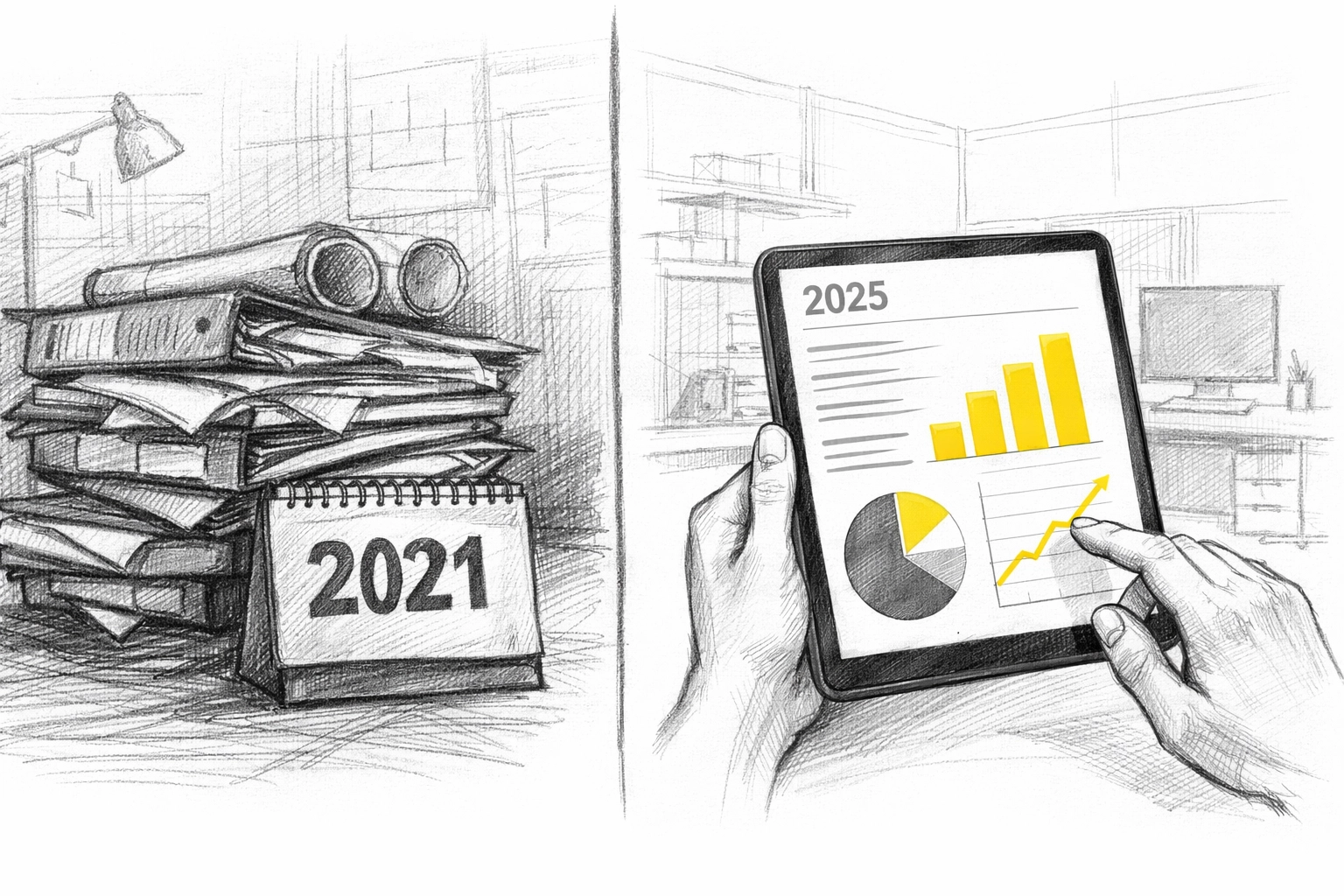
A pencil sketch illustration showing a stack of blueprints with a 2021 date stamp being pushed aside by a modern, sleek digital tablet displaying 2025 design trends, monochromatic graphite with a selective yellow highlight on the new data.
Why IDCEC standards have left your old library behind
The Interior Design Continuing Education Council (IDCEC) and the American Institute of Architects (AIA) have become increasingly stringent about what qualifies as Health, Safety, and Welfare (HSW) content. In 2021, many manufacturers were able to slip "product-heavy" content through the accreditation process because the system was adjusting to a massive influx of digital submissions.
By 2025, the auditors have tightened the reins. They are looking for deeper technical research and less marketing fluff. If your 2021 course was grandfathered in or approved during a more lenient period, it likely wouldn't pass a fresh audit today. When a firm’s librarian or education coordinator looks at your course description, they are checking to see if it meets the rigorous current standards. If it looks like a thinly veiled sales pitch from four years ago, they will skip it in favor of a competitor who has a fresh, research-backed presentation.
Furthermore, the subject codes used by IDCEC have evolved. There is a much higher demand for courses categorized under Environmental Design, Sustainability, and Human Centered Design. If your old library is categorized under general "Product Knowledge," you are invisible to the designers who are filtering for specific, high-value credits. You can learn more about how to structure this correctly in our What is CEU Ready Content? guide.
The psychological impact on the specifier
We often think of the CEU as a transactional exchange: the designer gets a credit, and the manufacturer gets an hour of their time. But the CEU is actually a brand-building exercise. It is the longest period of uninterrupted attention you will ever get from a specifier.
When you present a 2021 course in 2025, you are telling the designer that you haven't learned anything new in four years. You are signaling that your company is not investing in the A&D channel. In an industry where trust and reliability are the primary drivers of specification, this is a fatal error. Designers specify products from companies they view as experts. Experts are, by definition, at the forefront of their field.
If your competitor walks in the following week with a course about the circular economy or the impact of acoustics on cognitive load in hospitality environments, they have positioned themselves as the expert. Your rep is then relegated to the role of a "vendor" while your competitor becomes a "consultant." Vendors get cut during value engineering. Consultants get protected.

Pencil sketch of an architectural meeting room with several designers looking intently at a presentation screen, selective blue accents on the architectural drawings pinned to the wall, white background.
The agency model is the bottleneck
The reason most hospitality brands are stuck with 2021 content is the traditional agency model. When it costs $15,000 to $40,000 to develop a single course through an outside firm, the ROI math is difficult. Most marketing directors can't justify that spend every single year. So, they keep the old content on life support, hoping the reps can still squeeze some value out of it.
This dependency on agencies creates a massive bottleneck. If you want to update three slides to reflect a new building code or a fresh set of project photography, an agency might charge you several thousand dollars and take six weeks to turn it around. This friction prevents manufacturers from being agile.
The manufacturers who are winning the 2025 meetings are those who have moved their CEU production in-house. By owning the process, they can refresh their content quarterly. They can swap out images, update data points, and adjust their learning objectives to match current design trends in a matter of hours. This agility is what keeps them relevant. They aren't asking for meetings based on old news; they are offering the very latest insights.
The math of missed specification opportunities
Let’s look at the actual cost of an outdated library. If your sales team is struggling to book lunch and learns because your topics are stale, your "cost per lead" skyrockets.
Imagine you have twenty sales reps. If each rep is missing out on just two meetings per month because their CEU library is outdated, that is 480 missed meetings per year. In the hospitality world, a single meeting can lead to a specification for a 300-room hotel. If your average project value is $50,000, those 480 missed meetings represent a massive amount of potential revenue that never even entered your pipeline.
Compare this to the cost of maintaining a modern, agile CEU program. When you use a platform like CEU Builder, you can create and update as many courses as you need for a fraction of the price of a single agency-built course. The math is simple: the revenue lost from missed meetings is exponentially higher than the cost of modernizing your content production.
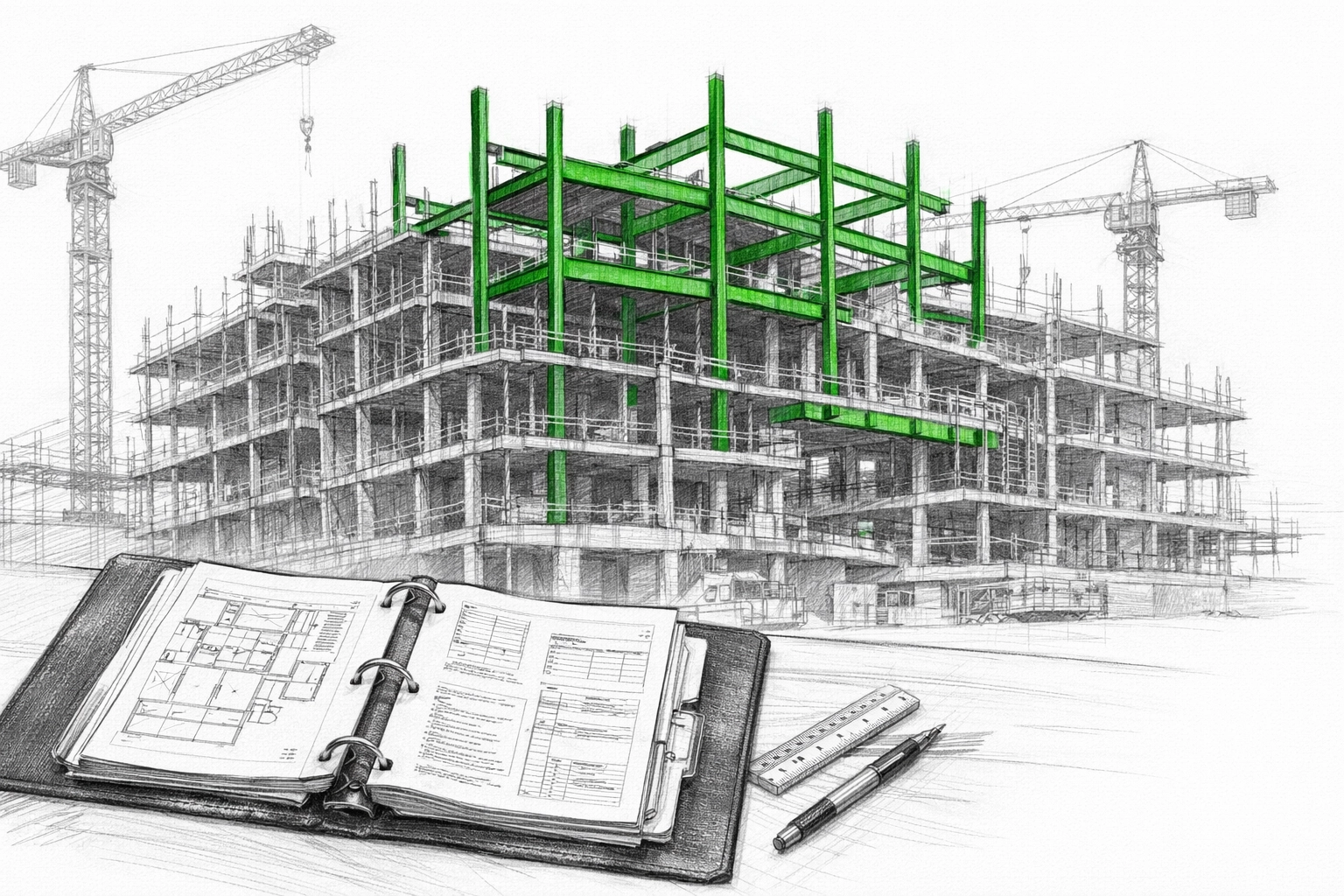
A monochromatic graphite sketch of a commercial project site under construction, with selective green accents on the structural elements, representing the growth of a healthy pipeline.
Updating your library for 2025 and beyond
To fix the 2021 problem, you don't necessarily need to start from scratch, but you do need to be honest about what needs to go. A successful 2025 refresh involves three main steps:
- The Visual Audit: Replace every single image that looks dated. If the furniture in the background of your project shots isn't current, the whole slide is compromised.
- The Technical Update: Review your learning objectives. Are they still relevant to the challenges designers face today? Do they reflect the current IDCEC and AIA HSW requirements?
- The Delivery Shift: Designers are fatigued by static webinars. They want interactive, high-quality content that feels like a conversation, not a lecture.
The goal is to move from a "static" library to a "living" library. A living library is one that is constantly being refined based on feedback from the field. When a rep hears a specific question from a designer in Chicago, that insight should be folded into the course content by the following week. This level of responsiveness is impossible when you are tied to an agency contract or a legacy platform that charges for every edit.
Moving from agency dependency to in-house agility
The shift toward in-house CEU production is the most significant trend for hospitality manufacturers in 2025. It allows brands to stop "renting" their expertise and start "owning" it. When you own the production process, you can create niche courses for specific segments of the market. You can have a course specifically for luxury resort designers and another for high-traffic healthcare hospitality.
This specialization is what earns the meeting. A design director at a top-five firm doesn't want a "General Flooring 101" course. They want "Advanced Acoustic Mitigation in Multi-Use Hospitality Environments." You can only produce that level of specialized content if your production costs are low and your speed to market is high.
By using CEU Builder, manufacturers are able to take their internal product knowledge and convert it into accredited, submission-ready content in a single workday. This removes the $15,000 barrier to entry for new content. It allows you to experiment, iterate, and stay ahead of the curve.
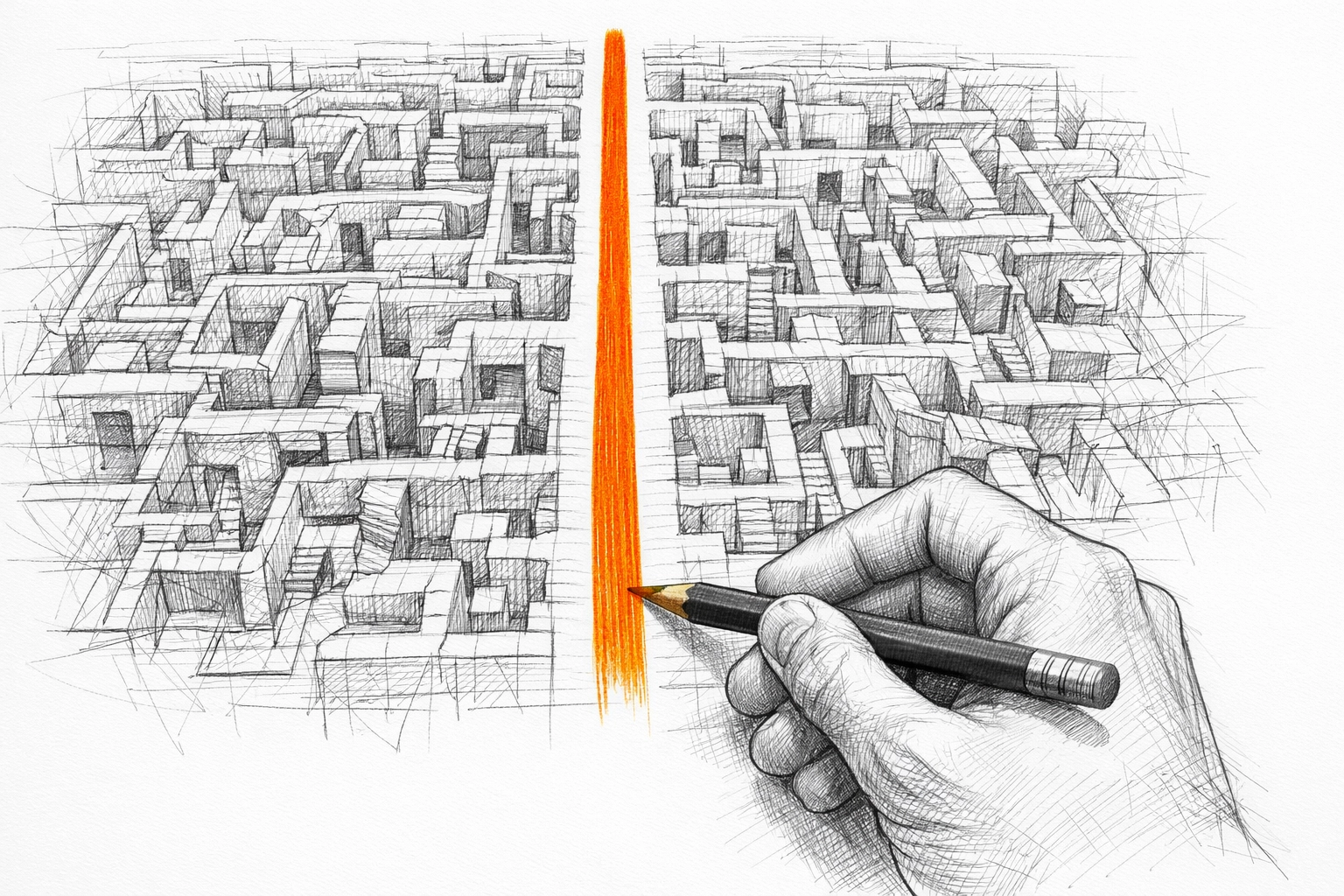
Pencil sketch of a hand holding a graphite pencil, drawing a clear path through a maze, selective red accent on the path to represent the streamlined process of in-house CEU development.
The CEU as the ultimate door opener
In a world where designers are increasingly hard to reach, the CEU remains the most effective "door opener" in the manufacturer’s toolkit. It is one of the few ways to get an entire design team in one room (or one Zoom call) for sixty minutes.
However, that door only opens if the key fits the lock. In 2025, a 2021 key will not work. Your content needs to be as innovative as the products you are trying to sell. If you are still relying on an agency to tell you what is relevant, or if you are stuck with a library that is gathering digital dust, you are handing your market share to competitors who are more agile.
The transition to a modern CEU strategy is not just a marketing project; it is a core sales necessity. It ensures that when your reps reach out to the firms that matter most, they are bringing value that justifies the designer's time.
Take control of your educational pipeline
If your 2025 meeting calendar is looking thinner than you’d like, the first place to look is your CEU library. Don't let a high investment from four years ago keep you anchored to irrelevant content. The market has moved on, and your education must move with it.
Stop paying for access you could own and stop waiting for agencies to tell your story. You have the technical expertise within your walls to create world-class education. You simply need the tools to package that expertise and get it accredited without the friction of the old model.
To see how you can transform your outdated library into a high-velocity sales tool, visit ceubuilderhq.com or book a demo today. We will show you how to take your existing product knowledge and turn it into IDCEC-compliant, submission-ready content that opens doors and wins specifications in 2025.
