

Top 8 Accreditation Management Software 2026

Managing accreditation has never been more important and choosing the right software can make all the difference. With new tools entering the market every year, the search for the perfect match can be both exciting and overwhelming. Some platforms offer simple solutions while others pack in advanced features for complex needs. What sets each option apart and which one fits your process best? Take a closer look and discover which choices stand out for 2026.
Table of Contents
- CEU Builder
- Watermark Accreditation Solutions
- Blackboard (formerly Anthology)
- Weave Education
- SPOL
- Axiom Mentor
- Watermark Insights
- Anthology (formerly Blackboard, Ellucian, Encoura)
CEU Builder
At a Glance
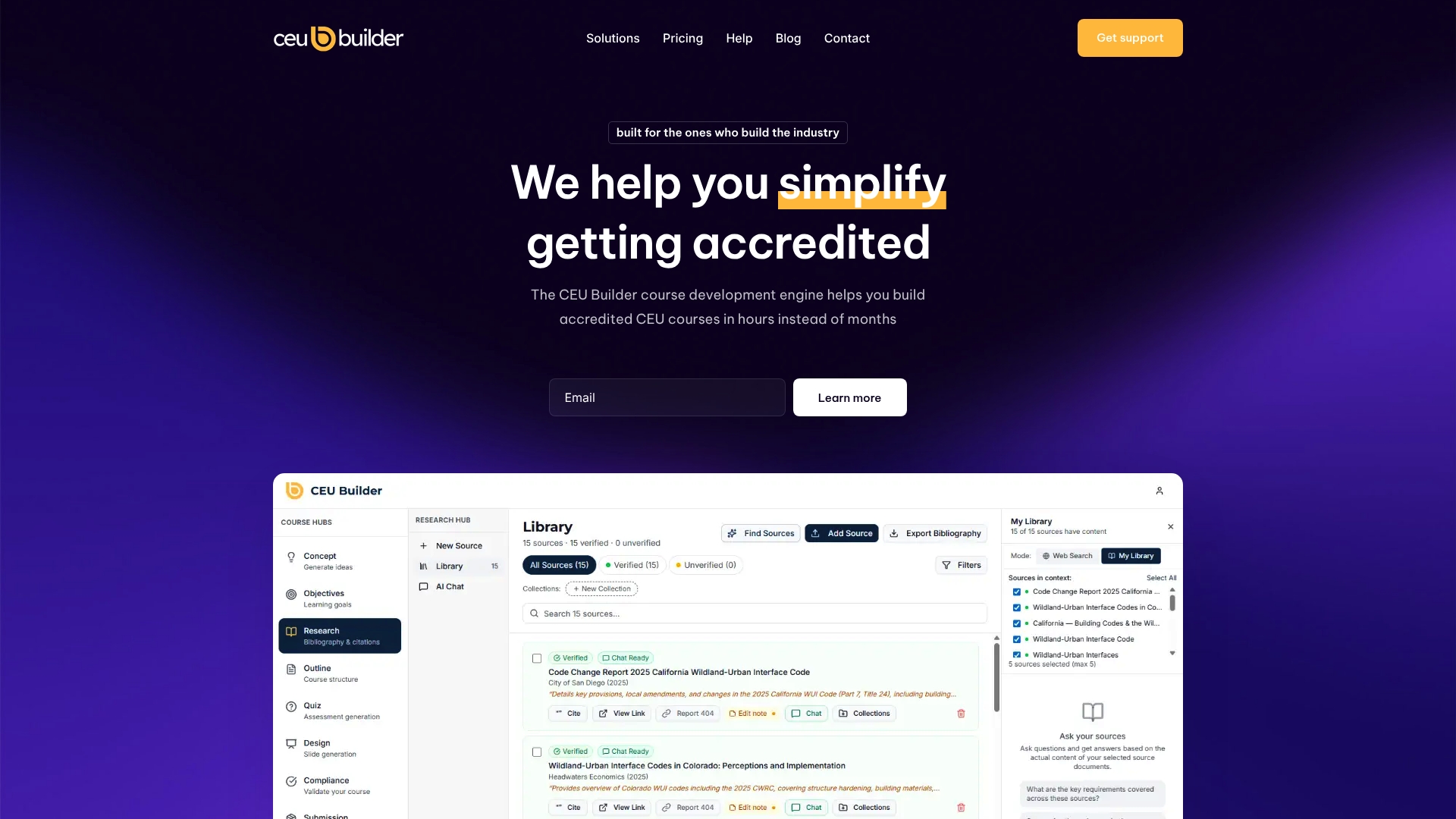
CEU Builder is a focused course development platform that helps manufacturers build accredited CEU content quickly and reliably. Its guided workflow and automated validation cut traditional development time dramatically while keeping compliance front and center.
Fast. Compliant.
Core Features
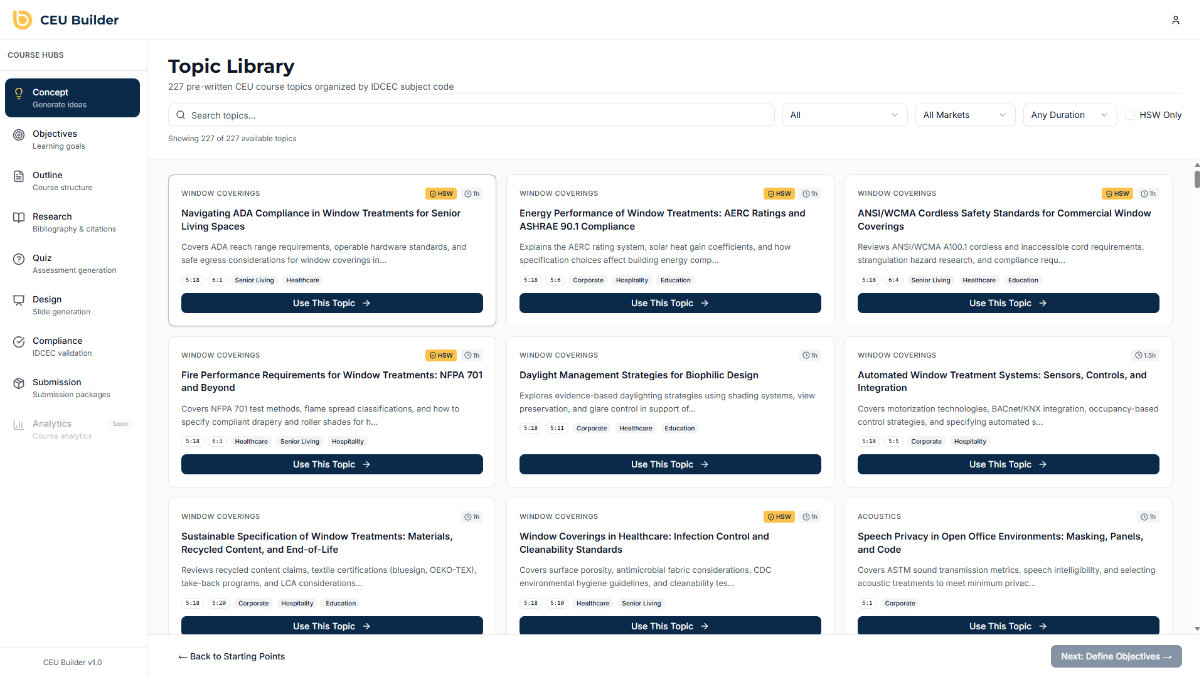
CEU Builder combines a guided course development workflow with AI powered content generation and a prebuilt topic library tied to IDCEC codes. The platform provides automatic compliance validation against IDCEC standards and team collaboration tools for role assignments and review.
This mix makes it possible to move from topic idea to accreditation with fewer handoffs and less rework.
Pros
- Speeds up course creation from months to hours: The guided workflow and AI powered outline and quiz generation drastically reduce content development time for internal teams.
- Reduces costs compared to traditional agency routes: Building courses in platform avoids high agency fees while retaining accreditation quality.
- Includes a comprehensive library of topics and compliance checks: The prebuilt library of over 200 topics organized by IDCEC codes simplifies topic selection and ensures alignment with reviewer expectations.
- Supports team collaboration for scalable workflows: Role assignment and collaboration tools let product, marketing, and compliance teams work in parallel without version chaos.
- Offers automated content and compliance validation: The platform flags compliance gaps and generates accreditation ready components so you submit with confidence.
Who It’s For
CEU Builder serves manufacturers and organizations in the hospitality industry that need accredited CEU courses delivered quickly and cost effectively. It fits marketing leaders, product teams, and training managers who want to own course creation rather than outsource every project.
Ideal users are teams that already interact with architects and designers and want to convert educational touch points into specification opportunities.
Unique Value Proposition
CEU Builder uniquely combines accreditation aware tooling with AI powered content creation and a topic library mapped to IDCEC codes so you do less compliance guesswork and more value creation. The platform reduces both calendar time and cost by removing typical accreditation pitfalls while preserving human review for technical accuracy.
The result is repeatable production of accredited courses that scale across product lines and marketing initiatives.
Real World Use Case
A hospitality product manufacturer uses CEU Builder to produce multiple accredited training courses for architects and designers ahead of a trade show cycle. The team selects topics from the prebuilt library, uses AI powered outlines to accelerate script development, and relies on automatic validation to ensure IDCEC alignment before submission.
This workflow lets the manufacturer launch several courses within weeks rather than months while keeping internal teams focused on product messaging.
Pricing
Flexible plans start at $267 per month with monthly or annual billing options and tiers to support individuals, mid sized teams, and large enterprises.
Website: https://ceubuilder.com
Watermark Accreditation Solutions
At a Glance
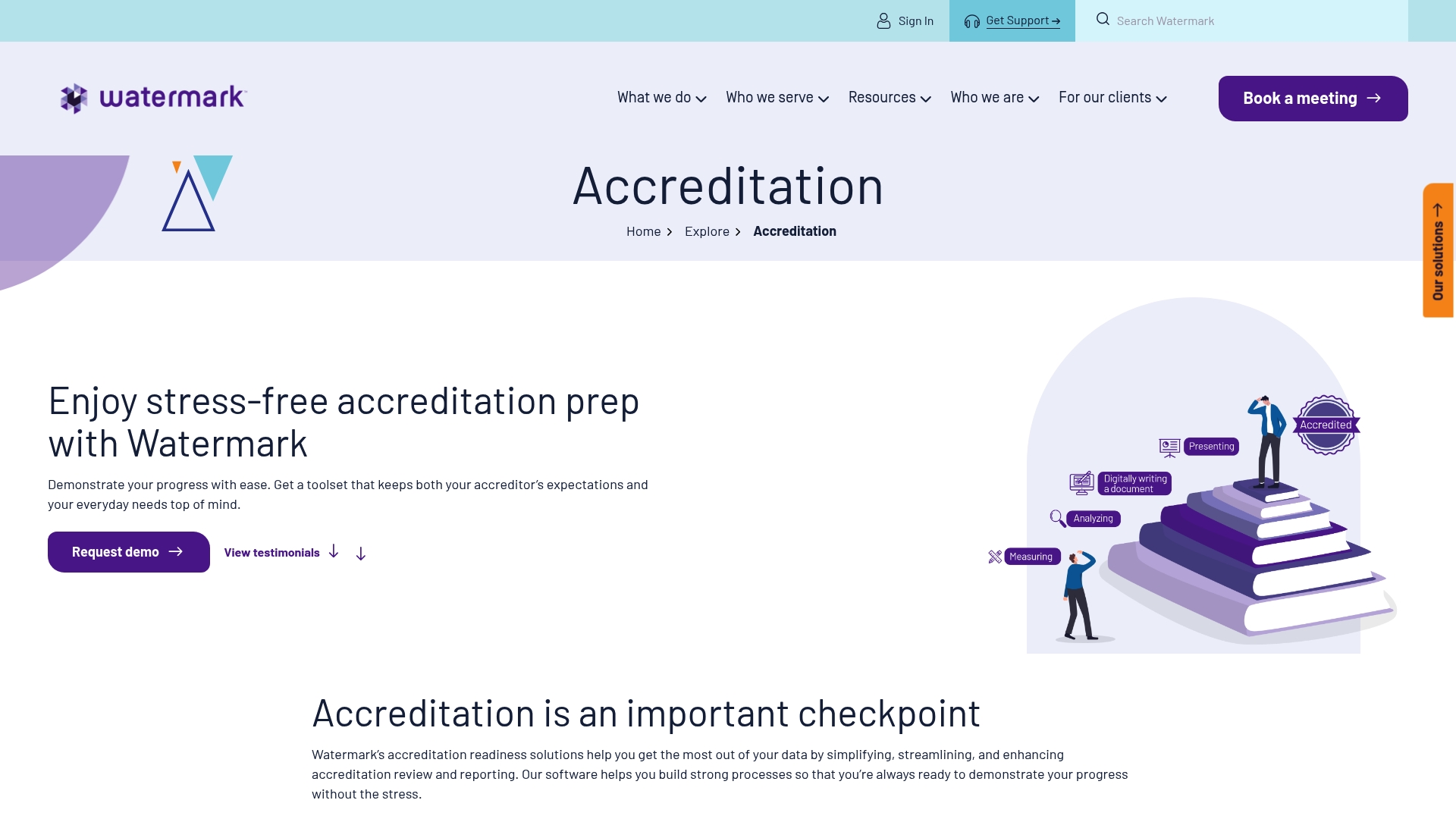
Watermark offers accreditation readiness tools that help institutions prepare for reviews without last-minute scrambling. The suite focuses on evidence management, reporting, and campus collaboration so accreditation officers spend less time hunting for documents and more time on improvement.
Core Features
Watermark centers on data collection, collaborative reflection, and automated outputs that support ongoing institutional effectiveness.
- Assessment and programmatic data collection built to gather and synthesize evidence across departments.
- Collaborative tools for reflection and action planning that engage faculty and administrative staff.
- Automated reporting and evidence compilation that reduce manual assembly of review materials.
- Support for multiple regional agencies including HLC, SACSCOC, MSCHE, WASC, NWCCU, and NECHE.
- Tools aimed at institutional effectiveness and continuous improvement tracking.
Pros
- Reduces last-minute work: The platform helps institutions prepare for accreditation with less stress and less frantic data gathering before review deadlines.
- Drives improvement with data: Built-in analytics and reporting encourage continuous improvement through clearer, data-driven insights.
- Broad agency coverage: Support for multiple accreditation agencies makes the product useful for institutions working with different regional standards.
- Promotes campus engagement: Collaborative features make it easier for faculty and staff to contribute evidence and reflection during reviews.
- Strong evidence management: Automated reports and centralized evidence storage simplify the compilation of required documentation.
Cons
- Pricing transparency is limited on the website and does not list a clear pricing model.
- Adoption requires institutional commitment and training to reach full value.
- Some advanced capabilities may need extra integration or setup work before they perform as intended.
Who It’s For
Watermark suits higher education institutions focused on improving accreditation workflows and institutional effectiveness. Accreditation officers, assessment directors, faculty leads, and administrative staff who manage evidence and reporting will find the platform relevant.
Unique Value Proposition
Watermark combines evidence collection, collaborative reflection, and automated reporting in one product to shift accreditation work from frantic document hunts to ongoing improvement cycles. Its support for multiple accrediting bodies and campus engagement features makes it a practical choice for institutions with complex review requirements.
Real World Use Case
A university used Watermark to compile and manage evidence for an HLC accreditation review. The platform reduced manual work and last-minute data gathering by consolidating assessment documentation and automating report generation.
Pricing
Pricing is not specified on the website and requires direct contact with Watermark for a quote and licensing details.
Website: https://www.watermarkinsights.com/explore/accreditation/
Blackboard (formerly Anthology)
At a Glance
Blackboard combines a broad set of educational tools that address learning management, accessibility, assessment, and institutional intelligence. Its strength is an integrated platform designed for higher education, though the suite can be complex to deploy and budget for.
Core Features
Blackboard centers on a modular product set that covers learning and institutional workflows.
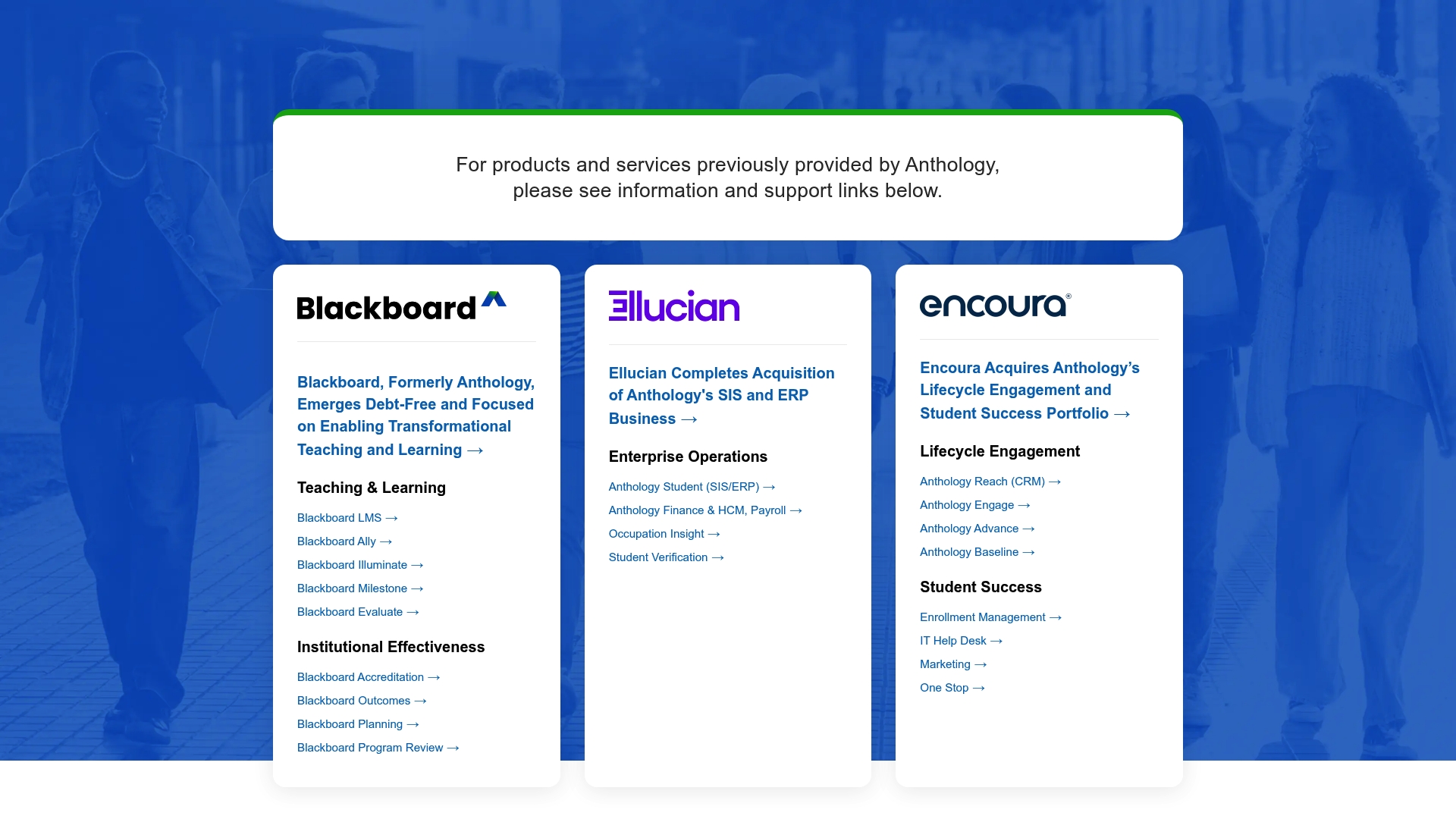
- Blackboard LMS for course delivery and learning management
- Blackboard Ally for accessibility and compliance
- Blackboard Illuminate for institutional intelligence and reporting
- Blackboard Milestone for career development workflows
- Blackboard Evaluate for assessment and accreditation management
These modules work together to support teaching, student engagement, and data driven planning across campus systems.
Pros
-
Comprehensive suite: The product lineup covers teaching, learning, student success, and institutional effectiveness in one vendor offering, reducing the need for multiple point solutions.
-
Strong integration: Blackboard integrates with common institutional systems which helps centralize data and reduce duplicate administrative work.
-
Student success focus: The platform includes tools aimed at lifecycle engagement and career development which help institutions track outcomes and support retention.
-
Backed by experienced organizations: Acquisition and support from known education technology organizations provide stability and ongoing investment in the platform.
-
Innovation emphasis: The product mix shows attention to accessibility and institutional intelligence which aligns with modern accreditation and compliance priorities.
Cons
-
Complex implementation: The suites breadth means institutions will likely need significant implementation support and project management resources to achieve a clean deployment.
-
Cost considerations: Pricing is not published and advanced features and licensing across modules can increase total cost of ownership for institutions.
-
Integration complexity: Connecting Blackboard to a campuss existing systems requires technical integration work and coordination with legacy platforms.
Who It’s For
Blackboard is best for higher education institutions that need an enterprise grade, integrated solution for course delivery, accessibility, assessment, and institutional reporting. Large campuses and multi campus systems that can commit implementation resources will gain the most value.
Unique Value Proposition
Blackboard offers a unified ecosystem of products that ties learning management to accessibility and institutional intelligence. That integration creates a single vendor path from course design to accreditation reporting which helps institutions align teaching outcomes and administrative decision making.
Real World Use Case
A university adopts Blackboard LMS and Blackboard Ally to make online courses more accessible while using Illuminate to track program level outcomes. Faculty deliver courses through the LMS and institutional planners pull consolidated reports for accreditation and strategy sessions.
Pricing
Pricing is not specified on the public website and likely varies by selected modules and institution size. Budget planning should account for license costs, implementation services, and ongoing integration support.
Website: https://anthology.com
Weave Education
At a Glance
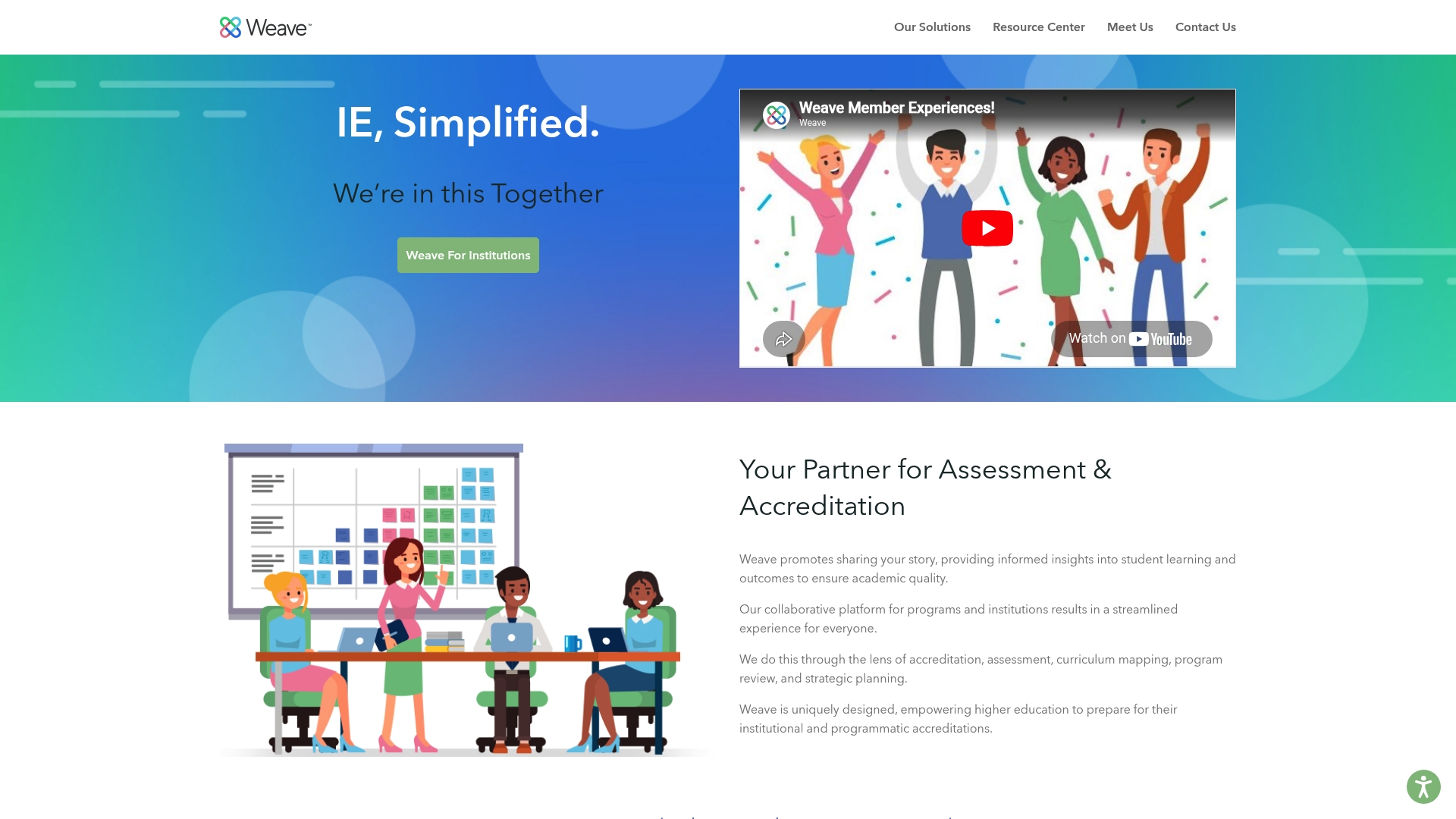
Weave Education is a centralized platform built for higher education teams to manage assessment, accreditation, and curriculum mapping with clarity and purpose. Its strength lies in combining programmatic and institutional workflows into a single, report-ready environment that reduces manual paperwork.
Core Features
Weave focuses on programmatic and institutional assessment in one place and pairs that with powerful dashboards for quick insight. The platform offers an unlimited data repository for standards evidence, strengthened permissions and workflow controls, and tools for creating dynamic reports with version control and consistent formatting.
Pros
- Higher education focus: The product is designed specifically for accreditation and assessment work, which aligns feature sets with reviewer expectations and compliance needs.
- User friendly dashboards: Visual summaries make it easier for administrators to spot gaps in student learning and program outcomes without digging through spreadsheets.
- Unified assessment management: The platform supports both institutional and programmatic assessment, reducing the need to reconcile data across separate tools.
- Robust evidence storage: An unlimited repository simplifies long term record keeping for standards related documentation and accreditation cycles.
- Active community support: Professional support and a user community help teams adopt best practices and share templates and workflows.
Cons
- Pricing is not listed on the website, which makes budget planning and vendor comparisons slower for procurement teams.
- New users unfamiliar with accreditation processes will face a learning curve before they can leverage reporting and mapping features efficiently.
- The product page does not list specific integrations with institutional systems, leaving questions about SIS, LMS, and single sign on compatibility.
Who It’s For
Weave targets higher education administrators, assessment coordinators, accreditation officers, and faculty who manage institutional quality work. For hospitality manufacturers considering accreditation software for CEU development, Weave is not a direct fit because its workflows center on academic accreditation rather than professional CEU course accreditation.
Unique Value Proposition
Weave combines long form evidence management with presentation ready reporting so institutions can move from scattered files to a repeatable accreditation process. The platform’s value comes from aligning assessment data, permissions, and report generation in one centralized system backed by a supportive user community.
Real World Use Case
A university uses Weave to collect assessment metrics across departments, map curriculum outcomes to program goals, and generate compliance reports for accreditation reviews. Centralizing evidence and versioned reports reduces manual compilation time and improves consistency across review cycles.
Pricing
Pricing details are not specified on the website and require direct contact with sales to obtain quotes and deployment options.
Website: https://weaveeducation.com
SPOL
At a Glance
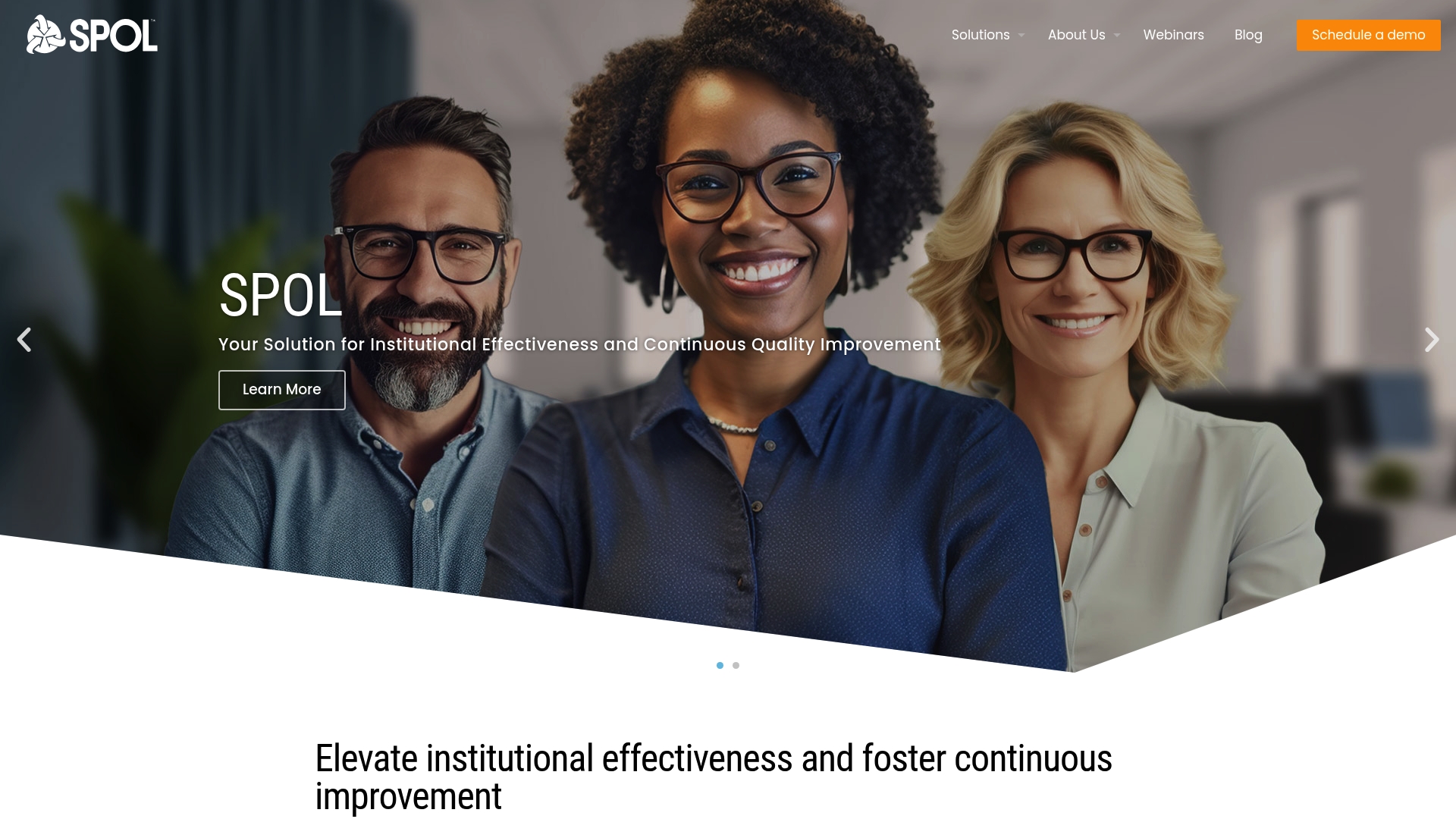
SPOL is a comprehensive institutional effectiveness platform built for educators by educators that focuses on continuous quality improvement and accreditation readiness. Its strength is in combining planning, assessment, and budgeting into a single workspace that surfaces real time insights for decision makers.
Core Features
SPOL brings together integrated planning, accreditation, assessment, credentialing, and budgeting modules in one platform. Collaboration tools and customizable workflows support cross functional teams while real time data analysis helps track performance against student success thresholds and compliance tasks.
Pros
- Comprehensive coverage: The platform manages multiple institutional functions so teams avoid tool fragmentation and duplicated efforts.
- Data driven decision making: Built in analytics and reporting deliver actionable insights that shorten review cycles and highlight performance gaps.
- User friendly interface: The product is designed for higher education staff, which helps reduce friction during routine planning and assessment work.
- Stronger collaboration: Shared workspaces and assessment tools improve coordination across academic and administrative units.
- Quality improvement focus: Modules support continuous improvement cycles that align strategic planning with accreditation needs.
Cons
- Pricing is not specified on the website, which makes budget planning difficult for procurement teams evaluating options.
- The site does not describe implementation and training processes, leaving questions about time to value and required internal resources.
- Smaller institutions with limited staff or technical resources could find the platform complex to adopt without dedicated support.
Who It’s For
SPOL matches higher education administrators, institutional effectiveness officers, and faculty engaged in planning, assessment, accreditation, and budgeting workflows. Departments preparing for accreditation reviews or seeking a single system to link program review to budgeting will find SPOL relevant.
Unique Value Proposition
SPOL centralizes the processes that normally live in separate tools so institutions can manage accreditation readiness and continuous improvement from one system. The primary differentiator is that the product is educator centric and designed to convert assessment data into operational actions.
Real World Use Case
A university uses SPOL to coordinate accreditation documentation across colleges, streamline program reviews, and align budget requests with strategic priorities. The result is improved compliance tracking and clearer evidence for accrediting bodies during review cycles.
Pricing
Pricing is not specified on the website, so procurement teams should request a formal proposal or demo to get accurate licensing and implementation estimates.
Website: https://spol.com
Axiom Mentor
At a Glance
Axiom Mentor is an education focused mentoring platform built for institutions and educators seeking secure, structured mentoring workflows. The platform emphasizes reliability with browser compatibility and visible security policies that appeal to enterprise and academic IT teams.
Core Features
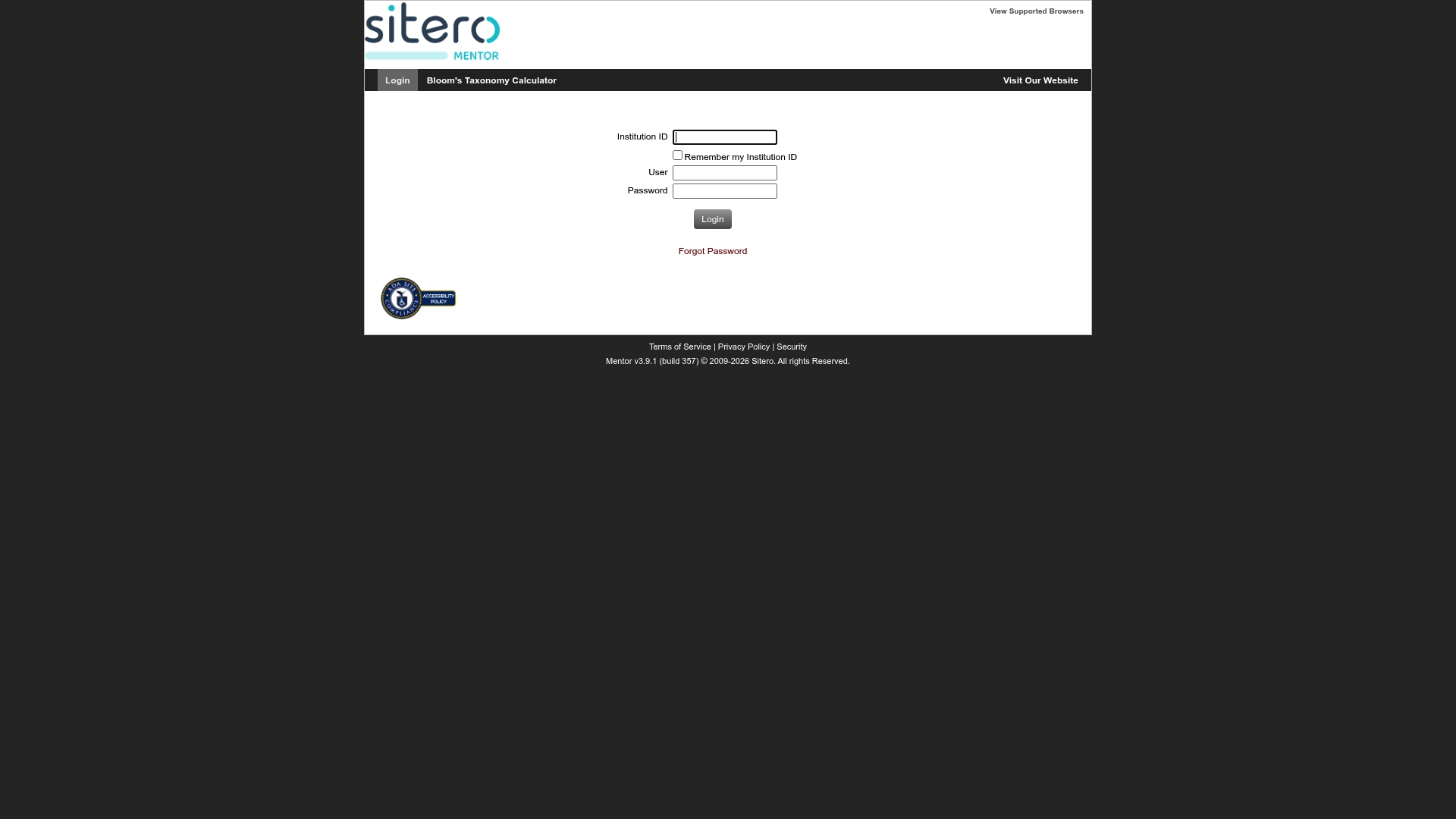
Axiom Mentor centers on mentor session management, an institutional login model, and an educational toolset that includes a Bloom’s Taxonomy Calculator. The product highlights security and compliance controls and browser support to reduce access friction for campus networks.
Pros
- Trusted security posture: The platform lists trusted site certification and explicit security policies that give IT teams confidence when approving institutional access.
- Broad browser support: Axiom Mentor supports multiple browsers and platforms so instructors and students can connect without forcing a single browser choice.
- Educational toolkit: The built in Bloom’s Taxonomy Calculator provides a quick way for educators to align learning objectives to assessments.
- Institutional focus: The platform is designed around institution level workflows which simplifies provisioning and account management for schools and training organizations.
- Compliance attention: Clear mention of compliance features makes the product easier to evaluate for formal programs that require audit trails.
Cons
- Limited public detail: Public documentation does not disclose specific mentoring workflows or interaction patterns which makes feature comparison difficult.
- Institution ID requirement: Requiring an institution ID for access likely blocks independent instructors and small teams from trialing the service easily.
- Unclear engagement metrics: The available information does not specify reporting, completion tracking, or learner engagement measures that buyers often need.
Who It’s For
Axiom Mentor fits educational institutions, training organizations, and educator networks that require secure, campus friendly mentoring. It works best for teams that already manage institutional credentials and want an education first tool rather than a marketplace for individual tutors.
Unique Value Proposition
The platform combines session management and a Bloom’s Taxonomy utility with institutional authentication and visible security controls. That package attracts IT conscious buyers who prioritize compliance, straightforward provisioning, and pedagogical tooling over consumer facing features.
Real World Use Case
A university deploys Axiom Mentor to run a faculty mentoring program. Administrators provision accounts through the institution login, mentors schedule and record sessions using the session management tools, and course designers use the Bloom’s Taxonomy Calculator to build aligned assessments.
Pricing
Pricing is not specified in the provided content so procurement teams will need to contact Axiom Mentor directly for licensing models and institutional rates.
Website
Website: https://axiommentor.com
Watermark Insights
At a Glance
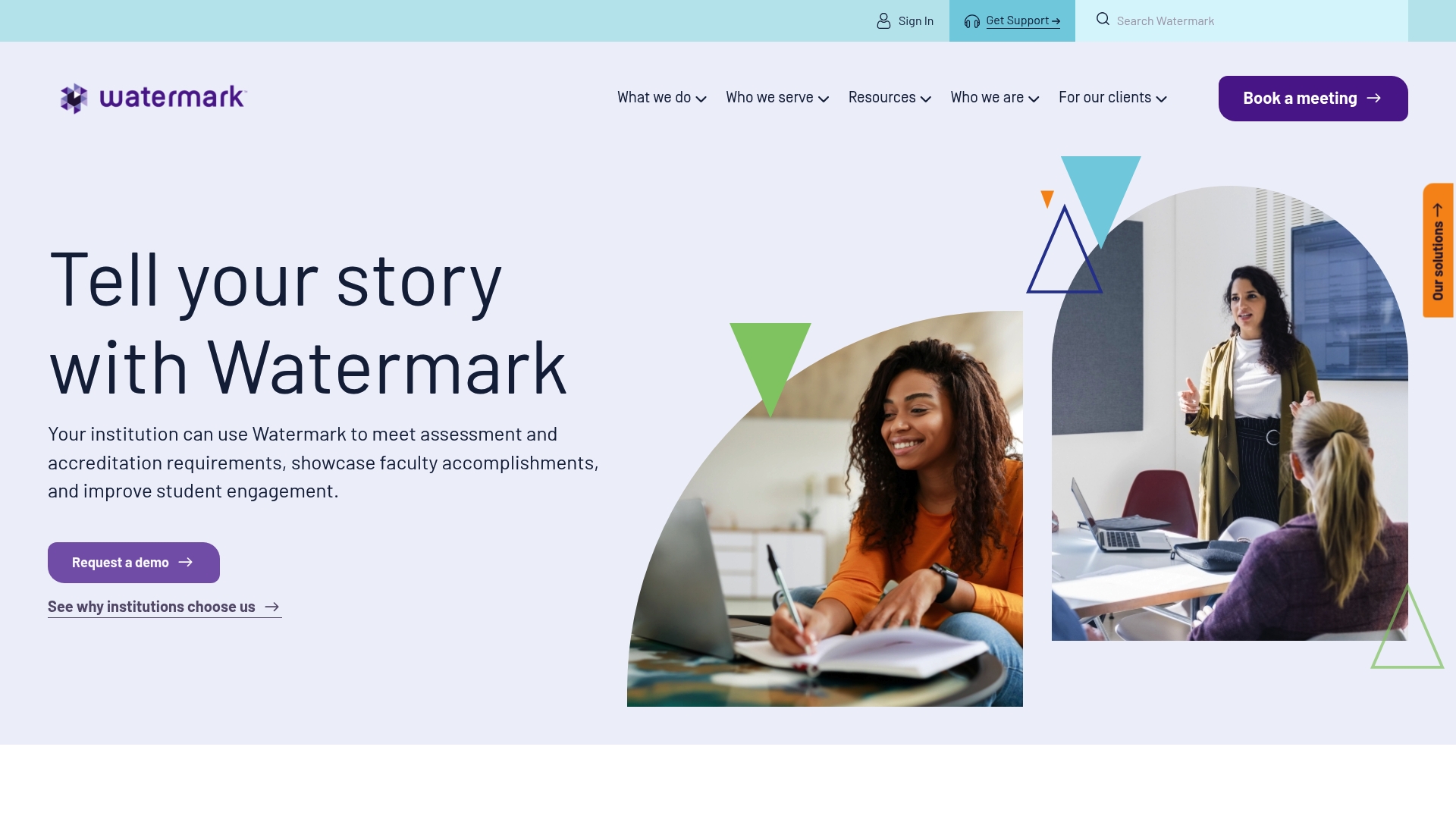
Watermark Insights is a comprehensive platform for higher education teams that need centralized assessment and accreditation management. It combines automated data collection with reporting tools to reduce manual work and improve institutional decision making.
Core Features
The platform bundles assessment and accreditation management, faculty activity tracking, student success monitoring, and curriculum mapping into a single system. It also offers robust reporting and dashboards and integrates with common LMS and SIS platforms to unify data sources.
Pros
- Comprehensive Accreditation Support: The product supports end to end accreditation workflows which helps institutions keep documentation organized and audit ready.
- Improved Data Accessibility: Consolidated dashboards and reports make it easier for stakeholders to find and act on assessment results quickly.
- Higher Evaluation Response Rates: Automated surveys and course evaluation tools improve completion rates and raise data quality for program assessment.
- Cross Department Collaboration: Shared templates and centralized storage facilitate collaboration across departments and committees.
- Customizable Reporting Templates: Administrators can tailor reports and templates to match institutional standards and reviewer expectations.
Cons
- Feature Complexity for New Users: The platform has many modules which create a steep learning curve for teams onboarding for the first time.
- Cost Pressure for Smaller Programs: Pricing is typically customized which can result in higher costs for smaller institutions or single programs.
- Advanced Feature Learning Curve: Leveraging advanced analytics and mapping tools requires training time and administrative investment.
Who It’s For
Watermark Insights fits Higher Education institutions that run multi program assessments and require centralized accreditation tracking. Academic leaders, assessment coordinators, and institutional research offices managing cross campus reporting will gain the most value.
Unique Value Proposition
The product centralizes disparate assessment activities into one platform so institutions have a single source of truth for accreditation evidence and program evaluation. The mix of faculty activity tracking, curriculum mapping, and integration with LMS and SIS systems stands out for institutions balancing compliance and improvement efforts.
Real World Use Case
A university uses Watermark to compile accreditation reports, log faculty research and achievements, and run course evaluations each term. That consolidated process reduced the time spent preparing self study materials and improved transparency for accrediting reviewers.
Pricing
Pricing is available upon request and is typically tailored to institutional needs and scale. Procurement teams should request a detailed quote that reflects the number of modules and integrations required.
Website: https://watermarkinsights.com
Anthology (formerly Blackboard, Ellucian, Encoura)
At a Glance
Anthology offers a broad, integrated set of educational tools that bundle learning management, accessibility, assessment, and institutional intelligence into one platform. For organizations that need deep accreditation and assessment support, Anthology provides a single vendor option with strong enterprise capabilities.
Core Features
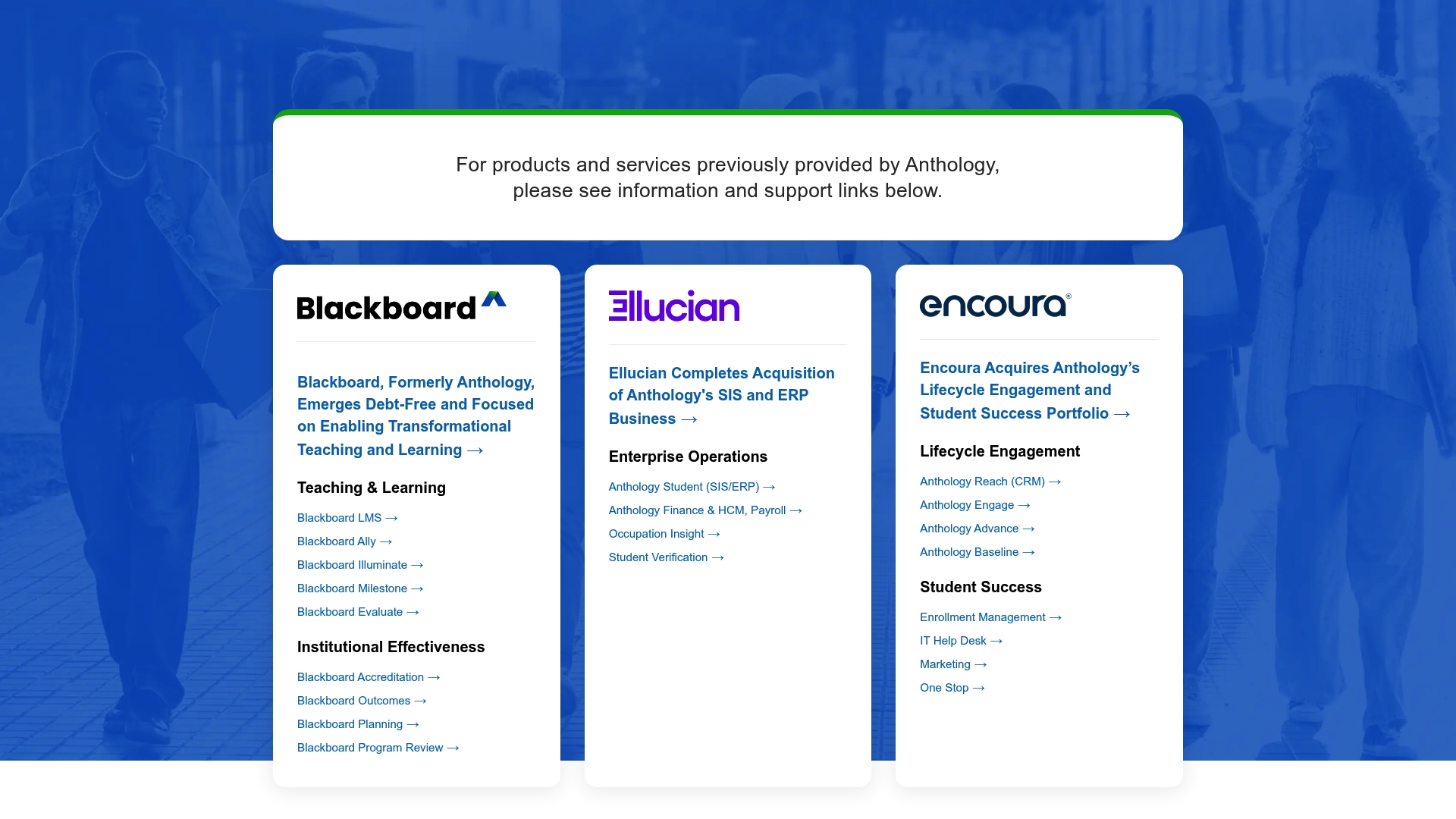
Anthology combines Blackboard LMS for course delivery with Blackboard Ally for accessibility and Blackboard Illuminate for institutional intelligence. The suite also includes Blackboard Evaluate for assessment and accreditation workflows and Anthology Student for SIS and ERP functions. Finance and HCM tools plus occupation insights and student verification services round out the platform.
Pros
-
Comprehensive suite: Anthology covers learning, assessment, student management, and enterprise operations so institutions avoid stitching multiple vendors together.
-
Strong integration options: The platform integrates LMS, accreditation workflows, student data, and administrative systems which reduces duplicate data entry and reporting gaps.
-
Backed by major acquisitions: The Ellucian and Encoura history expands resources and product depth which supports long term roadmaps and enterprise support.
-
Accessibility focus: Including Blackboard Ally signals a clear commitment to accessible content which helps compliance and improves learner experience.
-
Designed for transformation: The product set supports modern teaching and learning methods while supplying analytics and insights for strategic planning.
Cons
-
Product complexity increases onboarding needs: The large portfolio creates a steep learning curve which requires time and resources for configuration and staff training.
-
Custom pricing structure adds procurement work: Many modules carry subscription or licensing fees which means budgeting requires detailed scoping and vendor negotiation.
-
Post acquisition integration work may be required: Transitioning and consolidating products from prior acquisitions can create temporary technical and operational friction.
Who It’s For
Anthology is best for colleges and universities that need an integrated technology stack across teaching, assessment, student information, and administration. Institutions running multiple campuses or seeking consolidated reporting and accreditation workflows will find the platform most relevant.
Unique Value Proposition
Anthology’s value is the combined breadth of its tools delivered by one vendor. Institutions gain an integrated platform that links course delivery to accreditation data and enterprise operations which reduces administrative friction and centralizes reporting for compliance and strategic decision making.
Real World Use Case
A university deploys Blackboard LMS for online and hybrid courses, enables Blackboard Ally to meet accessibility goals, and uses Blackboard Illuminate to analyze retention and program performance. Blackboard Evaluate manages accreditation evidence and program review in a coordinated workflow.
Pricing
Pricing is not specified and is typically custom based on institutional needs and selected modules. Vendors provide quotes after scoping desired features, user counts, and integration requirements.
Website: https://anthology.com
Education and Accreditation Management Tools Comparison
This table provides a comparison of multiple platforms designed for educators, manufacturers, and institutions to aid in course creation, accreditation management, and institutional workflows.
| Platform | Core Features | Pros | Pricing | Target Audience |
|---|---|---|---|---|
| CEU Builder | Guided workflow; AI-powered content creation; automatic validation. | Reduces creation time; lowers costs; collaboration tools; compliance. | Starting at $267/month. | Manufacturers, product teams, training managers. |
| Watermark | Evidence management; automated reporting; agency support. | Reduces prep time; drives data improvement; campus collaboration. | Quote available on request. | Higher education institutions. |
| Blackboard | Modular product integration; extensive educational tools. | Comprehensive suite; student-focused; innovative emphasis. | Pricing upon inquiry. | Higher education multi-campus systems. |
| Weave Education | Data repository; dynamic report creation; curriculum mapping. | User dashboards; evidence storage; higher education focus. | Contact for pricing options. | Academic administrators, accreditation officers. |
| SPOL | Integrated planning; real-time insights; customization options. | Centralized functions; data-driven strategies; educator-designed. | Custom quotes required. | Administrators engaging in planning and budgeting. |
| Anthology | Accessible learning tools; institutional efficiency dashboards. | Unified platform; analytics; long-term solution offering. | Request for pricing. | Academic institutions aiming for consolidated operations. |
Accelerate Your Accreditation Success with CEU Builder
The challenge of navigating complex accreditation requirements and lengthy course development timelines is clear in the “Top 8 Accreditation Management Software 2026” article. Hospitality manufacturers and education teams struggle with slow turnaround, costly failures, and content that fails to engage architects and designers effectively. CEU Builder solves these pain points with a proven 100% first-pass accreditation rate and rapid 4-6 week development cycles that turn accredited continuing education from a compliance headache into a business-driving asset.
Why struggle with uncertainty and delays when you can leverage a platform designed for speed, accuracy, and demand generation? CEU Builder’s tailored courses connect directly to IDCEC standards and architect needs, enabling manufacturers to influence specification decisions confidently. Discover how our done-for-you service or DIY platform options fit your internal capacity.
Explore how CEU Builder transforms your accreditation process at CEU Builder. Learn more about our strategic approach and unique methodology today.
Ready to move beyond compliance theater? Visit CEU Builder to accelerate your accreditation journey and start creating courses architects and designers value. Act now to gain a competitive advantage with education that drives real specification results.
Frequently Asked Questions
What features should I look for in accreditation management software?
Look for features that support automated data collection, reporting tools, and collaboration functionalities. Choose software that simplifies compliance tasks and centralizes documentation for effective accreditation management.
How can accreditation management software improve my institution’s workflow?
Accreditation management software can streamline document management and reduce manual labor through automation. Implementing such software can save your team significant time during assessment cycles, allowing for quicker preparation of accreditation submissions.
How do I assess if an accreditation management software fits my institution’s needs?
Assess your institution’s specific requirements by evaluating current processes and identifying gaps. Review software features that align with your accreditation goals and consider functionalities like data reporting and faculty collaboration tools.
What is the typical implementation timeline for accreditation management software?
The implementation timeline can vary, but most institutions can expect to complete setup and training within 30 to 90 days. Plan for adequate staff training to maximize the software’s capabilities and ensure a smooth transition.
How can I measure the effectiveness of accreditation management software after implementation?
Measure effectiveness by tracking time saved on accreditation tasks, increased accuracy in data reporting, and improved completion rates for compliance documentation. Conduct periodic reviews to refine processes based on data insights collected through the software.
What are common challenges when using accreditation management software?
Common challenges include adapting to new workflows and overcoming resistance to change among staff. Provide thorough training and ongoing support to address these issues and ensure all team members are comfortable with the new system.
Recommended
