

Why fast course delivery boosts specifier influence

Most hospitality manufacturers assume that creating high-quality continuing education courses requires six to twelve months of careful development. This belief costs them specifications and revenue every quarter they delay. Fast course delivery using AI-driven methodologies and streamlined accreditation processes can compress development timelines to four to six weeks without sacrificing quality or compliance. For manufacturers targeting architects and designers who control product specifications worth millions in project value, speed directly translates to competitive advantage. This article explains how rapid CEU development works, when to deploy it strategically, and how to implement it for measurable specification growth.
Table of Contents
- Key takeaways
- How rapid course delivery transforms continuing education in hospitality manufacturing
- Why fast courses matter for specifier engagement and specification growth
- Balancing speed with quality: when to use fast course delivery and its limitations
- Implementing fast CEU delivery to maximize hospitality manufacturer ROI
- Streamline your CEU course delivery with CEU Builder
- Frequently asked questions
Key Takeaways
| Point | Details |
|---|---|
| Rapid CEU delivery | Rapid CEU delivery using AI driven templates and streamlined reviews compress development from months to four to six weeks while preserving quality and compliance. |
| Higher architect engagement | Fast courses engage architects and designers, increasing specification rates and shifting the relationship toward educational partnerships. |
| Speed and quality balance | AI assistance with human oversight maintains educational rigor and accreditation compliance while keeping production timelines tight. |
| Modular templates advantage | Modular slide templates and reusable frameworks allow quick updates for regulatory or product changes, cutting development time further. |
| Specification growth uplift | CEU programs raise the likelihood of manufacturers being specified by architects by four to six times. |
How rapid course delivery transforms continuing education in hospitality manufacturing
Rapid e-learning methodologies enable course creation in weeks instead of months using templates, AI tools, cloud platforms, and streamlined reviews, cutting development time by 40-60%. This acceleration fundamentally changes how hospitality manufacturers can respond to market opportunities and architect needs.
The core technologies driving fast CEU development include AI-generated content outlines that structure learning objectives around IDCEC requirements, reusable slide templates that maintain visual consistency while adapting to different product categories, cloud collaboration platforms that eliminate version control delays, and compressed review cycles that focus feedback on strategic elements rather than technical formatting.
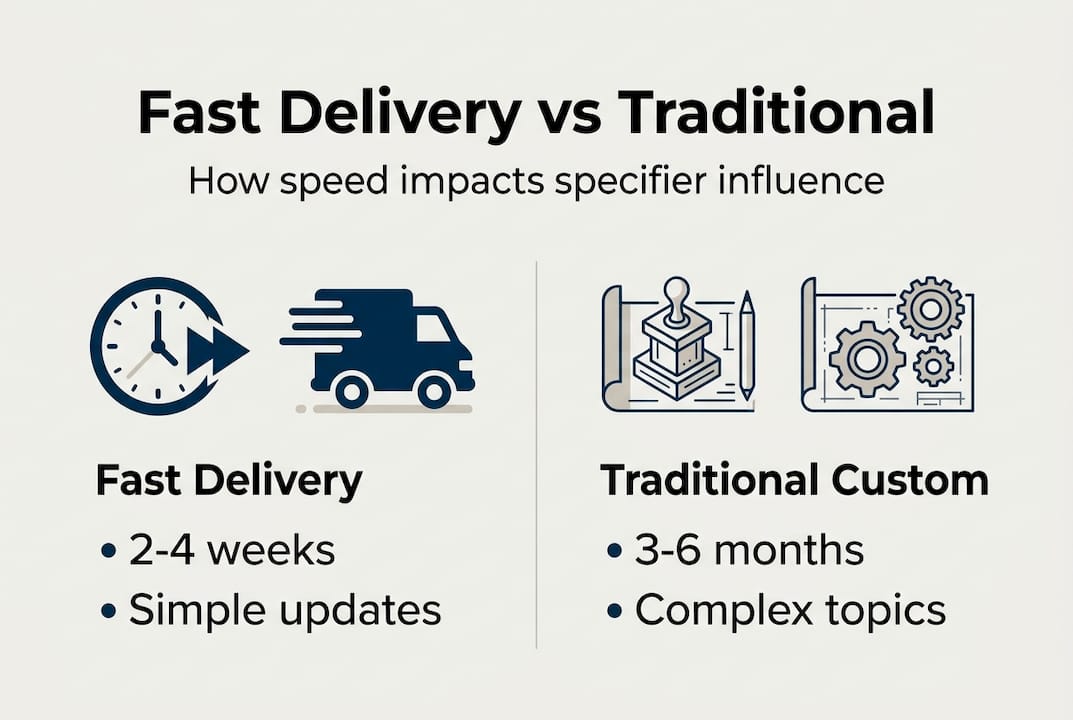
These approaches reduce traditional content creation times from three to six months down to two to four weeks. A furniture manufacturer launching a new seating line can have accredited education ready before the product hits showrooms. A lighting company responding to updated energy codes can deliver compliant training to architects within weeks of regulatory changes taking effect.
Balance remains critical throughout rapid development. AI accelerates foundational content creation by drafting initial outlines, generating learning objectives aligned with IDCEC standards, and structuring exam questions that test comprehension. However, creating effective IDCEC CEU courses requires human review for accreditation compliance, particularly around Health Safety Welfare standards that demand nuanced understanding of how products impact building occupant wellbeing.
This methodology suits hospitality manufacturers focusing on product specifications and compliance updates targeted at design professionals. A textile company can rapidly deploy courses covering flame resistance standards. A surfacing manufacturer can quickly educate architects about new antimicrobial treatments. The speed advantage matters most when content addresses urgent market needs or time-sensitive regulatory requirements.
Pro Tip: Use modular templates to accelerate updates for frequent regulatory or product changes. Build a library of reusable slide frameworks covering common topics like sustainability metrics, installation requirements, or maintenance protocols. When new products launch or codes change, you can adapt existing templates rather than starting from scratch, cutting development time by another 30-40%.
The top continuing education tools 2026 comparison reveals that platforms combining AI assistance with expert oversight deliver the best balance of speed and quality. Manufacturers gain velocity without compromising the educational rigor that architects expect from accredited content.
Why fast courses matter for specifier engagement and specification growth
CEUs from manufacturers directly influence architect and designer specifications by providing technical education on products, increasing specification likelihood by 4-6x. This dramatic impact stems from how continuing education shifts the manufacturer-architect relationship from transactional selling to educational partnership.
Fast courses meet architects’ needs for timely, relevant education amid demanding project schedules. Design professionals juggle multiple projects simultaneously while maintaining licensure requirements that mandate annual continuing education credits. When manufacturers deliver focused, accredited content quickly, they solve two problems: architects get required credits efficiently, and manufacturers gain extended attention from decision-makers who would otherwise avoid sales conversations.

Rapid CEUs earning Health Safety Welfare credits enable quick credential maintenance, encouraging higher uptake rates. HSW-accredited courses fulfill the most valuable continuing education requirements for architects, making them prioritized learning opportunities. Manufacturers offering HSW courses through fast delivery capture architect attention before competitors complete slower development cycles.
| Engagement Type | Specification Rate | Timeframe |
|---|---|---|
| No CEU interaction | Baseline 1x | Standard sales cycle |
| Trade show contact only | 1.5-2x baseline | 3-6 months |
| CEU course completion | 4-6x baseline | 6-12 months |
| Multiple CEU completions | 7-10x baseline | 12-24 months |
Architects completing manufacturer CEUs value their involvement at 73%, favoring products with direct education. This preference translates directly to specification decisions when architects select materials, furniture, or lighting for hospitality projects.
Manufacturer-led education builds trust by positioning companies as subject matter experts rather than vendors. An architect who learns acoustic performance principles from a furniture manufacturer’s CEU course remembers that expertise six months later when specifying seating for a hotel conference center. The educational context creates credibility that traditional marketing cannot achieve.
Fast course delivery addresses specific specifier pain points:
- Meeting tight project deadlines with quick access to technical knowledge needed for specification decisions
- Learning about new products immediately upon market introduction rather than waiting months for education
- Staying current with regulatory compliance requirements through timely training on code changes
- Accessing on-demand education that fits unpredictable schedules better than scheduled webinars
The faster CEU approval boosts specs dynamic creates competitive moats. Manufacturers who deliver accredited education quickly capture architect attention and preference before slower competitors reach market. This timing advantage compounds over multiple product launches and regulatory cycles.
CEU registration specification influence extends beyond individual course completions. Architects who engage with a manufacturer’s educational content become warmer leads for sales teams. CRM data showing which architects completed which courses enables precise targeting and personalized follow-up that references specific learning rather than generic product pitches.
Balancing speed with quality: when to use fast course delivery and its limitations
| Factor | Fast Delivery | Traditional Custom |
|---|---|---|
| Development time | 2-4 weeks | 3-6 months |
| Cost range | $3,000-$8,000 | $15,000-$40,000 |
| Best for | Product specs, compliance updates, simple technical content | Complex technical training, faculty-led instruction, deep theoretical content |
| Quality level | High for focused topics with expert review | Highest for nuanced subjects requiring extensive research |
| Accreditation risk | Low with experienced providers | Low with proper planning |
Fast delivery suits simple content but risks quality compromise if rushed; complex training needs slower, custom approaches. Understanding these boundaries prevents manufacturers from applying rapid development inappropriately.
Fast delivery excels for urgent updates addressing regulatory changes affecting product specifications. When energy codes change or accessibility standards update, architects need immediate education to specify compliant products. Rapid development delivers timely training that maintains relevance.
Product specification content benefits from fast delivery because the information is straightforward and factual. Teaching architects how to specify acoustic panels, select appropriate fabric grades, or calculate lighting levels involves clear technical criteria that AI tools can structure effectively with human expert refinement.
Avoid fast delivery for deep technical training requiring faculty-led nuance. Complex topics like building envelope physics, advanced structural analysis, or sophisticated sustainability modeling demand extensive research, peer review, and iterative refinement that cannot be compressed without quality loss.
Pro Tip: Combine fast tools for initial drafts with expert human reviews to maintain HSW compliance and engagement quality. Use AI to generate course outlines, draft learning objectives, and create preliminary exam questions. Then route everything through instructional designers who understand IDCEC requirements and subject matter experts who verify technical accuracy. This hybrid approach captures speed benefits while preserving quality standards.
The IDCEC approval process demands specific compliance elements regardless of development speed. Fast delivery works only when providers understand these requirements thoroughly and build compliance into accelerated workflows. Manufacturers attempting rapid development without accreditation expertise waste time on rejected submissions that require complete rebuilds.
Clear criteria help hospitality marketers decide when speed should trump depth. If the content teaches specification criteria for existing products, rapid development works. If the content explores emerging design theories or complex performance analysis, traditional custom development delivers better outcomes.
The CE compliance guide for manufacturers outlines quality standards that must be maintained regardless of development velocity. Rapid does not mean careless. It means efficient processes that eliminate unnecessary delays while preserving educational rigor and accreditation compliance.
Implementing fast CEU delivery to maximize hospitality manufacturer ROI
For hospitality manufacturing leaders, fast CEU delivery via AI tools builds specifier loyalty and drives specs worth over $120 million in revenue. Implementing this approach strategically requires systematic execution across five key steps:
- Assess content needs by auditing existing materials and identifying specification knowledge gaps architects face with your products
- Select AI tools and platforms that balance automation with compliance requirements specific to IDCEC accreditation
- Develop compliant content using rapid methodologies while maintaining quality standards through expert review checkpoints
- Activate accreditation process immediately upon content completion to minimize time between development and market availability
- Promote courses through targeted outreach to architects working on relevant hospitality project types
Best practices for maximizing rapid CEU impact include:
- Targeting key specifier pain points like sustainability requirements, tight project deadlines, and complex compliance needs
- Prioritizing HSW-accredited quick credits that fulfill architects’ most valuable continuing education requirements
- Leveraging on-demand formats that respect architects’ unpredictable schedules better than live webinars
- Connecting course topics directly to common specification challenges in hospitality projects
- Using completion data to identify engaged architects for personalized sales follow-up
Manufacturers using CEU frameworks experience 491% lead increases; architects show strong preference for U.S.-made products via education. These metrics demonstrate measurable business outcomes from strategic continuing education investment.
Choosing CEU platforms matters significantly for expedited IDCEC accreditation. Providers specializing in hospitality manufacturing understand specification dynamics and architect learning preferences better than generalist education companies. They build compliance into rapid workflows rather than treating accreditation as an afterthought that delays launch.
The offering CEU courses for hospitality guide details promotional strategies that convert course completions into specification conversations. Fast delivery creates content assets quickly, but manufacturers must activate distribution through architect networks, industry associations, and sales team outreach to generate ROI.
Connecting rapid CEUs to lead generation requires CRM integration tracking which architects complete which courses. This data reveals specification intent and enables targeted follow-up. An architect completing a course about acoustic performance in hospitality environments signals active interest in sound management solutions, creating warm leads for manufacturers offering relevant products.
The IDCEC CEU ROI for hospitality analysis shows that single courses generating 200 architect completions create 200 specification-capable touchpoints. At 2% conversion, that produces four specifications. In hospitality projects where product packages often exceed $100,000, one specification returns 10x the course investment.
These strategies build trust and long-term loyalty among architects and designers by positioning manufacturers as educational resources rather than vendors. The fast CEU approval process enables manufacturers to establish this positioning quickly, capturing specification opportunities before competitors complete slower development cycles.
Streamline your CEU course delivery with CEU Builder
CEU Builder offers AI-enabled tools and expert support to create accredited CEUs in as little as 45 days, compressing traditional six-month timelines by 75%. This speed advantage matters critically for hospitality manufacturers targeting architects with time-sensitive product education and regulatory compliance training.
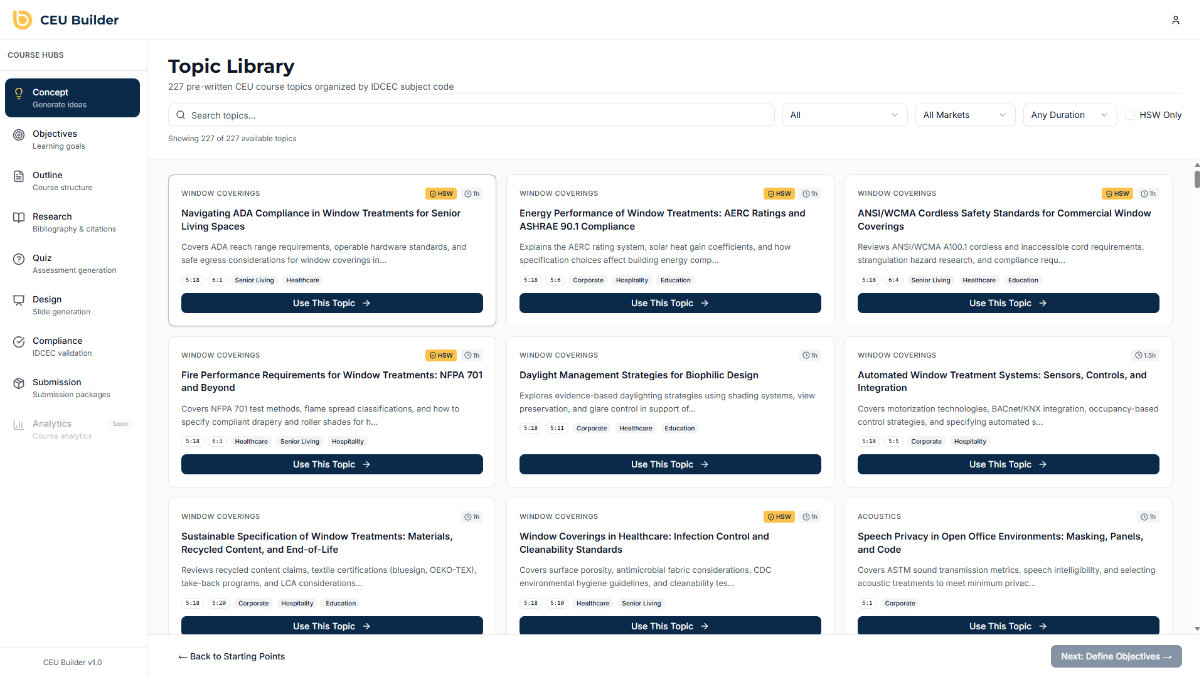
Their platform ensures compliance with IDCEC standards through systematic quality checks and expert review at every development stage. This attention to accreditation requirements proves essential for hospitality manufacturers who cannot afford submission failures that waste months and require complete content rebuilds.
Using CEU Builder accelerates time to market while boosting specifier engagement through strategically designed educational content that connects product features to architect specification challenges. The IDCEC accreditation guide walks manufacturers through the complete process from initial concept to approved course launch.
The measurable ROI from faster continuing education delivery translates directly to specification growth and revenue increases. Explore the IDCEC CEU ROI analysis to understand how rapid course development drives business outcomes for hospitality manufacturers. The fast CEU approval process details exactly how CEU Builder compresses timelines while maintaining quality and compliance standards that ensure first-pass accreditation success.
Frequently asked questions
What is the main benefit of fast course delivery for hospitality manufacturers?
Faster delivery enables manufacturers to quickly update education, influence architects, and drive more specifications by responding to market needs in weeks rather than months. It supports just-in-time training aligned with product launches and regulatory changes, ensuring educational content reaches architects when it matters most for specification decisions.
How does fast course delivery impact specification decisions by architects and designers?
Rapid CEUs position manufacturers as trusted educators, increasing specification chance by 4-6 times compared to manufacturers without educational content. Providing timely, relevant content builds preference and loyalty among specifiers who remember manufacturers that taught them valuable knowledge when selecting products for hospitality projects months later.
Are there risks involved with rushing course development?
Rushed development may compromise content quality and accreditation compliance if proper safeguards are not in place. Fast delivery works best for simple, frequently updated content like product specifications and regulatory compliance, not complex technical training requiring extensive research and faculty-led instruction.
What technologies support rapid CEU course development?
AI-generated outlines, reusable templates, and cloud collaboration platforms reduce development times from months to weeks by automating routine tasks. Expert human review ensures compliance and maintains quality despite acceleration, balancing speed with the rigor IDCEC accreditation demands.
Recommended
